Last updated: August 23, 2026
Long term food storage gets sold as a shopping list. Buckets, bags, absorbers, a shelf unit, done. What actually decides whether the food is worth eating in five years is duller than any of that: which foods you chose, how much oxygen and heat you let near them, and whether you built a system you will keep using instead of a monument in the basement.
This page is the map for the whole pantry silo. It runs through the four things that spoil stored food, the packaging methods that stop each one, which staples repay the effort and which ones quietly do not, and where the individual guides pick up the detail.
This article contains affiliate links. If you buy through them, we may earn a commission at no extra cost to you. Learn more.
Quick Answer
How do you store food long term at home?
- Pick foods that store. Dry, low fat staples like white rice, wheat, beans, pasta, sugar and salt do. Brown rice, whole grain flour and nuts do not, because of their oils.
- Remove the oxygen. A sealed mylar bag with an oxygen absorber inside a food grade bucket is the standard home method.
- Control the heat. A cool interior closet beats a hot garage by a wide margin, whatever the packaging.
- Rotate. Date every container, put new behind old, and cook from the shelf you built.
Bottom line: the right food, oxygen out, kept cool and dark, eaten in order. Gear is the easy part.
The Four Things That Ruin Stored Food
Oxygen, moisture, heat and light, with pests as a fifth that comes along for the ride. Oxygen turns fats rancid and drains color and nutrients. Moisture invites mold and caking. Heat speeds up every one of those reactions. Light bleaches and degrades. Every technique below is aimed at one or more of the four.
Ranked by what usually goes wrong in a home, heat comes first and oxygen second. People obsess over absorber sizing and then keep the buckets in an uninsulated garage where summer temperatures swing thirty degrees in a day. Fix the location before you spend on packaging.
Pests Are the Fifth
Rodents and pantry insects are a packaging problem rather than a chemistry problem, and rigid containers solve them. A bucket keeps out teeth, a sealed bag keeps out beetles, and an oxygen free package suppresses insect life inside the food. Our guides to pantry moths and weevils in flour cover what to do when they are already there.
Which Foods Are Worth Storing
The staples that store for years are dry, low in fat and low in moisture. White rice, hard wheat, rolled oats, dry beans and lentils, pasta, sugar, salt, powdered milk and dehydrated or freeze dried produce all qualify. They are also cheap in bulk, which is what makes the whole exercise sensible.
The ones that disappoint people are the ones with oil in them. Brown rice, whole wheat flour, nuts, seeds and anything with added fat go rancid regardless of how well you seal them, because the fat oxidizes with what little oxygen remains. Buy those in smaller amounts, keep them cold, and use them.
What Not to Put an Absorber In
Sugar and salt clump into a brick with an oxygen absorber, because the absorber works by taking up moisture as part of the reaction. Store both sealed and dry without one. Anything with meaningful moisture content, including home dehydrated food that was not dried to brittle, should not be sealed oxygen free either, which is a food safety line rather than a quality one.
The Packaging Methods, Ranked by Job
Four methods cover almost every home setup, and they are not competitors so much as different tools. Mylar with absorbers inside buckets is the workhorse for dry staples. Vacuum sealing suits the freezer and the medium term. Canning handles wet food. Freeze drying handles the rest at a much higher cost.
Most households end up with two or three of them. The mistake is picking one and forcing everything through it, which is how people end up vacuum sealing flour they will not open for five years or trying to can something that has no tested recipe.

Mylar, Absorbers and a Bucket
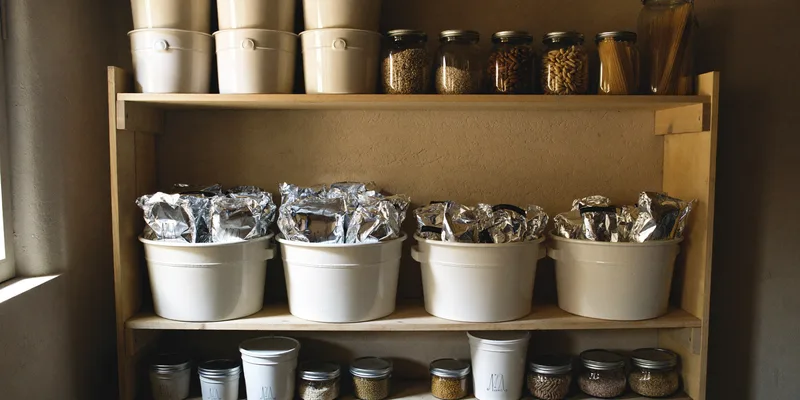
Line a food grade bucket with a metalized mylar bag, fill it, drop in an oxygen absorber sized to the bag, press the air out and heat seal the top, then fold it down and fit the lid. That sequence is the backbone of home long term storage and it costs less per pound than anything else. The detail is in mylar bags, oxygen absorbers and food storage buckets.

Vacuum Sealing and Jar Sealing
A vacuum sealer pulls the air out of a bag rather than absorbing it, which is quicker and better suited to the freezer and to portions you will open within months. A jar attachment does the same for mason jars of dry goods on the pantry shelf. It is the most convenient method and the least suited to multi year storage, since bag plastic is more permeable than mylar. See vacuum sealers and jar sealing dry goods.

Method by Food Type
The table pairs the food categories home storers actually deal with against the method that suits them and the reason. It is a routing table for the guides rather than a set of storage life figures, since those vary by food and are best taken from a university extension storage table for the specific item.
| Food | Method that fits | Why | Where it goes wrong |
|---|---|---|---|
| White rice, wheat, beans, pasta | Mylar plus absorber in a bucket | Dry, low fat, cheap in bulk | Storing it hot, or skipping the bag |
| Sugar and salt | Sealed dry, no absorber | Absorbers turn both into a brick | Treating them like grain |
| Flour and brown rice | Cold storage, smaller amounts | Oils in them go rancid | Packing years of it and hoping |
| Meat, soups, vegetables | Pressure canning or the freezer | Low acid wet food needs heat or cold | Water bath canning it, which is unsafe |
| Fruit, jam, pickles, tomatoes | Water bath canning, tested recipe | Acidity makes boiling water enough | Untested recipes and altered ratios |
| Garden surplus, herbs, jerky | Dehydrating, then sealed storage | Removes the moisture mold needs | Underdrying, then sealing it away |
The wet food rows are a safety boundary, not a preference. Low acid foods have to be pressure canned, and our guide to what you cannot water bath can spells out why.
Where You Put It Matters More Than the Brand
Cool, dark and dry, and as steady as you can manage. An interior closet, a basement that stays dry, or the coolest corner of the house beats a garage, an attic or a shed in almost every climate. Temperature swings are worse than a steady warm room, because they drive condensation inside the packaging.
Keep buckets off bare concrete on a board or a pallet, keep everything out of direct light, and leave room to get at the back of the shelf. A stack you cannot reach is a stack you will not rotate.
Rotation Is the Part People Skip
Storage only pays off if the food gets eaten and replaced. Date every bucket, bag and jar on the outside, shelve new behind old, and keep a simple list of what is where so you are not opening sealed buckets to find out. Our guide to pantry organization and first in first out covers the racks and labels.
Cook from it too. A pantry full of hard wheat is worth nothing if nobody in the house knows what to do with hard wheat, and the time to find that out is now rather than later.
Where the Prepper and LDS Storage Lists Come From
Nearly every home storage checklist online traces back to the same place. The Church of Jesus Christ of Latter-day Saints publishes home storage guidance on its Provident Living site, built around a supply of the everyday food you actually eat, plus longer term staples and water. The prepper lists that circulate are mostly reworked versions of it.
What makes that guidance useful outside the church is the shortlist of staples it settles on: wheat, white rice, dried beans, oats, dry milk, sugar and salt, all of them foods that store for years when they are packed dry and sealed. Its home storage centers sell those staples already packed, which is a fair comparison point if you are pricing out doing it yourself. What you should not copy blindly is the quantity, since a target that suits a family of six is the wrong shelf for a couple in an apartment. Store what you eat, then scale.
Frequently Asked Questions
What is the best food to store long term? Dry, low fat staples you already eat. White rice, hard wheat, dry beans, pasta, oats, sugar and salt store well and cost little in bulk. The best storage food is the one your household actually cooks, since anything else becomes a wall of buckets nobody opens.
Do I need both mylar and oxygen absorbers? They work as a pair. The absorber removes the oxygen sealed in with the food, and the mylar keeps new oxygen from coming back through the wall. An absorber in an ordinary plastic bag or a bare bucket saturates and achieves little.
Is a vacuum sealer good enough for long term storage? For the freezer and for months rather than years, yes. Bag plastic is more permeable than metalized mylar, so multi year dry storage is where mylar earns its place. Many households use both, a sealer for the freezer and mylar for the bulk shelf.
Can I store food in the garage? You can, and it is the worst common choice. Summer heat and daily temperature swings shorten storage life faster than any packaging decision makes up for. If the garage is the only space, store the most heat tolerant items there and keep grain and anything with oil indoors.
How much should I store? Start with two weeks of what you normally eat, then extend. Building depth in foods you already cook is more useful than a year of something unfamiliar, and it lets you find out what your household actually gets through.
How long does freeze dried food last? Longer than anything else you can make at home, and the figures you see come from manufacturers rather than from NCHFP. Harvest Right states 25 years for food that is fully dried and sealed in mylar with an oxygen absorber. Read that as a packaging claim: a bag that leaks, or food that went in short of dry, fails long before any date.
The Bottom Line
Choose dry low fat staples, seal them in mylar with an oxygen absorber inside a food grade bucket, keep the stack cool and dark, and rotate it into your everyday cooking. Wet food goes to the canner or the freezer instead, and low acid wet food needs pressure canning rather than a boiling water bath. Read next: mylar bags for the barrier, oxygen absorbers for the sizing, and how to store rice long term for a worked example.