Last updated: August 23, 2026
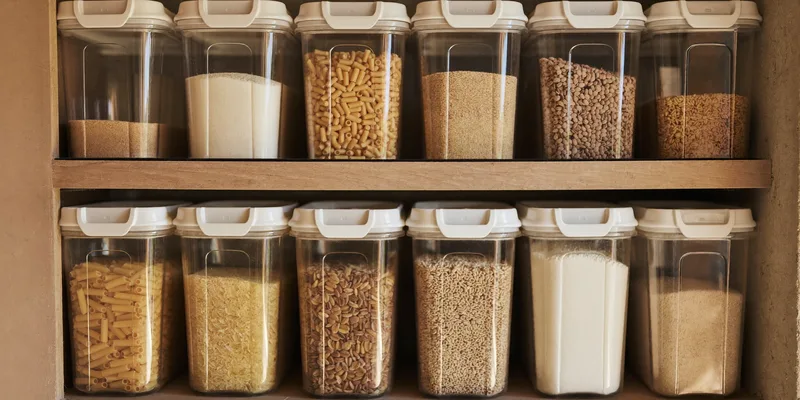
Most pantries fail in the same two ways. Half opened bags fold over on themselves and spill, and the shelf runs out of room long before it runs out of food. A stack of matching containers fixes both at once, which is why they sell by the millions, and it is also why so many people end up with a cabinet of lids that do not fit anything they own.
The useful question is not which set looks best on a shelf. It is which containers actually seal, which sizes swallow a whole bag of the thing you buy most, and which ones stack without the top one sliding off every time you reach past. Those three answers decide whether the set stays in use after the first month.
This article contains affiliate links. If you buy through them, we may earn a commission at no extra cost to you. Learn more.
Quick Answer
What makes a food storage container actually airtight?
- A real gasket. A silicone seal in the lid plus latches, a press button or a screw thread is what holds air out, not a snug plastic rim.
- Sizes that match your bags. Buy a container that takes a whole five pound bag, or you will keep half of it in the paper.
- Square and stackable beats round and pretty. Round containers waste the corners of every shelf.
- A flat lid with a recess for the next base, so the stack does not walk when you pull one out.
Bottom line: gasket, bag sized, square, stackable. Everything else on the box is decoration.
Airtight Is a Gasket, Not a Marketing Word
Almost every container is sold as airtight and most of them are not. What separates the two is a compressible seal, usually a silicone gasket seated in the lid, and a mechanism that presses the lid down onto it. Latches, a push button in the lid and a screw thread all do that. A lid that only clicks onto the rim does not.
You can test one in the store or at home in ten seconds. Close it empty, press the middle of the lid and listen. A sealed container pushes back and hisses when you release the catch. A snap lid just moves.
What a Good Seal Buys You
Three things. Crackers and cereal stay crisp because humidity stays out, brown sugar stays soft because moisture stays in, and pantry insects cannot walk into an open bag because there is no open bag. That last one is the reason a container upgrade is the standard advice after an infestation, as our guide to weevils in flour explains.
Size the Set to the Bags You Actually Buy
Start from your shopping, not from the set. A standard five pound bag of flour or sugar needs a container in the six quart range, rice and pasta come in smaller and odder amounts, and cereal boxes want tall narrow containers. Buying one big set of identical mid size tubs leaves you decanting half bags forever.
Write down the four or five staples you rebuy most and match a container to each. It is a duller way to shop than buying a photogenic set of twelve, and it is the difference between a pantry you use and a shelf of half empty containers.

The Big Ones for Flour and Sugar
These are the containers that get used daily, so buy them oversized and easy to scoop from. A wide mouth matters more than volume here, because a measuring cup has to go in and come out level. Handles on a large container are worth having when it is full and you are lifting it down from a high shelf.

Small Kitchen, Not Enough Shelf
The complaint that comes up most often in owner reviews is not sealing at all, it is space. People buy containers to organize a cramped pantry and find the round ones waste the corners and the tall ones will not fit under the shelf above. Square or rectangular containers in two or three heights solve it.
Measure the shelf height before you buy, not the shelf width. Width sorts itself out, height is the constraint that turns a bargain set into a returned one. Containers that stack with a recessed lid also let you use vertical space that a loose lidded set cannot.

Glass or Plastic
Glass does not stain, does not hold onto the smell of chili powder, and looks better on an open shelf. Plastic is lighter, survives a drop on a tile floor, and comes in the tall shapes that fit a cereal box. Neither seals better than the other, because the seal is in the gasket and the closure, not in the wall material.
Weight decides most of it. A glass container full of flour on a high shelf is a genuinely heavy thing to bring down one handed. Glass on the low shelves and plastic up high is a reasonable compromise, and it is what most people drift toward anyway.

What These Containers Do Not Do
They do not make food last for years. A gasket keeps out humidity, insects and stale air exchange, but the container is still full of ordinary air, and oxygen is what turns fats rancid and drains color and vitamins out of dry goods over time. That is a different job with different equipment.
For anything you are putting away rather than using, the standard home setup is a mylar bag with an oxygen absorber inside a food grade bucket, which removes the oxygen instead of just sealing it in. Our guides to mylar bags and long term food storage cover that stack. Containers are for the food you are eating this season.
Matching the Container to the Staple
The table pairs the staples people store most with the container shape that suits them and the trap to avoid. Sizes are the practical ones for standard US bag sizes rather than a manufacturer specification.
| Staple | Container to use | Why | Common mistake |
|---|---|---|---|
| Flour and sugar | Wide mouth, around six quarts | Takes a whole five pound bag, cup fits inside | Buying a size that leaves half the bag out |
| Cereal and crackers | Tall rectangular with a pour lid | Uses shelf height, keeps crisp | Round tubs that waste the corners |
| Rice, beans, pasta | Medium square, gasketed | Stacks in a row, easy to scoop | Mixing sizes so nothing stacks |
| Coffee and spices | Small opaque with a tight seal | Light and air degrade both fast | Clear jars on a sunny counter |
| Bulk grain you are storing away | Mylar inside a bucket | Removes oxygen, not just air exchange | Treating a canister as long term storage |
Which Containers Actually Work in the Freezer
Freezer duty needs a container the maker rates for it. Look for a freezer mark on the base, leave headspace when anything wet goes in, and expect thin plastics and unrated glass to crack. Gaskets stiffen in the cold, so let a tub warm for a minute before you fight the lid open.
Shape matters as much as the rating. Straight sided containers survive freezing liquid because the ice has somewhere to go, while a jar or tub that narrows at the shoulder puts the pressure into the glass. Rigid containers earn their place for portions you reheat; for a freezer you are trying to pack tight, a sealed bag lies flat and wins on space every time. Our guide to sealing for meal prep covers that side.
Frequently Asked Questions
Will a five pound bag of flour fit in one container? Only if you buy a container in the six quart range or larger. Flour is bulkier per pound than sugar, so a container that takes five pounds of sugar with room to spare will overflow with flour. Size up rather than down.
Do airtight containers stop pantry moths and weevils? They stop insects moving between foods, which is what turns one bad bag into a shelf wide problem. They do not kill eggs already inside the food. Treat suspect grain first, as our guide to weevils in flour sets out, then repack it.
Are the lids dishwasher safe? Many are, but the gasket is the part that suffers. Repeated hot cycles harden silicone over time and a hardened gasket stops sealing. Hand wash lids, machine wash bases, and pull the gasket out occasionally to clean the groove where crumbs collect.
How long will flour keep in an airtight container? Longer than in the paper bag, and not indefinitely. White flour outlasts whole grain flour because whole grain still contains the oils that go rancid. Storage life tables from university extension services are the place to check a specific food, and keeping the container cool and dark matters more than the container brand.
Can I use these containers in the freezer? Check the base for a freezer mark. Some plastics crack at freezer temperatures and glass without a freezer rating can fail. If you are freezing dry goods to kill insects, an ordinary sealed bag does the job and takes less room.
Will these containers keep mice out? Not the thin ones. A rodent chews through light plastic and works its way under a snap lid, so glass, stainless or a thick walled container with a latch is the level that actually holds. For bulk grain in a garage, basement or shed, food grade buckets are the honest answer. See our guide to food storage buckets.
Are beeswax wraps airtight? No. Beeswax wraps cling and breathe, which suits a cut lemon, a wedge of cheese or a bowl in the refrigerator for a day or two. They do not seal against air, moisture or insects, so they are not a pantry answer for flour, grains or anything you are keeping for months. Use a gasketed container for that.
The Bottom Line
Buy for the gasket first, then for the sizes you actually rebuy, then for a square footprint that stacks. Two or three big wide mouth containers for flour and sugar plus a row of matching medium ones covers most kitchens, and glass low with plastic high keeps the heavy things reachable. For anything going away rather than getting used, step up to the packed version. Read next: mylar bags for bulk staples and pantry organization and rotation so the oldest food gets used first.