Last updated: August 23, 2026
A bucket looks like the least interesting purchase in the whole pantry. It is a plastic pail with a lid, they are all the same, and the free ones behind the bakery counter are the same shape as the ones in the store. That is exactly why people get this one wrong and only find out a year later, when the rice tastes faintly of dill pickle or the lid has warped enough to let a mouse chew a corner.
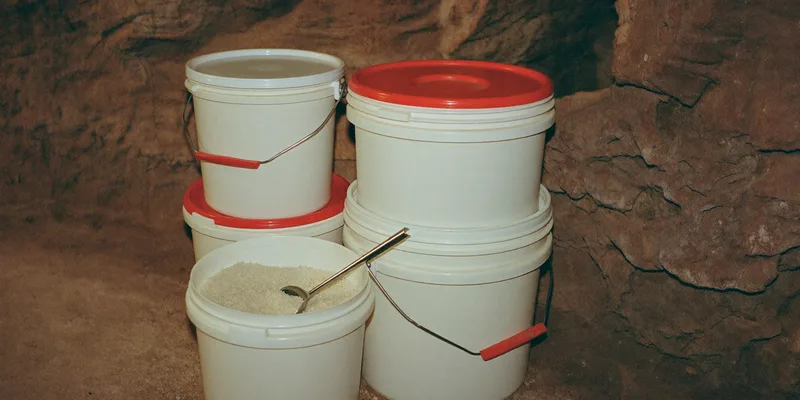
Buckets are the outer shell of nearly every home long term storage setup in the country, and they only do two jobs: keep the light and the pests out, and keep the shape of a stack that will not collapse. Understanding what they do not do is what makes the rest of the system make sense.
This article contains affiliate links. If you buy through them, we may earn a commission at no extra cost to you. Learn more.
Quick Answer
What should you look for in a food storage bucket?
- Food grade HDPE, marked as such by the maker. The resin code alone does not tell you what the bucket was made to hold.
- A bucket you can actually lift when full. Five gallons of wheat is heavier than most people plan for.
- The right lid for the job. Snap lids for sealed storage, gamma lids for anything you open weekly.
- Mylar inside. The bucket is the shell, the sealed bag with an oxygen absorber is the barrier.
Bottom line: buy food grade, size for what you can carry, and never treat the bucket itself as the airtight layer.
What Food Grade Actually Means
Food grade describes what the plastic and its additives were approved to contact, not the shape of the container. Most food storage buckets are high density polyethylene, resin code 2, but plenty of HDPE buckets are made for paint, drywall compound or driveway sealer with colorants and mold release agents never intended to touch food. The marking on the bucket is what tells you which is which.
Look for the maker stating food grade or food safe on the bucket or the listing, usually alongside a cup and fork symbol. If the seller does not say it, assume it is not, because a food grade bucket has no reason to hide the fact.
Free Buckets From the Bakery
They are usually genuine food grade, and they are usually fine, with two caveats. Frosting and pickle buckets hold their smell no matter how you scrub, and that smell moves into flour, so use those for non food or for something strongly flavored. Check the rim and the lid channel for cracks from being pried open, since a chipped rim will not seal again.
Which Size to Buy
Five gallon is the default because everything else in this hobby is built around it, from mylar bag sizes to gamma lids to shelving depth. The real limit is weight. A five gallon bucket packed with wheat, rice or beans is a two handed lift off a high shelf, and it stops being a one person job when your shoulder is unhappy.
Buy a mix. Five gallon buckets for the staples you store deepest, and a few three and a half or two gallon buckets for the things you dip into, which are easier to move, easier to reseal and easier to store under a counter.

Six Gallon and Larger
Six gallon buckets exist and hold noticeably more, but they take the same footprint and get genuinely heavy. They suit lightweight bulk like pasta, rolled oats and freeze dried food far better than they suit grain. Check the mylar sizing before you commit, since a bag cut for five gallons will not close over a six gallon load.

Lids Decide How You Live With Them
The plain snap lid that comes with the bucket seals well and is a fight to remove, which is exactly right for a bucket you intend to open once, years from now. You need a lid opener tool, and even then the first few take some swearing. That resistance is a feature for sealed storage and a nuisance for anything else.
For a bucket you open weekly, a screw in gamma lid turns it into a bin you can access with one hand. Just do not let the convenience change the packing plan, because a gamma lid is a convenience closure rather than a long term oxygen barrier. Our guide to gamma lids goes through what they do and do not seal.

The Bucket Is the Shell, Mylar Is the Barrier
Plastic buckets are not gas tight. Polyethylene lets oxygen pass slowly through the wall, and the lid gasket is not designed to hold a vacuum, so a bucket alone leaves your food sitting in ordinary air for years. The metalized mylar bag inside is what actually stops oxygen and light, and the oxygen absorber removes what is sealed in with the food.
The working order is simple. Line the bucket with the bag, fill it, drop the absorber on top, press the air out, seal the bag with a hot iron or an impulse sealer, then fold it down and snap the lid on. Our guides to mylar bags and oxygen absorbers cover the thicknesses and the absorber sizing.

Bucket Sizes and What They Suit
The table pairs the common sizes with the load they handle well and the practical catch. Capacities are nominal bucket volumes rather than a tested fill weight for any specific grain.
| Size | Best for | Lid to pair | Watch out for |
|---|---|---|---|
| 2 gallon | Sugar, salt, small batches, a working bin | Snap lid or small gamma | Mylar sizing is less standard |
| 3.5 gallon | Flour, oats, anything you lift often | Gamma lid | Costs nearly as much as a five |
| 5 gallon | Rice, wheat, beans, the default | Snap lid for sealed storage | Heavy when full of grain |
| 6 gallon | Pasta, rolled oats, freeze dried food | Snap lid | Five gallon mylar will not close over it |
Stacking and Where They Live
Buckets stack well and floors take the weight better than shelves do, so a column on the floor of a closet beats a row on a bracket shelf. Keep them off a concrete slab on a board or a pallet, because concrete stays cold and damp and the temperature swing pulls moisture toward the bucket bottom.
Cool, dark and dry beats every other storage decision you make. Heat is what shortens storage life fastest, which is why a garage in a hot climate is the worst place for your food and an interior closet is the best. Label the outside with the contents and the date, since a stack of identical white buckets tells you nothing.
Frequently Asked Questions
Can I use any HDPE bucket for food? No. The resin code tells you the plastic type, not what additives went in or what the bucket was made to hold. Buy buckets the maker sells as food grade, or reuse ones that genuinely held food. Paint and construction pails are not the same product.
Do I need mylar bags if the bucket has a sealing lid? For long term storage, yes. The bucket wall is not a gas barrier and the lid gasket is not made to hold out oxygen for years. The mylar bag with an absorber inside is the part doing that job. Without it a bucket is just a very good pest proof bin.
How do I get a snap lid off without breaking it? Use a bucket lid opener, which hooks under the rim and levers it up evenly. Prying with a screwdriver chips the rim and the lid stops sealing afterward. If you plan to open the bucket regularly, fit a gamma lid instead.
Will mice chew through a food storage bucket? They can chew plastic, and they will if they can smell food and get purchase on an edge. A properly seated lid gives them nothing to start on, and the mylar inside removes the smell that attracts them. Buckets sitting open or with a warped lid are the ones that get chewed.
Are buckets worth it for a small household? Only for what you truly buy in bulk. For a few pounds of flour or rice at a time, gasketed airtight containers are easier to live with. Buckets earn their space when you buy grain by the sack.
The Bottom Line
Buy buckets the maker calls food grade, size them to what you can carry rather than to what fits the most, snap lids for sealed storage and gamma lids for anything you open, and always put the mylar and the oxygen absorber inside. Keep the stack cool, dark and off the concrete, and label every one. Read next: long term food storage for the full method comparison, and how to store rice long term for a worked example from bag to shelf.