Last updated: August 23, 2026
Flour goes wrong in three specific ways, and each one has a different cause. Small moths appear in the pantry and there is webbing in the corner of the bag. The whole wheat flour smells like old crayons. Or the bag has absorbed enough humidity to set into a lump you have to break with a spoon.
Insects, rancidity and moisture, in that order of frequency. Flour is harder to store than rice because the grain has already been ground, which exposes far more surface to air and, in whole grain flour, releases the oil that turns. The good news is that all three problems respond to the same short routine.
This article contains affiliate links. If you buy through them, we may earn a commission at no extra cost to you. Learn more.
Quick Answer
How do you store flour long term?
- Freeze new bags first. University of Minnesota Extension advises freezing at 0 degrees F for at least four days to kill any eggs or insects.
- Let the flour return to room temperature and stay dry before you seal it, or you trap condensation inside.
- Get it out of the paper sack. USU Extension lists food safe plastic containers, glass jars, lined number ten cans and mylar type bags for long term storage.
- Treat white and whole wheat differently. The oil in whole grain flour goes rancid regardless of the container.
Bottom line: freeze, warm up, seal into a real barrier, and keep whole grain flour cold or buy it in smaller amounts.
Start With the Freezer, Not the Container
Pantry moths and weevils almost always arrive inside the packaging rather than crawling in from the kitchen. Sealing an infested bag into an expensive container simply gives the eggs a safe place to hatch, which is why the freezer step comes before anything else you do.
University of Minnesota Extension advises freezing flour at 0 degrees F for at least four days to kill any eggs or insects, and Utah State University Extension gives a range of four to seven days at that temperature. Either way, it is days rather than hours, and it applies to the unopened package.
Then Let It Warm Up Before Sealing
Cold flour pulls moisture out of the room air as it warms, and if you seal it while it is still cold you seal that condensation in with it. Leave the package on the counter until it is fully at room temperature and the outside is dry, then transfer it. This one step prevents most of the clumping people blame on the container.
Get It Out of the Paper Bag
A paper sack keeps nothing out. Moths chew through it, humidity passes straight through it, and it splits in a cupboard. USU Extension lists what actually works for long term storage of dry staples: food safe plastic (PETE) containers, glass jars, number ten cans with a food grade enamel lining, and mylar type bags.
For the flour you bake with weekly, a wide mouthed airtight container is the right answer, because you open it constantly and a scoop needs to fit. For flour you are putting away for a year or more, a mylar bag inside a bucket is the better structure, and our guide to airtight food storage containers covers the kitchen end.
Best for the flour you actually bake with each week

The Long Term Version
Mylar plus an oxygen absorber inside a food grade bucket is the standard for bulk storage, the same structure used for rice and beans. Flour packs densely, so a bucket of it is heavy, and a gamma style lid you can twist off makes a real difference to whether you actually use the contents. Our guides to mylar bags and gamma lids cover both parts.
Best long term barrier for bulk flour

White Flour and Whole Wheat Are Different Problems
White flour has had the germ and its oil removed, so with insects and moisture handled it is a stable pantry item. Whole wheat, rye and other whole grain flours still contain that oil, and oil goes rancid on its own schedule no matter how airtight the container or how thorough the oxygen absorber.
The practical answers are to buy whole grain flour in quantities you will finish, keep it in the freezer or refrigerator rather than the pantry, or store whole grain berries instead and grind as you need them. Whole grains keep far better than the flour made from them, which is the reason home mills exist at all.
How to Tell If It Has Turned
Smell it. Rancid flour has a sharp, faintly crayon like or oily paint smell that is quite distinct from the neutral smell of fresh flour, and the taste follows through into whatever you bake. Rancid flour is a quality problem rather than a safety one, but nothing you make with it will taste right.
Keeping Moths Out of the Rest of the Pantry
If you have already found webbing or moths, the containers are only half the job. Empty the shelf, vacuum the corners and the shelf brackets where larvae pupate, and check every other open package of grain, nuts, dried fruit and pet food, since they travel between packages.
After that, the containers do the work. Moths cannot get into glass or a sealed bucket, so once everything on the shelf is in a hard container, an infestation has nowhere to go. Our guides to pantry moths and weevils in flour go through the cleanout in detail.
Storage Options Compared
The table below matches the container to how you actually use the flour, which matters more than maximum theoretical storage life.
| Option | Suits | Protects against | Watch out for |
|---|---|---|---|
| Airtight kitchen container | Weekly baking flour | Moths, humidity, spills | Refill hygiene, wipe it out between bags |
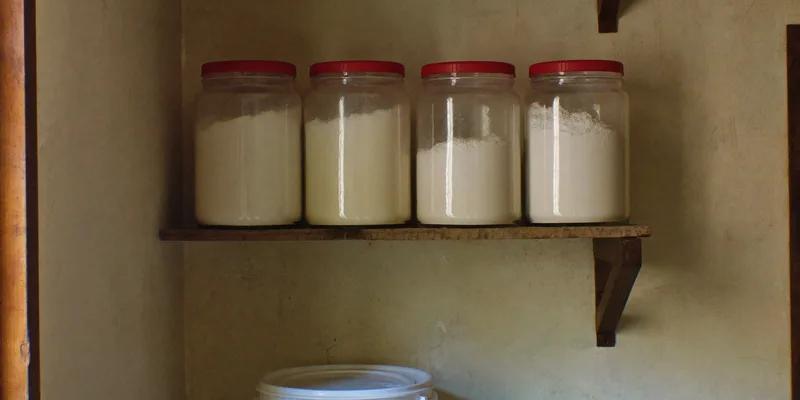
| Glass jars | Smaller specialty flours | Insects and moisture | Light, so store in a cupboard |
| Mylar and absorber in a bucket | Bulk white flour for the long haul | Air, light, moisture, rodents | Weight, and opening commits the bag |
| Freezer | Whole wheat and rye flour | Rancidity and insects | Freezer space, and condensation on removal |
Frequently Asked Questions
How long does flour keep in a sealed container? White flour stored cool, dark and sealed keeps far longer than whole grain flour, which is limited by the oil in the germ rather than by the container. Date every container when you fill it, and rotate the oldest to the front so age never becomes a guess.
Does freezing flour really get rid of bugs? It kills what is present in the package. University of Minnesota Extension advises freezing at 0 degrees F for at least four days to kill eggs and insects, and USU Extension gives four to seven days. It does not protect against a later infestation, which is what the container is for.
Should I use an oxygen absorber with flour? For long term bulk storage in mylar, yes, sized to the air volume in the bag. For a kitchen container you open twice a week there is no point, since the container refills with air every time you scoop. Our absorber guide covers sizing.
Can I store flour in the original bag inside a bucket? You can, and it keeps rodents and moths out, but the paper still lets humidity through and the bucket lid is not an oxygen barrier. For anything beyond a few months, pour the flour into a mylar bag instead of storing the sack.
Why did my flour go lumpy in an airtight container? Almost always moisture that went in with it, usually from sealing flour that was still cold from the freezer. Let it come fully to room temperature first, and keep the container away from the stove and the dishwasher vent.
The Bottom Line
Freeze the bag when it comes home, let it warm up completely, then move it into a real container rather than leaving it in paper. Keep white flour cool and dark and it will outlast your baking plans, and treat whole grain flour as a refrigerator item because its oil sets the limit rather than the seal. Read next: our airtight container guide and mylar bags for the bulk version.