Last updated: August 23, 2026
The bucket you packed in January comes open in November and the sugar inside is one solid brick. Or the rice smells like the basement. Or the mylar bag you sealed so carefully has gone soft again because the seal has a pinhole you never saw. Almost nobody loses a whole pantry at once. It goes wrong one container at a time, and always for one of about six reasons.
What follows is the short list of mistakes that show up when people open their storage a year later, why each one happens, and what to change. Most of the fixes cost nothing. A few need the right material instead of the cheapest one, and those are called out as such.
This article contains affiliate links. If you buy through them, we may earn a commission at no extra cost to you. Learn more.
Quick Answer
What are the most common food storage mistakes?
- Putting an oxygen absorber in sugar or salt, which sets it into a block for no benefit.
- Storing in a room that gets hot, which costs more shelf quality than any container can win back.
- Using thin bags that let oxygen creep back in, then blaming the absorber.
- Sealing anything moist or oily in reduced oxygen packaging, which is the one mistake with a safety angle.
Bottom line: match the material to the food, keep the room cool and dark, and never put a wet or fatty food in an oxygen free package.
The Mistakes That Show Up When You Open the Bucket
Long term storage fails in slow motion, so you find out about a mistake long after you made it. The pattern is consistent: hardened sugar, stale grain, weevils in the flour, bags that lost their vacuum, and buckets nobody labeled. Each has a different cause and only one of them is about the container being cheap.
Work through them in order of consequence. Room temperature first, because it affects everything on the shelf. Then the food to material match, then the seal, then rotation. A perfect mylar seal in a hot garage still loses.
Mistake 1: An Oxygen Absorber in the Sugar
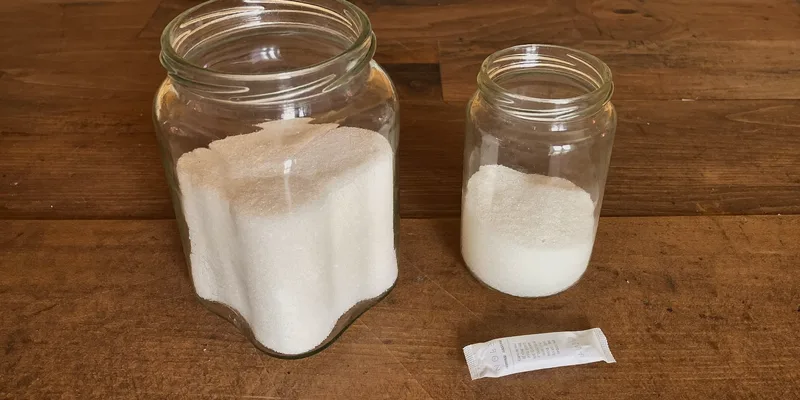
Sugar and salt are the two staples that do not want an absorber. Absorber suppliers say so in their own use instructions, because both keep indefinitely in a sealed airtight container without one, and pulling the oxygen out tends to leave you with a solid lump you have to chip apart. Nothing unsafe happens, you just wrecked the texture for no gain.
The staples that do benefit are the dry ones prone to going stale or buggy. Utah State University Extension’s food storage packaging guidance recommends oxygen absorbers for white and brown rice, dried beans, dried milk, dried vegetables and spices, to extend shelf life, minimize off flavors and protect against insects. Sugar, salt and honey are the household exceptions to that list.

Mistake 2: Storing Where the Room Gets Hot
Temperature does more damage than any other single factor, and no packaging compensates for it. The NCHFP tells home canners to store jars in a clean, cool, dark, dry place, between 50 and 70 degrees F for best quality, and specifically warns against storing above 95 degrees F or near hot pipes, a range, a furnace, an uninsulated attic or direct sunlight.
Dried food follows the same curve. The NCHFP notes that most dried fruits can be stored for 1 year at 60 degrees F and 6 months at 80 degrees F, with vegetables lasting about half as long as fruits. That is the same food in the same bag, halved by the room. An interior closet beats a garage shelf every time.
The Garage Shelf Problem
Garages and attics are where storage goes to die, because they swing with the season. A shelf that reads a comfortable temperature in April can be brutal in August, and the swing itself pulls moisture in and out of packaging. If the garage is genuinely the only space, keep it to sealed buckets of dry staples, not jars, and accept a shorter quality window.
Mistake 3: Bags Too Thin for the Job
Mylar is sold by thickness in mils, and thin bags are the reason plenty of people conclude that oxygen absorbers do not work. A thin bag flexes, pinholes at the fold, and lets oxygen creep back through the film over months. You cannot see it happen. You only notice that the bag never went hard around the contents, or that it went soft again a few weeks later.
For anything going into a bucket for years, buy the heavier film and seal it properly with a hot iron or an impulse sealer, not by twisting and taping. Our guide to mylar bags covers thicknesses and sizes, and sealing options compares the tools that make a seam you can trust.

Mistake 4: Reduced Oxygen Packaging on the Wrong Food
This is the one mistake on the list with a genuine safety angle, so treat it separately from the quality mistakes. Reduced oxygen packaging belongs on dry goods. Utah State University Extension’s packaging guidance warns that vacuum packaging increases the ability of botulism bacteria to grow, precisely because it removes the oxygen, so moist foods do not belong in a sealed oxygen free package on a pantry shelf.
In practice that means the mylar and absorber method is for dry staples like rice, beans, pasta, flour and dried milk, and not for anything wet, oily or freshly dehydrated but not fully dry. Nuts and whole grain flours carry fat that goes rancid regardless of oxygen, so those belong in the freezer or in small batches you turn over quickly.
Vacuum Sealing Is Not Canning
Pulling the air out of a bag or a jar slows spoilage, it does not make food shelf stable. A vacuum sealed pouch of leftovers is a refrigerator or freezer item, full stop. If you want a jar of low acid food to live on a shelf, that is pressure canning, and our comparison of vacuum sealing against canning lays out which method belongs on which food.
Mistake 5: The Wrong Container for the Food
Most storage disappointments are a mismatch between food and material rather than a bad product. Bulk grain wants mylar inside a food grade bucket. Everyday flour and sugar want a gasketed canister you open weekly. Dehydrated food wants a small jar so you are not opening a big one twice a day. The table sorts the common cases.
| Food | Right material | Absorber? | What goes wrong otherwise |
|---|---|---|---|
| White rice, beans, pasta | Heavy mylar inside a food grade bucket | Yes | Thin bag pinholes, oxygen creeps back |
| Sugar, salt | Airtight container or sealed bag | No | Absorber turns it into a solid block |
| Flour, whole grain | Gasketed canister, freezer for the fatty ones | Short term, no | Rancid fat and pantry moths |
| Dehydrated fruit and vegetables | Small glass jars, jar sealed or with desiccant | Optional | Big jar opened daily reabsorbs moisture |
Container choices for the daily staples are covered in our guide to airtight food storage containers, and the bucket side in food storage buckets.

Mistake 6: No Rotation and No Dates
The last mistake is the cheapest to fix and the most common. Undated containers mean you cannot tell old from new, so you use whatever is in front and the back row ages out. Write contents plus month and year on every bag, bucket lid and jar, and load new stock behind the old.
Rotation is a habit rather than a purchase, but a shelf layout that makes the habit automatic helps. Our walkthrough of pantry organization with FIFO covers the racks, boxes and labels that keep the oldest container at the front without you thinking about it.
Frequently Asked Questions
Can I put an oxygen absorber in with sugar or salt? You can, but you should not. Absorber suppliers list both as exceptions in their own instructions, since neither needs a reduced oxygen environment and both tend to harden into a block. Seal them airtight and leave the absorber out.
Why did my mylar bag go soft again after a week? Either the film is too thin and oxygen is permeating back through it, or the seam has a gap. Reseal with a proper heat seal across the full width, and use a heavier bag for anything you expect to store for years.
Is it safe to vacuum seal fresh vegetables for the pantry? No. Utah State University Extension warns that vacuum packaging increases the ability of botulism bacteria to grow because it removes oxygen, so moist foods belong in the refrigerator or freezer, not in a sealed package on a shelf.
How warm is too warm for a storage room? The NCHFP puts best quality for home canned jars between 50 and 70 degrees F and warns against storing above 95 degrees F. If a room regularly runs above the top of that range in summer, move the jars indoors and keep only sealed dry staples out there.
Do I need both a mylar bag and a bucket? For long term storage of dry staples, yes. The mylar carries the oxygen barrier and the bucket carries the physical protection against rodents, crushing and light. A bucket alone is not an oxygen barrier.
My flour got moths. Was that a storage mistake? Usually the eggs came home in the package rather than arriving in your pantry. Freezing new flour before it goes into storage and keeping it in a hard sided airtight container is the standard prevention, covered in our guide to weevils and moths in flour.
The Bottom Line
Get the room right, then match the material to the food, then seal properly, then date and rotate. Reduced oxygen packaging is for dry goods only, sugar and salt do not want an absorber, and no container in the world fixes a hot shelf. Read next: mylar bags for the thicknesses that hold up, and oxygen absorbers for how to size them to the container.