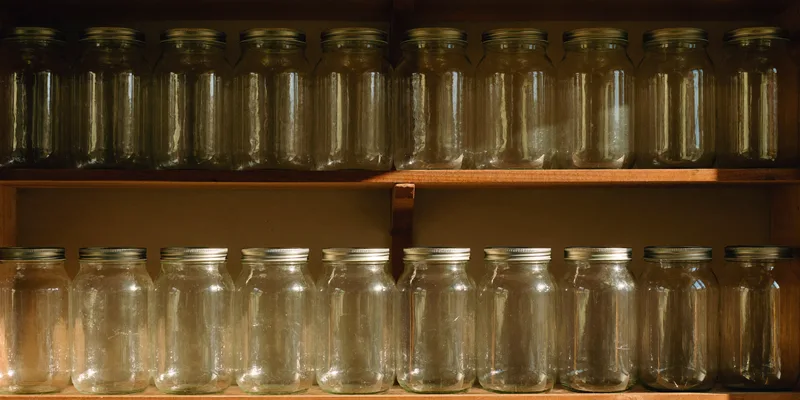
Last updated: August 23, 2026
The moment that sends most people to buy jars is not a shopping list. It is a counter covered in tomatoes with four empty jars left in the cupboard and a canner already coming to a boil. Running short of jars mid harvest is the most predictable problem in home canning, and the cheapest one to prevent.
Canning jars are also one of the few purchases where the choices are genuinely simple once someone lays them out: two mouth sizes, a handful of capacities, and two or three brands that all make the same standard product. This guide covers which to buy, how many, and which glass containers should never go in a canner.
This article contains affiliate links. If you buy through them, we may earn a commission at no extra cost to you. Learn more.
Quick Answer
Which canning jars should you buy?
- Pints for most things, quarts for whole tomatoes, beans, and broth, half pints for jam and jelly.
- Wide mouth if you pack whole or chunky food and hate scraping; regular mouth if you want jars that stack and store more tightly.
- Buy jars made for home canning. The NCHFP advises against reusing commercial food jars such as mayonnaise or pasta sauce jars.
- Buy by the case in the off season. Jars do not expire, and August pricing is not your friend.
Bottom line: two cases of pints and one of quarts covers almost any first season, in whichever mouth size suits your hands.
What Makes a Jar a Canning Jar
Canning jars, still called mason jars after the original patent, are made from tempered glass designed to take repeated heating and cooling, with a threaded rim machined to seal against a flat lid held by a screw band. That two piece closure is what allows a vacuum to form as the jar cools, and it is why the rim has to be undamaged.
Commercial food jars look similar and are not the same product. The NCHFP advises against reusing jars from store bought food for home canning, because they are made for one filling under factory conditions rather than for repeated home processing, and standard lids are not designed to seal them.
Wide Mouth or Regular Mouth
Regular mouth jars have the narrower opening and a shoulder, which makes them slightly sturdier for tall storage and cheaper per jar in most cases. Wide mouth jars have a straight sided opening the same width as the jar body, which makes packing peach halves, pickle spears, and anything chunky much easier, and cleaning them much faster.
Most kitchens end up with both. Wide mouth wins for whole fruit, pickles, meat, and anything you will scoop out; regular mouth wins for jam, jelly, juice, sauces, and anything you want to fit more of on a shelf. Our side by side comparison works through the specific foods, and the wide mouth guide covers that side in detail.
Lids Are Not Interchangeable
A regular mouth lid does not fit a wide mouth jar and the reverse is equally true, which is the single most common ordering mistake in canning. If you already own jars, check the mouth size before buying lids in bulk, because a case of the wrong lids is useless until you buy matching jars.
Which Sizes to Buy
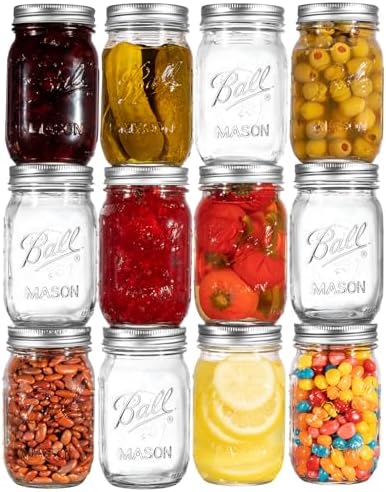
Pint jars are the workhorse: salsa, pickles, jam in a generous size, fruit, and most vegetables for a small household. Quarts suit whole tomatoes, green beans, broth, and anything a family eats in one sitting. Half pints are for jam, jelly, and condiments, and small four ounce jars are for gifts, samples, and strong preserves.
Jar size is not a free choice inside a recipe. Tested processing times are given per jar size, and the NCHFP directs using the jar size the tested recipe specifies rather than substituting a larger one. Our canning jar sizes guide lays out the full range with the details that matter.

How Many Jars You Actually Need
Work from canner loads. A standard boiling water canner takes seven quarts or nine pints at a time, so a single case of each is one load with nothing spare. Two loads worth means a second batch can be filling while the first one cools, which is how a productive canning day is organized.
The other reason to buy in volume is that a jar stays in service for years, and the ones that leave circulation mostly go out full as gifts. Anyone who cans regularly has more jars than they think they need and still buys another case each spring.
Buy in the Off Season
Jar supply tightens every summer, and in some years the shelves empty entirely at the peak of tomato season. Buying cases in late winter costs less and removes the risk of standing in front of an empty display with a full harvest at home. Store them empty with the bands off so nothing traps moisture.

Brands and What Actually Differs
Ball and Kerr are the mainstream American brands and are made by the same manufacturer, with Kerr historically favoring wide mouth designs. Both meet the same standard, both take the same lids by mouth size, and both appear in tested recipes without distinction. Imported and store brand jars vary more, and the thing to check is that the rim is smooth and the threads match standard lids.
Decorative jars are the category to be careful with. Quilted jelly jars are genuine canning jars, but jars sold purely as drinkware, storage, or craft containers may not be made for processing, and the listing rarely says so plainly. If a jar is not described as a canning or mason jar, treat it as storage only.
Jar Types at a Glance
| Jar | Mouth | Typical use | Notes |
|---|---|---|---|
| Half pint | Regular, some wide | Jam, jelly, condiments | Quilted versions are jelly jars |
| Pint | Both | Salsa, pickles, fruit, vegetables | The most useful single size |
| Quart | Both | Tomatoes, beans, broth | Wide mouth is easier to pack |
| Four ounce | Regular | Gifts, samples, strong preserves | Process with a tested recipe time |
Half gallon jars exist but are a special case, since the NCHFP has tested processes for only a very limited set of foods in that size. Our half gallon jar article covers what they can and cannot be used for.
Inspecting Jars Before You Fill Them
Run a fingertip all the way around every rim before filling. A chip you can feel but barely see is enough to prevent a seal, and it is the reason a single jar in a batch fails while the rest are fine. Hairline cracks in the shoulder show up as breakage in the canner rather than as a leak on the counter.
Jars that fail inspection are still useful for dry storage, refrigerator pickles, and organizing screws in the garage. They just do not go back in the canner. Our article on jars that will not seal covers the other causes worth checking.
Weck Jars and Other Clamp Lid Systems
Weck jars use a glass lid, a rubber ring and metal clips instead of the two piece metal lid, and in Europe they are ordinary canning jars. The complication for an American kitchen is that USDA and NCHFP processing guidance is written around the two piece lid, so the tested times you rely on assume a seal that this system does not make.
In practice people water bath high acid preserves in them and read the seal from the tab on the rubber ring pointing down after cooling. What you give up is the published rule set, because NCHFP does not publish processing guidance for glass lid and clamp jars, which leaves you extending a tested process to different hardware on your own judgment. For anything you intend to store on a shelf, the two piece system is the one the guidance actually covers. Weck jars remain excellent for refrigerator preserves, ferments and dry goods, where none of this applies.
Frequently Asked Questions
Can I reuse canning jars every year? Yes. Jars and bands are reusable as long as the rim is undamaged and the band is not rusted or bent out of shape. Only the flat metal lids are single use, according to the lid manufacturers’ own instructions.
Can I can in mayonnaise or pasta sauce jars? No. The NCHFP advises against using commercial food jars for home canning, since they are not manufactured for repeated processing and are not designed for standard two piece canning lids.
What is the difference between Ball and Kerr jars? Very little in practice. They are made by the same manufacturer to the same standard and take the same lids for a given mouth size, so buy on availability, case price, and the mouth you prefer.
How many jars do I need for a canner load? A standard boiling water canner holds seven quarts or nine pints in one layer. Buy at least two loads worth so a second batch can be filled while the first cools.
Can I use a bigger jar than the recipe says? No. Processing times are tested per jar size, and the NCHFP directs against substituting a larger jar than the tested recipe specifies. A smaller jar processed for the time given for the larger size is the safe direction.
Do jars need to be sterilized first? Only for short processes. The NCHFP states that jars processed for less than ten minutes must be pre sterilized, and that longer processing sterilizes them along the way. Our guide to sterilizing canning jars explains the method.
The Bottom Line
Buy real canning jars, in pints for most work, quarts for the family sized foods, and half pints for jam, and buy them by the case before the season starts. Match the lid to the mouth, feel every rim before filling, and keep the commercial jars for dry storage. Read next: the full jar size breakdown and which lids actually seal.