Last updated: August 23, 2026
Jar sizes look like a preference until you are standing over a recipe that says pints and holding a case of quarts. Then it turns into the one part of canning where the container is part of the safety instruction, because processing times are tested per jar size rather than per recipe.
This is the size reference: what each capacity is called, what fits in it, how many go in a canner load, and the one substitution rule that is safe to use. It is worth reading once and then keeping bookmarked for the moment the shelves at the store only have the wrong size left.
This article contains affiliate links. If you buy through them, we may earn a commission at no extra cost to you. Learn more.
Quick Answer
What canning jar sizes are there and which do you need?
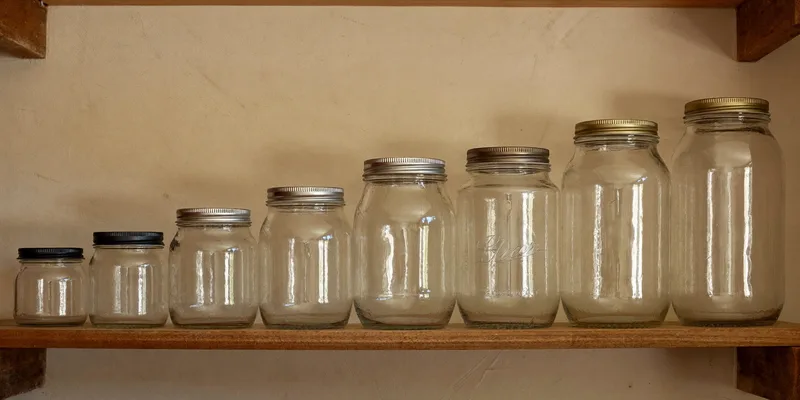
- Four ounce, half pint, twelve ounce, pint, pint and a half, quart, and half gallon are the standard capacities.
- Pints and quarts cover almost everything; half pints cover jam; four ounce jars cover gifts and strong preserves.
- Use the jar size your tested recipe specifies. The NCHFP directs against processing in a jar larger than the tested size.
- Going smaller is the safe direction: a smaller jar processed for the time given for the larger size, never the reverse.
Bottom line: the recipe picks the jar size, and the only safe deviation is downward.
Why Jar Size Is a Safety Detail
Heat has to reach the center of the jar and stay there for the tested time. A larger jar takes longer for that heat to penetrate, which is why the USDA and the NCHFP publish separate processing times for pints and quarts of the same food, and why some foods have no tested process in the larger sizes at all.
That is also why the substitution rule runs one way. The NCHFP directs using the jar size the tested recipe specifies and advises that a smaller jar may be used with the processing time given for the larger size, while scaling up to a bigger jar than the recipe covers is not safe.
The Standard Sizes
| Size | Also called | Typical contents | Notes |
|---|---|---|---|
| 4 ounce | Quarter pint, mini jar | Jam, jelly, hot sauce, gifts | Regular mouth; process per a tested recipe |
| 8 ounce | Half pint | Jam, jelly, condiments, pesto style spreads | The standard jam jar |
| 12 ounce | Jelly jar, quilted | Jelly, sauces, small gifts | Less common in tested recipes |
| 16 ounce | Pint | Salsa, pickles, fruit, vegetables | The most widely useful size |
| 24 ounce | Pint and a half | Pickle spears, tall vegetables | Check that your recipe covers it |
| 32 ounce | Quart | Tomatoes, beans, broth, whole fruit | Family sized, wide mouth is easier |
| 64 ounce | Half gallon | Ferments, dry storage, refrigerator | Very few tested canning processes |
The last row is the one that catches people out. The NCHFP has tested processes for only a very short list of foods in half gallon jars, which is why those jars are best treated as storage and fermenting vessels. Our half gallon jar article covers exactly what they can be used for.
How Many Jars Fit a Canner Load
A standard boiling water canner holds seven quarts or nine pints in a single layer, and most tested recipes are written around that yield. Half pints and four ounce jars go in larger numbers, and some canners take a double layer of small jars with a second rack.
Yield in recipes is given in pints or quarts for the same reason. When a recipe says it makes seven pints, that is one canner load, and doubling it means two loads rather than a bigger pot.
Matching Size to Household
Open a jar and it goes in the refrigerator, so the right size is the amount your household eats within a few days. For one or two people that is usually pints and half pints; a quart of green beans often ends up half wasted in a small household.
For families, quarts of tomatoes, broth, and beans save both shelf space and processing time, since one canner load holds more food. A mixed shelf with both is the practical answer for most kitchens.
Small Jars for Strong Flavors
Anything used a spoonful at a time belongs in a small jar: pepper jelly, chutney, mustard, hot sauce, and concentrated syrups. Four ounce jars keep those from sitting open in the refrigerator for a month, and they are the standard gift size. Our four ounce jar guide covers that end of the range.
Mouth Size Is a Separate Question
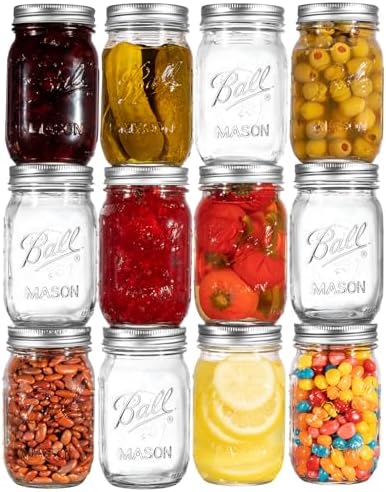
Capacity and mouth size are independent. Most capacities are sold in both regular and wide mouth, and the mouth affects packing and cleaning rather than processing. Lids are bought per mouth size, not per capacity, which is why a case of pint jars and a case of quart jars can share lids if they share the mouth.
Wide mouth is easier for anything chunky and for freezing, regular mouth is denser on a shelf. Our comparison of the two covers which foods actually change the answer.
Headspace Changes With the Recipe, Not the Jar
Headspace is the gap between the food and the rim, and it is specified by the tested recipe for each food and jar size. Too little and the contents can bubble out under the lid; too much and the air may not be driven out to form a good vacuum.
Measure it rather than judging it, using the notches on a bubble remover tool or a small ruler. It is one of the two or three things that most often separates a shelf of sealed jars from a shelf with two failures on it.
Frequently Asked Questions
Can I use quart jars when the recipe says pints? No. Processing times are tested per jar size and the NCHFP directs against using a larger jar than the tested recipe specifies, because heat takes longer to reach the center of a bigger jar.
Can I use smaller jars than the recipe says? Yes. The NCHFP allows using a smaller jar and processing for the time given for the larger size. That is the only safe direction to substitute.
How many pints fit in a water bath canner? Nine pints or seven quarts in a standard canner, in a single layer with a rack underneath. Smaller jars fit in larger numbers, and some canners handle a double layer of half pints.
What size jar is a jelly jar? Usually eight or twelve ounces, often in the quilted pattern. The pattern is decorative and the capacity is what your recipe cares about.
Are half gallon jars usable for canning? Only for the very limited set of foods the NCHFP has tested in that size. Otherwise they are excellent fermenting and dry storage jars.
Does jar size change the headspace? The recipe specifies headspace per food and jar size, so check the line for the exact size you are filling rather than carrying a number over from another recipe.
The Bottom Line
Keep pints and quarts as your working sizes, half pints for jam, and four ounce jars for the things you use by the spoonful. Let the tested recipe choose the size, remember that smaller is the only safe substitution, and buy lids by mouth rather than by capacity. Read next: how many jars to buy and which brand and whether wide mouth is worth it.