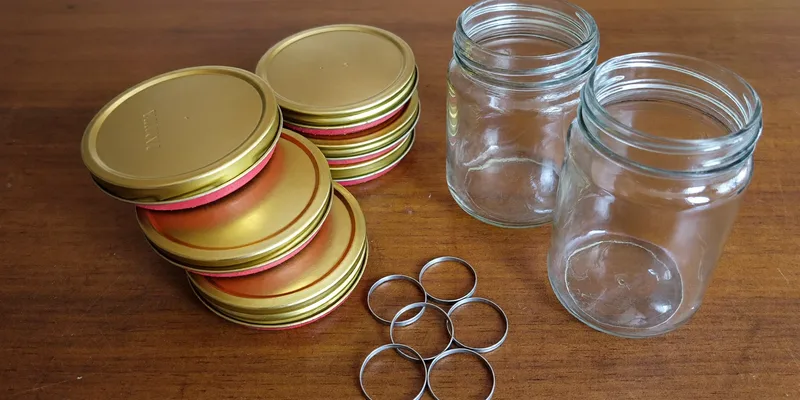
Last updated: August 23, 2026
The jar is not the part that fails. The lid is. A flat disc of coated steel with a ring of sealing compound around the underside is the only thing standing between a shelf of preserves and a shelf of compost, and it is also the cheapest item in the whole operation. That combination is why lids get bought carelessly and then blamed loudly.
Two complaints show up every single season. The first is that lids run out halfway through the harvest, when the stores are picked over. The second is that a box of unfamiliar lids produced a batch where several jars never sealed, or sealed and then let go weeks later. Both are fixable, and neither is about luck.
This article contains affiliate links. If you buy through them, we may earn a commission at no extra cost to you. Learn more.
Quick Answer
Which canning lids actually seal?
- Flat lids from the established brands, bought fresh, used once, and matched to your jar mouth size.
- The flat lid is single use per the manufacturer’s own guidance, the screw band is reusable indefinitely.
- Most seal failures come from a dirty rim, wrong headspace or an overtightened band, not from the lid itself.
- Buy a bulk box out of season, because lids are the thing you run out of, not jars.
Bottom line: new flat lids every batch, fingertip tight bands, and a clean rim under every one of them.
How a Two Piece Lid Actually Seals
The flat lid carries a ring of soft sealing compound on its underside. During processing that compound softens against the jar rim and molds itself to the exact contour of that specific piece of glass. As the jar cools, the contents contract, air is drawn out, and atmospheric pressure pulls the lid down into a vacuum seal that holds without the band.
That is why the band is not part of the seal. Its only job is to hold the flat lid in place while the jar is being processed and cooling. Once the lid has pulled down, the band is decoration, and most canners take them off before the jars go on the shelf so a failed seal is visible immediately.
Why Flat Lids Are Single Use
Ball’s own lid use and care guidance is that flat lids are single use, because the sealing compound has already been molded to one jar rim and will not reliably form to another. The bands are handwashed and reused. This is not a sales pitch, it is the physics of a compound that sets once.
Why Cheap Lids Get Blamed
Some off brand lids genuinely do underperform, usually through thin or unevenly applied sealing compound, and owners of those boxes report the same thing: a handful of jars per batch that never pull down. If a whole box behaves that way across multiple batches, the box is the problem and it is worth switching.
More often, though, the lid is taking the blame for something else in the process. A rim with a smear of jam on it, a jar filled to the wrong headspace, a band cranked down hard, or a lid stored somewhere damp long enough to spot with rust. Those four account for most of the seal failures a home canner sees, and none of them are cured by a more expensive lid.
Canning Lids by Situation
The Bulk Box You Should Buy Before the Season
Lids are the consumable, so buy them the way you buy any consumable: in quantity, ahead of time, in the mouth size you standardized on. A bulk box of regular mouth flats bought in spring costs less attention and less scrambling than three small boxes bought in August when the shelves are bare.

If Your Jars Are Wide Mouth
Wide mouth flats are a different diameter and do not interchange, which is worth repeating because it is the single most common wrong purchase in the aisle. If your quarts are wide mouth and your pints are regular, you need both boxes and you need them stored separately so nothing gets grabbed in a hurry.

Lids and Bands Together for a New Setup
If you are building a jar collection from scratch or replacing bands that have rusted, buying lids and bands as a set makes sense once. After that you only ever need flats, since bands last years if you dry them properly instead of leaving them wet in a drawer.

The Reusable Alternative
Reusable lids are a separate system with a plastic lid and a rubber gasket, applied differently from a standard flat lid and requiring you to follow the manufacturer’s instructions closely. Extension services that have addressed them, including University of Minnesota Extension, point users to the manufacturer’s directions rather than to the standard two piece method. They suit high volume canners who want to stop buying flats every year and are willing to learn a different routine.

Lid Types Compared
| Lid type | Reuse | Best for | Watch out for |
|---|---|---|---|
| Standard flat lid and band | Flat once, band many times | Everyone, all tested recipes | Storing flats somewhere damp |
| Reusable plastic lid and gasket | Many times with care | High volume canners | Different tightening routine to learn |
| One piece storage cap | Indefinitely | Dry goods, fridge, honey | Not a canning lid, no seal formed |
| Vacuum sealer jar lid | Many times | Dry goods and fridge storage | Does not replace canning, see below |
The bottom row matters more than it looks. A vacuum sealed jar is not a canned jar, and it does not make wet low acid food shelf stable. That distinction is covered properly in our jar sealing guide.
The Habits That Save More Lids Than Any Brand
Wipe every rim with a clean damp cloth before the lid goes on, even when it looks clean, and especially with anything sugary or oily. Fill to the headspace the tested recipe specifies rather than by eye. Tighten the band to fingertip tight, meaning the point where resistance starts and no further, so air can still escape during processing.
Then leave the jars alone. Do not press the lids to test them while they are cooling, and do not retighten bands after processing. Check the seals the next day by removing the band and lifting the jar gently by the lid edge.
When a Jar Does Not Seal
You have a short window to reprocess with a new lid, or you can refrigerate the jar and use it first. What you should not do is push the lid down by hand and call it sealed. Our guide to jars that did not seal walks through the causes in the order worth checking them.
Frequently Asked Questions
Can canning lids be reused? Standard flat lids, no. Ball’s use and care guidance is that the sealing compound forms to one rim and the flat lid is single use. Bands are reusable as long as they are not bent or rusted, and purpose built reusable lids are a separate system.
Why do my lids keep failing to seal? Check the rim for residue, the headspace against the recipe, and how hard the band was tightened. Those three cover most failures. A lid stored damp long enough to spot with rust is the fourth.
How many lids should I buy for a season? More than you think, because lids are single use and jars are not. Estimate the number of jars you expect to fill across the whole year and buy that many flats in one bulk box before the harvest starts.
Do off brand canning lids work? Some do and some do not, and the difference shows up as a consistent handful of failures per batch rather than an occasional one. If a box behaves that way repeatedly, stop using it rather than adjusting your method around it.
Should I leave the bands on for storage? Most canners take them off. A band left on can hold a failed lid in place so the failure goes unnoticed, and it can trap moisture against the rim and rust.
Do I need to boil the lids first? Current manufacturer guidance is to wash them in warm soapy water and keep them ready rather than boiling them, since boiling can damage the sealing compound. Follow the instructions on the box you actually bought.
The Bottom Line
Buy flat lids in bulk before the season in the mouth size you standardized on, use a new one every batch, and keep the bands you already have. Then spend your attention on the three habits that actually decide the seal: a wiped rim, the headspace the recipe calls for, and a band tightened only to fingertip tight. That combination fixes far more failed jars than switching brands ever will. Next, our canning jars guide covers what the lids go onto, and the canning supplies checklist lays out the full kit.