Last updated: August 23, 2026
Almost every canning recipe written before about 1990 opens the same way: sterilize your jars. So people boil a stockpot of jars every single time, on a August afternoon that is already too hot, and wonder why the modern books seem to skip the step. Both sets of instructions are right. They are describing different situations.
The rule that decides it is short, it comes from the National Center for Home Food Preservation, and it has nothing to do with how clean your kitchen is. It is about how long the filled jar spends in the canner. Once you know the rule, most batches you make in a summer will not need pre sterilized jars at all.
This article contains affiliate links. If you buy through them, we may earn a commission at no extra cost to you. Learn more.
Quick Answer
Do canning jars need to be sterilized?
- Only when the recipe processes the filled jars for less than ten minutes. NCHFP says jars for those short process products must be filled sterile.
- Ten minutes or longer in a boiling water canner and the jars are sterilized during processing, so pre sterilizing is unnecessary.
- Pressure canning never needs pre sterilized jars, because the process runs far above boiling.
- Jars still have to be washed in hot soapy water and kept hot until you fill them, sterile or not.
Bottom line: check the process time in your recipe first. That number, not habit, decides whether you boil the empty jars.
When Sterilizing Is Actually Required
When the filled jars will be processed for less than ten minutes. NCHFP states that all jams, jellies and pickled products processed less than ten minutes should be filled into sterile empty jars, and that pre sterilizing is unnecessary for fruits, tomatoes and pickled or fermented foods processed ten minutes or longer in a boiling water canner.
The logic is simple once it is spelled out. A jar sitting in boiling water for ten minutes or more is being sterilized right there in the canner, with the food inside it. Doing the same thing an hour earlier with an empty jar adds nothing. Short process recipes never reach that point, so the jar has to arrive sterile.
Which Recipes Fall Under Ten Minutes
Mostly jellies and some jams, where a long process would ruin the set and the color. Pickle recipes and most fruit and tomato products run longer than ten minutes and do not need the extra step. If you are working from a tested recipe, the process time is printed with it, and that number is the only thing you need to look at.
How to Sterilize Canning Jars Properly
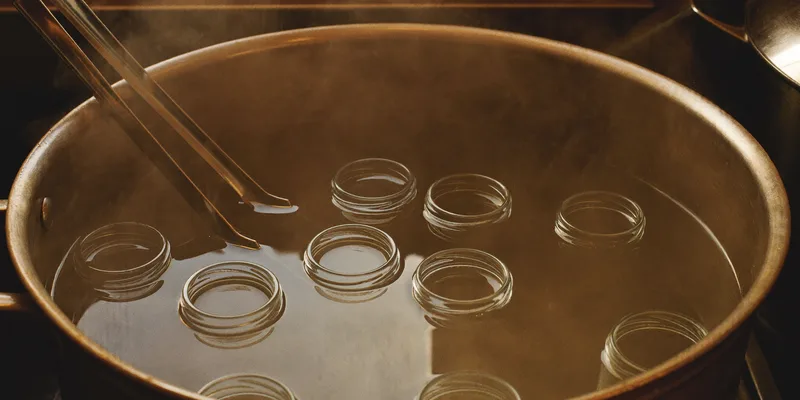
Wash the jars in hot soapy water and rinse. Stand them upright on a rack in your boiling water canner, cover with water to at least an inch above the tops, bring to a boil and hold the boil for ten minutes if you are below 1,000 feet. NCHFP adds one minute of boiling for each additional 1,000 feet of elevation.
Leave the jars in the hot water until you are ready to fill them, and lift them out one at a time with a jar lifter. A sterile jar that sits on the counter cooling and collecting kitchen air is no longer doing the job it was boiled for, and a cold jar filled with hot product is also a jar that may crack.
Why the Altitude Adjustment Matters
Water boils cooler as you climb, so the same ten minutes delivers less heat at 5,000 feet than at sea level. That is why NCHFP scales the boiling time with elevation rather than giving one fixed number. Look up your own elevation once and write it on the inside of a cupboard door, because every canning process time you use from then on depends on it.
What Does Not Sterilize a Jar
A dishwasher cycle does not sterilize canning jars, whatever the sanitize setting is called. It cleans them and it keeps them hot, which is useful, but extension guidance treats washing and sterilizing as separate steps. If your recipe calls for sterile jars, the boiling water step still has to happen.
Oven sterilizing is worse than useless. Dry heat is a poor way to transfer heat into glass, jars are not designed for it, and extension services warn about breakage and burns from handling hot dry glass. The same applies to the microwave, and to bleach solutions, neither of which appears in any tested canning procedure.
Oven Canning Is a Different Thing, and It Is Unsafe
Oven sterilizing gets confused with oven canning, which is the practice of processing filled jars in a dry oven. NCHFP and extension services are direct about this: oven canning is not a safe processing method, because dry air does not carry heat into the food the way boiling water or steam under pressure does, and the food can be badly under processed while looking finished. Our guide to what you cannot water bath can covers the same reasoning for low acid foods.
What About the Lids?
Modern flat lids do not get boiled. Ball’s current instructions tell canners to wash lids in warm soapy water and skip the simmering step that older recipes describe, and NCHFP’s position is to follow the lid manufacturer’s directions. Boiling today’s lids can soften the sealing compound rather than help it.
Screw bands need nothing more than a wash and a check for rust or dents. They are not part of the seal after the jar cools, they only hold the lid down during processing, which is why they come off for storage.
Sterile Jars by Situation
The table below turns the ten minute rule into the four cases you will actually meet in a canning session. Process times come from your tested recipe, and the sterilizing rule and altitude adjustment are the ones NCHFP publishes.
| What you are canning | Typical process | Sterile jars needed | Why |
|---|---|---|---|
| Jelly, short process jam | Under ten minutes, boiling water | Yes | Too short to sterilize the jar in the canner |
| Pickles, most fruit, tomatoes | Ten minutes or longer, boiling water | No | Jars sterilize during processing |
| Vegetables, meat, soup | Pressure canner | No | Process runs well above boiling |
| Refrigerator or freezer jam | No canner process | No, but clean and hot | Never shelf stable, stays cold |
If you are still choosing equipment, the process time you plan to use decides the pot as much as the jar. Our water bath canner guide covers the boiling water side and the pressure canner guide covers everything low acid.
Frequently Asked Questions
Do I need to sterilize jars if I am pressure canning? No. Pressure canning processes run above boiling, so the jars are sterilized during the process. Wash them in hot soapy water, keep them hot until you fill them, and put the effort into venting the canner properly instead.
Can I sterilize jars in the dishwasher? A dishwasher cleans jars and holds them hot, which is genuinely useful during a batch, but it is not a substitute for the boiling water step when a recipe calls for sterile jars. Treat washing and sterilizing as two different jobs.
How long do jars stay sterile after boiling? Only while they stay hot and out of the air, which is why NCHFP describes leaving them in the hot water until they are filled. A jar that cooled on the counter for an hour should go back into the canner before you use it for a short process recipe.
Is oven sterilizing safe? No, and it is not recommended by any extension service. Dry heat is inefficient at heating glass, jars are not made for it, and handling hot dry jars is a burn and breakage risk. Boiling water is the method the guidelines describe.
Do the lids need to be boiled or simmered? Not with current lids. Ball tells canners to wash them in warm soapy water, and NCHFP says to follow the lid manufacturer’s directions. Older recipes calling for a simmer were written for a different sealing compound.
My jars came out of storage dusty. Is a rinse enough? Wash them properly in hot soapy water and check the rims for chips while you do it, because a nick in the sealing surface is the most common reason a jar fails to seal. Chipped jars are fine for dry storage and not for canning.
The Bottom Line
Look at the process time before you fill the stockpot. Under ten minutes and NCHFP says the jars go in sterile, boiled for ten minutes below 1,000 feet plus a minute for every extra 1,000 feet. Ten minutes or more, or any pressure canning, and washing plus keeping the jars hot is all that is asked of you. Read next: our water bath canner guide if you are buying the pot, and what to do when jars do not seal, which is the problem people usually blame on sterilizing when it is something else.