Last updated: August 23, 2026
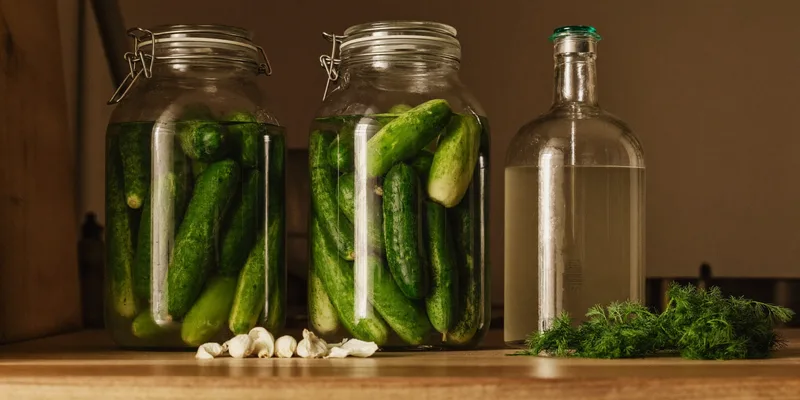
The first jar of lacto fermented pickles is a nervous project. There is no vinegar in it, nothing gets boiled, and the jar sits on your counter for weeks getting cloudy and bubbly while some part of your brain insists this is how people used to get sick. Then you taste one and understand why deli pickles taste like that and supermarket pickles do not.
The nervousness is worth respecting, though, because the salt in this recipe is not seasoning. It is the control. This page covers what the process actually is, which numbers have to come from a tested source, and the small pieces of gear that decide whether your cucumbers stay under the brine and stay crunchy.
This article contains affiliate links. If you buy through them, we may earn a commission at no extra cost to you. Learn more.
Quick Answer
How do you make lacto fermented pickles?
- Cucumbers, water and salt in a jar. No vinegar, and the sourness comes from the bacteria rather than from a bottle.
- Take the salt amount and the curing time from a tested NCHFP or extension recipe, never from a ratio you half remember.
- Everything stays under the brine. That is what weights and airlock lids are for.
- Finished pickles go in the refrigerator, or get canned using the times in the tested recipe.
Bottom line: the gear is cheap and the recipe is short, but the salt concentration comes from a tested source and does not get adjusted to taste.
What Lacto Fermentation Actually Is
Salt tolerant lactic acid bacteria, already present on the vegetables, eat the sugars in the cucumber and produce lactic acid. The acid sours the brine and preserves the pickle. Salt is what lets those bacteria win the race against the spoilage organisms that would otherwise get there first, which is why the concentration is not a preference.
Nothing is added except salt, water and whatever aromatics you like. There is no vinegar, no heat step during fermentation and no starter culture in the standard method. The bubbling you see in week one is carbon dioxide, and the cloudiness is the bacterial population doing its job rather than a sign of trouble.
Brined Pickles Versus Fresh Pack
The NCHFP separates fermented, or brined, pickles from quick process fresh pack pickles, which are the vinegar kind that take a day rather than weeks. Both are pickles and only one is fermented. If that distinction is what brought you here, our pickling versus fermenting page works through it properly.
The Salt Is the Recipe
Use a tested recipe and follow its salt amount exactly. NCHFP guidance is explicit that the salt concentration in fermented pickle recipes should not be reduced, because it is doing preservation work rather than seasoning work. A low salt fermented pickle is a different and less controlled process, not a healthier version of the same one.
Use canning or pickling salt as well. NCHFP notes that iodized table salt can darken pickles and cloud the brine, and anti caking agents in table salt add to the cloudiness. Our canning salt page covers which salts are interchangeable and which are not.
Where to Get the Numbers
The fermented dill pickle recipe in the USDA Complete Guide to Home Canning, hosted free by the National Center for Home Food Preservation, gives the exact salt, water and vinegar quantities, the jar and crock sizes and the curing time. Take the whole set from there. Mixing a salt ratio from one video with a curing time from another is how people end up with a soft, off smelling crock.
The Gear That Decides the Outcome
Very little, and each piece solves one specific failure. A vessel big enough to leave headroom, a weight to keep everything submerged, and a lid that lets gas out without letting air in. That is the whole kit, and skipping the weight is the single most common reason a first batch grows mold.
Wide mouth jars beat narrow ones here because you have to get cucumbers, weights and eventually your hand in and out. Quart and half gallon wide mouth jars cover a household batch, and a crock takes over when you are pickling by the bushel rather than by the jar.
Best vessel for a first batch
Wide mouth quart or half gallon jars give you room for whole small cucumbers plus a weight and still leave headroom for the brine to rise. Buy a few, because you will want a small test jar alongside the real one.

Best weight for keeping cucumbers under the brine
Glass fermentation weights sit inside a wide mouth jar and hold floating vegetables down. NCHFP guidance for brined pickles is to keep the vegetables one to two inches below the surface of the brine, and a weight is what makes that hold overnight. Our weights guide compares the shapes.

Best lid for a counter ferment
An airlock lid vents carbon dioxide while keeping air and fruit flies out, which removes the daily burping routine and the film that forms on an open jar. See fermentation lids for the silicone against three piece airlock comparison.

How the Process Runs
Wash the cucumbers and remove the blossom end. NCHFP guidance is to cut off and discard a slice from the blossom end, because blossoms carry an enzyme that softens pickles, and that one step does more for texture than any additive. Pack the jar, add the brine from your tested recipe, weight everything down and fit the lid.
Then it needs a stable, cool spot and patience. The USDA Complete Guide to Home Canning specifies a fermentation temperature of 70 to 75 degrees F for about three to four weeks for fermented dill pickles, with cooler rooms taking longer and warmer rooms risking soft pickles. Check daily for the first week, top up brine that has escaped, and skim any surface film.
When It Is Done
The pickles turn olive green throughout, the brine has gone sour, and the bubbling has stopped. Taste one. From there the tested recipe gives you two endings: refrigerate them, or process them in a boiling water bath using the recipe’s own times. Do not invent a processing time, and see our water bath walkthrough for the method itself.
What Goes Wrong, and Why
Almost every failure in a fermented pickle crock traces back to one of four causes, and three of them are gear or process rather than bad luck. The table is the short diagnostic list before you throw a batch away.
| What you see | Usual cause | What fixes it next time | Batch still good? |
|---|---|---|---|
| Fuzzy colored growth | Vegetables exposed above the brine | A weight, and topping up the brine | No, discard per NCHFP guidance |
| Flat white film on the surface | Kahm yeast on an open or under weighted jar | Airlock lid, keep everything submerged | Usually yes, see our kahm yeast page |
| Soft or hollow pickles | Blossom end left on, or a room that ran warm | Trim the blossom end, ferment somewhere cooler | Texture only, judge by smell |
| Cloudy brine early on | Normal lactic acid bacteria, or iodized salt | Use canning or pickling salt | Normally yes |
Mold and spoilage judgments here follow NCHFP guidance on brined pickles; when a fermented batch smells wrong or shows fuzzy growth, the guidance is to discard it rather than salvage it.
Frequently Asked Questions
Do lacto fermented pickles need vinegar? No. The sourness comes from lactic acid produced during fermentation. Some tested recipes include a small amount of vinegar for other reasons, so follow whichever recipe you are using rather than adding or removing vinegar on your own.
Can I use less salt? No. NCHFP guidance states that salt concentration in fermented pickle recipes should not be reduced, because the salt is what keeps the fermentation on the right side. If sodium is a concern, refrigerator pickles made with a tested fresh pack recipe are the better route.
My ferment is too salty. What now? Taste is subjective and the salt level is not adjustable mid batch. Rinsing finished pickles before eating them helps, and next time you can choose a different tested recipe rather than modify this one. Our brine ratio page explains where the published ratios come from.
How do I keep them crunchy? Trim the blossom end as NCHFP directs, use fresh cucumbers picked recently, keep the ferment cool, and consider a tannin source such as grape or oak leaves, which is a traditional practice. Our crunchy pickles page goes through the options, including calcium chloride.
Can I ferment pickles in the refrigerator? Fermentation slows dramatically at refrigerator temperature, so a cold ferment either takes a very long time or barely starts. Ferment at the temperature your tested recipe specifies, then move the finished jar to the refrigerator for storage.
Do I need a crock, or is a jar enough? A jar is enough for a household batch and is how most people should start. A water seal crock earns its place once you are fermenting by the gallon and the kitchen smell has become a family discussion.
The Bottom Line
Lacto fermented pickles are among the simplest preserving projects and among the least forgiving of improvised numbers. Get the salt amount, the curing time and the fermentation temperature from a tested NCHFP or extension recipe, trim the blossom ends, keep everything under the brine with a real weight, and let an airlock lid handle the gas. The gear costs very little and prevents nearly every failure. Next: pickling versus fermenting if the terminology is still fuzzy, and a starter kit if you would rather buy the pieces together.