Last updated: August 23, 2026
It is August, the cucumbers are on the counter, and the recipe says pickling salt. The store has a box labeled canning and pickling salt, a box of kosher salt, and the table salt already in the cupboard. Standing in that aisle is where most people first wonder whether the choice actually matters or whether it is tradition.
The short version is that canning salt and pickling salt are the same product under two names, and the interesting comparison is between that product and everything else you might reach for. Some of those substitutions are fine, one of them is a genuine safety problem, and a couple will simply cloud your brine.
This article contains affiliate links. If you buy through them, we may earn a commission at no extra cost to you. Learn more.
Quick Answer
What is the difference between canning salt and pickling salt?
- None. They are the same pure salt, sold under both names and often on one box as canning and pickling salt.
- The NCHFP recommends using canning or pickling salt, and notes that non caking materials in table salt can make brine cloudy.
- The NCHFP does say fermented and non fermented pickles may safely be made with either iodized or non iodized table salt.
- Flake salt is not recommended by the NCHFP because its density varies, and reduced sodium salt is not recommended in fermented pickle recipes.
Bottom line: buy the box marked canning and pickling salt, and never substitute curing salt, which is a different chemical for a different job.
One Product, Two Names on the Shelf
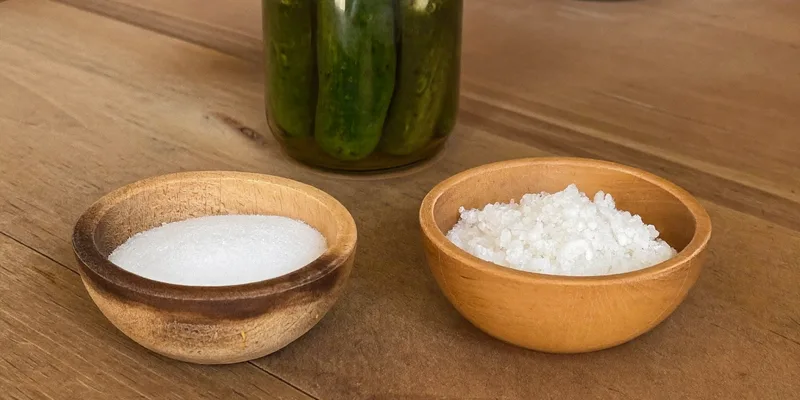
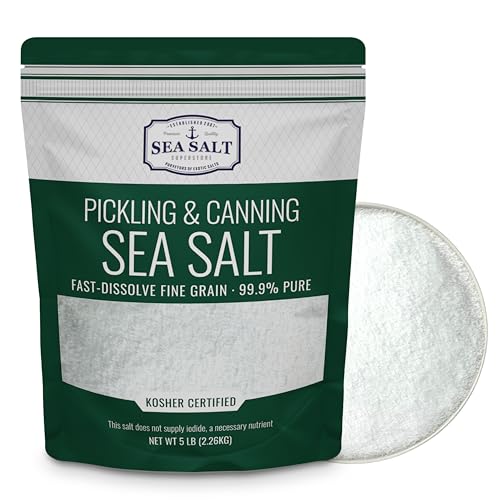
Canning salt and pickling salt are both plain sodium chloride with nothing added. No iodine, no anti caking agent, no dextrose. Manufacturers print whichever name suits the shelf, and plenty of boxes carry both words together. If a recipe asks for one and your box says the other, you already have what you need.
The fine grain is the other practical difference from table salt. Because there are no anti caking agents, the crystals dissolve readily into a brine and do not leave a haze behind, which is the reason the National Center for Home Food Preservation recommends canning or pickling salt for pickling work in the first place.

What Salt Does in the Jar, and What It Does Not
Salt plays two completely different roles depending on the recipe, and confusing them is where most bad advice starts. In canned vegetables it is a flavoring. In a fermenting crock it is part of the process itself, controlling which microbes get to grow and which do not.
In Canned Vegetables It Is Flavor
Penn State Extension states plainly that salt in canned vegetables and tomatoes is used for flavor and is not necessary to prevent spoilage, which means it can safely be left out if you are cutting sodium. What keeps a jar of green beans safe is the processing method and time, not the salt.
That is worth knowing because it removes a common worry. Forgetting the salt in a batch of canned carrots does not make the jars unsafe. Using the wrong canner for those carrots does, and that is a separate decision covered in water bath against pressure canning.
In Ferments It Is Doing Real Work
Fermented pickles and sauerkraut rely on salt to favor the lactic acid bacteria you want over the spoilage organisms you do not. This is why the NCHFP advises against using reduced sodium salt in fermented pickle recipes while allowing it in quick pickle recipes. The salt level in a ferment is part of the recipe, not a seasoning preference.
Follow a tested ferment recipe as written and measure carefully rather than adjusting to taste. The practical side of getting that right, including why weighing beats scooping, is in the sauerkraut brine guide.
Table, Kosher, Sea and Flake Salt Compared
Here is the honest ranking for pickling work, based on what the NCHFP actually says rather than on folklore. Canning and pickling salt is the recommendation. Table salt is permitted with a cosmetic caveat. Flake salt is the one type singled out as not recommended.
| Salt type | What it contains | NCHFP position for pickling | What you will notice |
|---|---|---|---|
| Canning and pickling salt | Pure sodium chloride, no additives | Recommended | Clear brine, dissolves easily |
| Table salt, iodized or plain | Iodine and anti caking agents | Safe for fermented and quick pickles | Non caking materials can cloud the brine |
| Flake salt | Sodium chloride in flake crystals | Not recommended, density varies | A measured cup is not a consistent amount |
| Reduced sodium salt | Potassium chloride blends | Quick pickles only, not ferments | Recipes may taste different than expected |
Kosher salt is the one shoppers ask about most and the one the NCHFP page does not name. Treat it as a density question: brands differ enough that a tablespoon of one is not a tablespoon of another, so weigh it or use canning salt where a recipe was written for canning salt.
The One Salt You Must Never Swap In
Curing salt is not a substitute for anything in this article. It is a nitrite containing product made for curing meats, usually dyed pink so nobody mistakes it for table salt, and it is chemically a different thing from sodium chloride. Using it in a pickle or vegetable recipe is not a flavor experiment, it is a dosing error.
The confusion is understandable because it is often sold as pink salt, a name also used for Himalayan salt, which is an entirely different product again. Read the ingredient panel rather than the front of the package, and keep curing salt in a separate part of the cupboard from your canning supplies.
Measuring Is Where Recipes Actually Go Wrong
Salt crystals vary in size and shape, so the same measuring spoon holds different amounts of salt depending on which box it came from. That is exactly the reason the NCHFP flags flake salt as unreliable for pickling, and it is why substituting one salt for another by volume introduces a variable you did not intend.
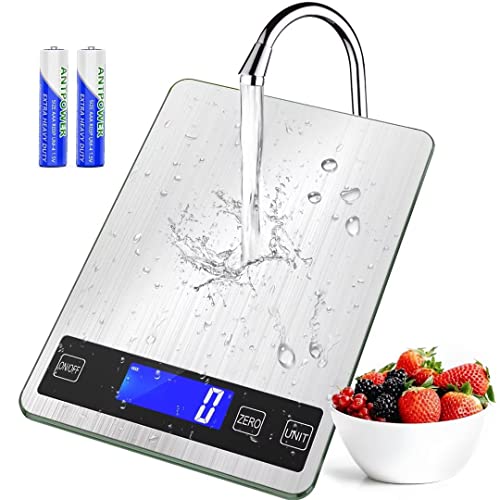
The fix is a kitchen scale. Weighing removes the crystal size problem completely, it makes a ferment repeatable from batch to batch, and it costs less than a case of jars. If you only own one measuring upgrade for preserving season, this is the one to buy, along with the basics listed in the canning supplies checklist.
Frequently Asked Questions
Can I use table salt instead of canning salt? For pickles, the NCHFP states that fermented and non fermented pickles may be safely made using either iodized or non iodized table salt, while noting that non caking materials in table salts may make the brine cloudy. The result is cosmetic rather than unsafe, but canning salt avoids it.
Is kosher salt safe for pickling? The concern with kosher salt is measurement rather than safety, because crystal size and density differ by brand. If your recipe was written in volume measures for canning salt, either weigh the kosher salt or use canning salt so the amount is the one the recipe was tested with.
Why did my brine turn cloudy? Anti caking agents in table salt are one common cause. Hard water minerals and the natural fermentation of a crock are others, and cloudiness in a ferment can be perfectly normal. If a quick pickle jar is cloudy along with an off smell or a bulging lid, do not taste it, discard it. See the canning safety page.
Can I reduce the salt in a pickle recipe? In quick pickles the NCHFP allows reduced sodium salt where the guide indicates. In fermented pickle recipes it advises against reduced sodium salt, because the salt level is part of what makes the ferment work. Do not improvise downward on a ferment.
Does canning salt expire? Plain salt does not spoil. It can absorb moisture and cake in a humid pantry, which affects scooping rather than safety. Keep it in a sealed container with the rest of your canning tools and it will outlast several seasons.
The Bottom Line
Canning salt and pickling salt are the same pure salt, and the box that says both is the one to buy. Table salt is safe for pickles according to the NCHFP and may just cloud your brine, flake salt is specifically not recommended because its density varies, and reduced sodium salt belongs in quick pickles rather than ferments. Curing salt is not a substitute for any of it. In canned vegetables salt is flavor only, in a ferment it is part of the recipe, so weigh it. Read next: how to keep pickles crisp, and choosing jars for pickling.