Last updated: August 23, 2026
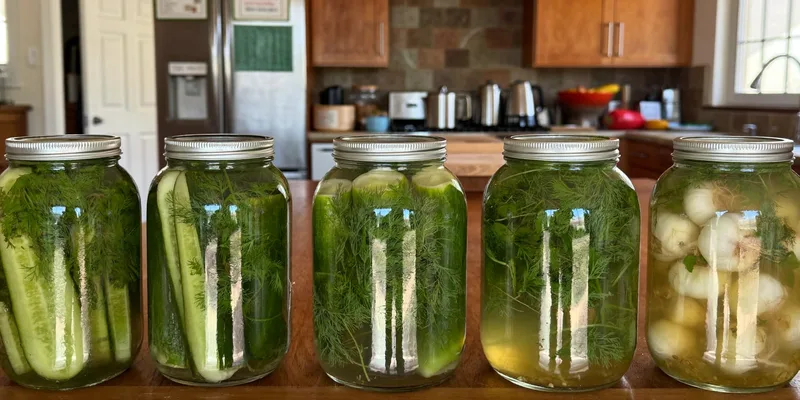
Pickling is the project that makes people rethink their jar collection. A cucumber spear is stiff and long, a whole dill pickle is longer, and both of them have to go into the jar upright with brine over the top. The pint jar that handles jam beautifully turns into a wrestling match the moment you try to stand six spears in it.
There is also the jar most beginners reach for first, the empty pickle jar from the grocery store that already looks the part. That one deserves a straight answer before anything else, because reusing it is the fastest route to a batch of broken glass in the canner.
This article contains affiliate links. If you buy through them, we may earn a commission at no extra cost to you. Learn more.
Quick Answer
Which jars should you use for pickling?
- Use actual canning jars, in wide mouth, so spears stand up and a weight or hand fits inside.
- Quarts for spears and whole cucumbers, pints for chips and relish, half pints for pickled odds and ends.
- Do not reuse commercial pickle or mayonnaise jars for processed pickles, the NCHFP advises against it for breakage and seal failure reasons.
- Refrigerator pickles are the one case where any clean lidded jar is fine, because nothing gets processed.
Bottom line: wide mouth canning jars in quart and pint, and keep the store bought jars for the fridge only.
Why Pickling Jars Are Mostly Just Wide Mouth Canning Jars
There is no separate category of pickling jar in the way there is a separate jelly jar. What sellers list as pickling jars are almost always standard mason jars in wide mouth, usually quarts, sometimes with a taller straight sided profile. The pickling part is about the shape of the opening and the height of the jar, not a different kind of glass.
The wide mouth matters more here than in any other canning job. Packing spears tightly is what keeps them under the brine, and you cannot pack tightly through a narrow rim without bruising the cucumber on the way in. A wide rim also lets you fit a hand or a weight in to push floaters down before the lid goes on.
Why Not the Store Bought Pickle Jar
Because it is the wrong glass with the wrong rim. The National Center for Home Food Preservation advises against using commercial mayonnaise style jars for pressure canning because of excessive breakage, and against commercial jars whose mouths will not take a two piece canning lid for canning any food at home.
Two things go wrong in practice. The glass is not tempered to the standard home canning jars are made to, so it is more likely to crack under the temperature swings of a canner. And the rim is often just different enough in diameter and finish that a canning lid appears to fit and then fails to hold a seal, which you may not discover for weeks.
The One Exception
Refrigerator pickles. If the jar never goes near heat and the pickles live in the fridge and get eaten within weeks, any clean jar with a lid will do the job, including the one the store bought pickles came in. Nothing about that method depends on a sealing surface, so the objection does not apply.
Pickling Jars by What You Are Putting Up
Spears and Whole Cucumbers
Wide mouth quarts are the standard here and the reason most pickling kits are built around them. A quart is tall enough to stand a trimmed spear upright with headspace above it, and wide enough to pack the jar full without forcing. If you grow your own cucumbers and pick them small, this is the size you will use the most.

Chips, Relish and Small Batches
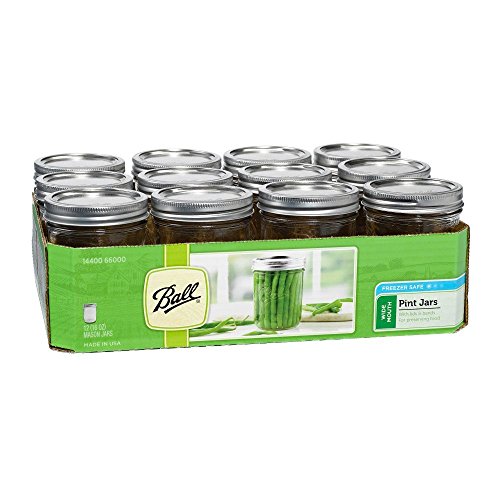
Pints are the practical size for sliced pickles, bread and butter chips, relish and pickled onions, all of which get used up faster than a quart lasts once opened. Wide mouth pints also stack better in a fridge door than quarts do, which matters for the jars in rotation.
Giardiniera, Pickled Eggs and Gifting Jars
For mixed vegetable pickles and anything you plan to give away, a squatter wide mouth jar in a pint or twenty four ounce size shows the contents off better and is easier to fork things out of. These are also the jars people reach for when pickling eggs, beets or garlic, where the pieces are round and awkward through a narrow rim.

Keeping Everything Under the Brine
Floating vegetables are the most common complaint in a pickling batch, and glass fermentation weights are the standard fix for fermented pickles. They drop through a wide mouth rim, sit on the vegetables and hold them below the brine line where they belong. For a fresh pack vinegar pickle you solve the same problem by packing tightly rather than with a weight.

Which Jar Size for Which Pickle
| Jar | What it fits | Mouth | Notes |
|---|---|---|---|
| Quart (32 oz) | Spears, whole small cucumbers, dilly beans | Wide | The default pickling jar |
| Pint (16 oz) | Chips, relish, pickled onions, jalapenos | Wide or regular | Best size for jars in daily use |
| Half pint (8 oz) | Pickled garlic, condiments, gift jars | Regular | Small enough to finish quickly |
| Half gallon (64 oz) | Refrigerator and fermented pickles only | Wide | No tested canning process in this size |
The half gallon row follows the USDA and NCHFP position that the only tested half gallon processes are for apple juice and grape juice, which is covered in our half gallon jar guide.
What Else Decides Whether the Pickles Are Any Good
The jar gets the pickles into storage, but crispness comes from what happens before the lid goes on. Trimming the blossom end, keeping the cucumbers cold until they go in the jar, and not overprocessing are the levers that matter most, and they matter more than any jar choice.
If your pickles keep coming out soft, that is a solvable problem with its own set of causes. Our guide to how to make crunchy pickles works through them in order, and pickle crisp and its alternatives covers the calcium chloride question that comes up every August.
Lids Are Still Single Use
Pickling brine is acidic and hard on the sealing compound, which is one more reason the flat lids are single use. Ball’s own use and care guidance is that the flat lid seals once and the band is the reusable part. Reaching for last year’s lids to save a trip is the most expensive shortcut in the pickling season.
Frequently Asked Questions
Can I reuse store bought pickle jars for canning? Not for processed pickles. The NCHFP advises against commercial mayonnaise style jars because of breakage, and against any commercial jar whose mouth will not take a two piece canning lid. Refrigerator pickles in those jars are fine.
What size jar is best for dill pickle spears? A wide mouth quart. It is tall enough for a trimmed spear to stand upright with headspace left over, and wide enough to pack the jar without bruising the cucumbers.
Why do my pickles float above the brine? Loose packing, mostly. Pack the jar tightly enough that the pieces support each other, and for fermented pickles use a glass weight to hold everything below the brine line.
Do I need special pickling jars or will regular mason jars work? Regular mason jars are what pickling jars are. Buy wide mouth in quart and pint and you have the whole range covered.
Why do my pickles go soft in the jar? Usually the blossom end was left on, the cucumbers sat warm too long, or the batch was overprocessed. Jar choice is not the cause, and our crunchy pickles guide works through the real ones.
Can I pickle in half gallon jars? Only as refrigerator or fermented pickles. There is no tested canning process for pickles in that size, since the USDA and NCHFP publish half gallon processes only for apple juice and grape juice.
The Bottom Line
Pickling jars are wide mouth canning jars, and the buying decision is mostly about size: quarts for spears, pints for chips and relish, half pints for the odds and ends. Skip the recycled grocery store jars for anything that goes in a canner, keep them for the fridge, and buy new flat lids every season because brine is hard on a sealing compound. Next up, our water bath canner guide covers the pot the jars go into, and the canning tools guide lists the short set of utensils that actually earn drawer space.