Last updated: August 23, 2026
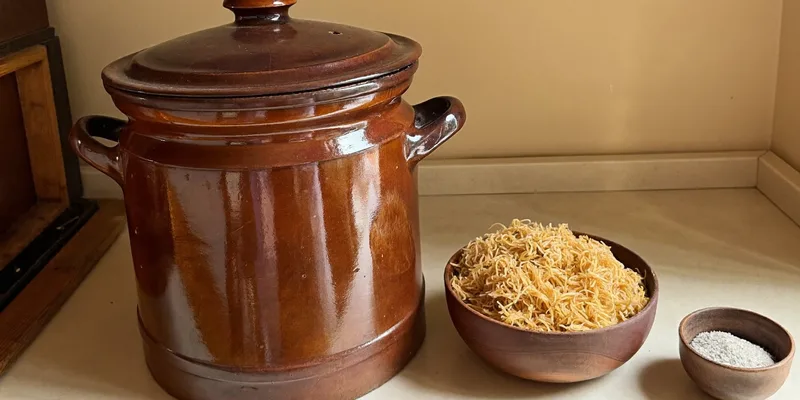
Most people meet their first crock through their nose. A jar of sauerkraut on the counter with a loose lid fills a kitchen with a smell that family members will comment on daily for three weeks, and by day ten somebody has suggested the garage. That is the problem a water seal crock was invented to solve, decades before anybody put an airlock on a mason jar.
The second reason people move to a crock is volume. A head of cabbage fits in a jar. Half a row of cabbage from the garden does not, and neither does a bushel of cucumbers in August. Once you are fermenting by the gallon rather than by the quart, stoneware stops being a nostalgia purchase and starts being the practical container. This guide covers the two crock styles, how to size one, and the details that decide whether your batch stays under the brine.
This article contains affiliate links. If you buy through them, we may earn a commission at no extra cost to you. Learn more.
Quick Answer
Which fermentation crock should you buy?
- Water seal, if smell or fruit flies bother you. The water filled moat lets gas out and keeps air out.
- Open crock, if you want the traditional route and do not mind a cloth, a plate and a weight.
- Size to your harvest, not your hopes. A crock you fill twice a year is a heavy ornament.
- Weights are not optional. Anything above the brine is where trouble starts.
Bottom line: a mid size water seal crock with its own stone weights handles most household batches and ends the kitchen smell argument.
What a Water Seal Crock Actually Does
It gives carbon dioxide a one way exit. The rim of the crock has a channel, you fill it with water, and the lid sits down into it. Fermentation gas bubbles out through the water, and nothing comes back in: no air, no dust, no fruit flies, and very little smell in the room. It is a mechanical airlock made of clay.
The maintenance is one thing and one thing only: keep the channel topped up. Water evaporates, and an empty moat is just a loose lid. Owners who ferment in a warm kitchen check it every few days, and many fill the channel with brine rather than plain water so that a splash into the crock does not dilute the batch.
The Open Crock, Honestly
An open crock is a straight sided stoneware pot with a lid that just rests on top. It ferments perfectly well, and it is what generations of kitchens used, but it needs a plate or a follower, a weight, and usually a cloth over the top. You also get the smell, and you will skim the surface more often. It is the cheaper, more hands on route rather than an inferior one.
Sizing a Crock Without Regretting It
Match the crock to what you actually put up in one session. A small crock in the two liter class handles a head or two of cabbage, a batch of kimchi or a jar’s worth of pickles, and it lives on a counter without dominating it. That size covers most households and gets used far more often than a big one.
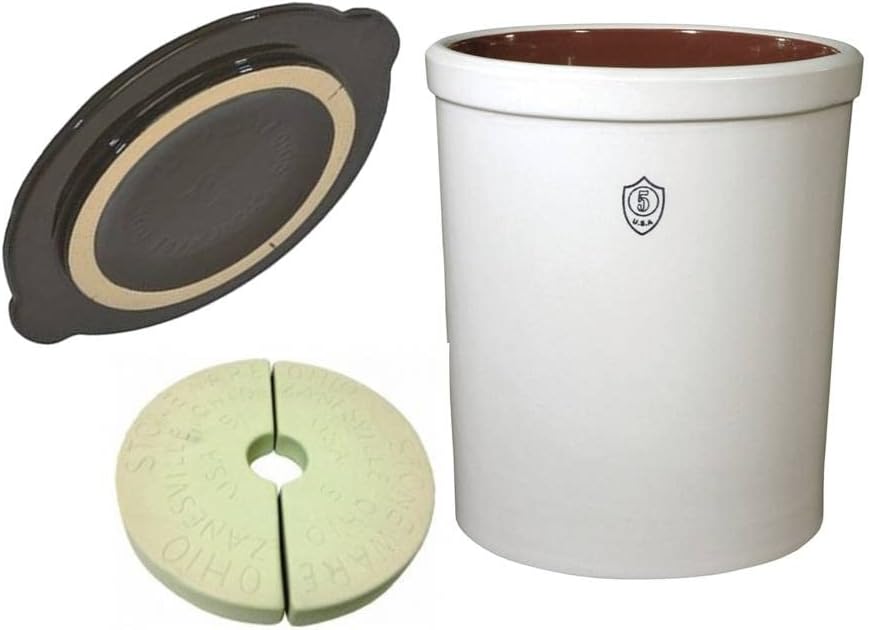
Gallon scale crocks exist for gardeners and they earn their keep in a real harvest, but consider the weight. A five gallon stoneware crock full of cabbage and brine is a two person lift, and it needs somewhere cool to sit for weeks. Buy the big one only when you have already outgrown the small one.
Leave Room for the Brine to Rise
Vegetables release liquid and the level climbs during the first days. Pack to somewhere short of the rim rather than to the top, or you will find brine running down the outside of the crock and across the counter. Whatever the crock’s stated capacity, treat the usable volume as less than the number on the box.
Weights, Followers and Keeping Everything Submerged
Everything above the brine is exposed to air, and exposed vegetables are where mold gets its foothold. Most water seal crocks ship with two half moon stone weights that sit on top of the packed vegetables; open crocks generally need a plate or a wooden follower plus something heavy on it.
Cabbage floats stubbornly, and shredded vegetables float worse than whole ones. If the supplied stones are not quite enough, add a second layer or a whole outer cabbage leaf tucked under them as a cap. Our guide to fermentation weights covers the options for both crocks and jars.

Crock, Jar or Kit
You do not need a crock to ferment. A wide mouth jar with an airlock lid does the same job at a smaller scale, for far less money and far less shelf space. What the crock buys you is volume, thermal mass and a genuinely effective seal without plastic parts. The table sorts the three routes.
| Vessel | How it seals | Batch size it suits | Trade off |
|---|---|---|---|
| Water seal crock | Water filled channel under the lid | One head of cabbage up to a garden row | Heavy, needs the moat topped up |
| Open crock | Loose lid, plate and weight | Traditional large batches | Smell, skimming, more attention |
| Mason jar with airlock lid | Silicone or plastic airlock | Small test batches | Limited volume, plastic parts wear |
| Fermentation kit | Lids plus weights for jars you own | Beginners trying several ferments | Still jar scale |
If you are starting out, our guide to a jar based fermentation kit is the cheaper first step, and airlock lids covers the hardware that turns jars you already own into fermenters.
Glaze, Care and the Antique Question
Buy a crock made and sold for food fermentation, with a food safe, lead free glaze stated by the maker. Established stoneware manufacturers say so plainly in their product information, and that is the assurance you want on a vessel holding acidic brine for weeks at a time.
Decorative and antique crocks are a different matter. An old crock of unknown origin may carry a glaze that was never intended for food, and there is no way to tell by looking. Use those for utensils and umbrellas. For care, hand wash with hot water, go easy on strongly scented soap, dry fully before storing, and avoid pouring boiling water into a cold crock.
Frequently Asked Questions
My kitchen smells like the ferment. Will a crock fix that? A water seal crock largely does. The lid sits in a water filled channel, so gas escapes through the water and the smell stays in the crock rather than in the room. Keep the channel topped up, because an evaporated moat is just a loose lid and the smell comes straight back.
How big a crock do I need for a large batch? Think in terms of what you process in one session and leave room for the brine to rise. Gallon scale stoneware handles a serious garden harvest, but a full one is extremely heavy and needs a cool spot to sit for weeks. Most households are better served by a smaller crock used more often.
Do I still need weights if the crock has a water seal? Yes. The seal keeps air out of the crock, but it does nothing about vegetables floating above the brine inside it. Everything has to stay submerged, which is what the stone weights are for.
What salt ratio should I use? Follow a tested recipe rather than a guess. NCHFP and university extension services publish salt ratios for sauerkraut and brined pickles, and getting that ratio right is what keeps a ferment on the safe side. Our page on sauerkraut brine points to the source tables.
There is a white film on the surface. Is the batch ruined? Probably not. A flat, white, wrinkly film is usually kahm yeast, which is harmless if unpleasant, while fuzzy colored growth is mold and a different matter. Our guide to telling the two apart walks through what to look for before you throw anything away.
The Bottom Line
A water seal crock buys you a quiet kitchen and a batch that is not exposed to the room, an open crock does the same job with more attention and a cloth, and a jar with an airlock is where most people should start. Size to what you really ferment, keep the moat topped up, keep everything under the brine with proper weights, and buy stoneware that states a food safe lead free glaze. Next steps: weights that actually hold vegetables down, and a starter kit if you want to test the habit before committing to stoneware.