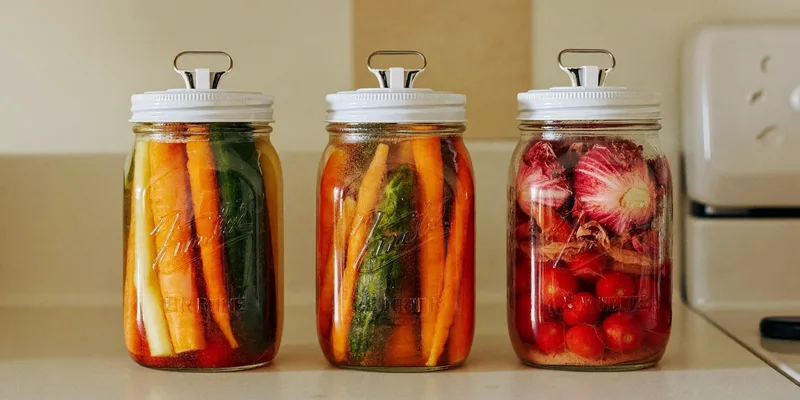
Last updated: August 23, 2026
Every January somebody posts a photo of a kitchen counter with a pink puddle spreading out from under a jar of fermenting beets. The lid was screwed on tight, the ferment got lively on day two, and the gas had exactly one way out. Sometimes it pushes brine past the threads. Occasionally, with a really vigorous batch in a sealed jar, it pops the ring.
The opposite setup has its own failure. Leave the jar under a cloth and the gas escapes fine, but fruit flies find it, and the brine surface picks up a film faster because air keeps arriving. A fermentation lid is the piece that lets carbon dioxide out without letting air and insects in, and there are four honest ways to do that job.
This article contains affiliate links. If you buy through them, we may earn a commission at no extra cost to you. Learn more.
Quick Answer
Which fermentation lid should you buy?
- Silicone one way valve lids are the lowest maintenance option and the easiest to clean, with nothing to fill or top up.
- Three piece water airlocks are the traditional choice and let you see bubbling, but the water in them needs checking.
- Match the lid to your jar mouth. Wide mouth and regular mouth versions are different threads and do not swap.
- A lid does not hold food under the brine. That is a separate piece of gear.
Bottom line: valve lids for set and forget, water airlocks if you like watching the bubbles, and buy them in the mouth size your jars already are.
What a Fermentation Lid Is Actually For
One job, two directions. A vegetable ferment produces carbon dioxide, and that gas has to leave or pressure builds inside the jar. At the same time, fresh air arriving at the brine surface feeds the wild yeasts that form a film, and an open jar is an invitation to fruit flies. A fermentation lid vents one way and blocks the other.
NCHFP makes the same point in plainer terms in its fermenting instructions, noting that covering the container helps prevent contamination from insects and molds while the vegetables ferment. The gear on sale is a tidier version of the towel over the crock, with the pressure relief built in.
Why a Sealed Canning Lid Is the Wrong Tool
A two piece canning lid is designed to hold a vacuum after processing, which is the opposite of what a fermenting jar needs. Screwed down on an active ferment it traps gas, and the pressure either forces brine out past the seal or bulges the lid. If you have no fermentation lid at hand, a band left finger tight is safer than one torqued down.
Silicone Valve Lids
These are a one piece silicone cap with a small nipple or slit that opens under internal pressure and closes again. There is no water to top up, nothing to fall over, and they go in the dishwasher. For most people fermenting a few mason jars of kraut and pickles at a time, this is the lid that gets used because it is the lid with no upkeep.
The trade is that you cannot read the ferment from across the kitchen. A water airlock bubbles visibly and tells you the batch is alive; a valve lid just quietly does its job. Owners also report that a valve occasionally seals itself shut if brine dries in it, so a rinse between batches matters more than with a hard airlock.

Three Piece Water Airlocks
The traditional setup: a lid with a grommet, a plastic airlock, and a little water in the airlock chamber. Gas bubbles out through the water, air cannot get back in, and you get a visible readout of how the fermentation is going. Brewers have used the same part for decades and they are cheap to replace.
Two practical notes. The water evaporates over a long ferment and needs topping up, and a knocked jar can siphon airlock water back into the brine, which is why some people fill the airlock with brine rather than plain water. They are also taller than a valve lid, so a shelf that fits your jars may not fit your jars plus airlocks.

All in One Lid and Extractor Systems
Some kits combine the lid, the valve and a pump that pulls the initial air out of the headspace, so the jar starts closer to oxygen free instead of getting there on its own. The appeal is a faster start to the anaerobic stage and less surface film in the first days, which is when film is most likely to appear.
The honest caveat is that these are proprietary systems. The lid, the weight and often the jar diameter are matched, so replacing a torn gasket means going back to the same brand. If you like one system and intend to stay in it, that is fine. If you want interchangeable parts, a plain valve lid is the safer purchase.

Lids for Crocks and Large Batches
A water seal crock does the same thing with a moat instead of a lid. The rim holds a channel of water, the lid sits in it, and gas escapes under the lid edge while air cannot travel back through the water. There is nothing to buy for the crock itself, but the water moat needs topping up over a long ferment for the same reason an airlock does.
If you are running a crock and mason jars side by side, keep spare grommets and a spare airlock for the jars, because those are the parts that get lost. Our fermentation crock guide goes through the open versus water seal choice in more detail.

Comparing the Lid Types
| Lid type | Upkeep | Best for | Watch out for |
|---|---|---|---|
| Silicone valve | Rinse between batches | Everyday mason jar ferments | No visible bubbling; valve can gum up if not rinsed |
| Three piece water airlock | Top up the water | Long ferments you want to monitor | Height on a shelf; water can siphon back if knocked |
| All in one system with pump | Brand specific parts | People who want a matched kit | Gaskets and weights tie you to one brand |
| Water seal crock rim | Top up the moat | Large single batches | Dries out if the room is warm and the ferment is long |
Every option in this table does the same thing: vent gas, block air. The differences are upkeep and how much the setup tells you while it works.
Fitting, Sizing and What Lids Do Not Do
Check the mouth size before anything else. Wide mouth and regular mouth mason lids are different diameters and different threads, and a set of the wrong ones is the most common return in this category. If your jars are mixed, buy the size you have most of and standardize over time.
Then be clear about the division of labor. A lid manages gas and keeps insects out. It does not hold cabbage under the brine, and no lid design does. That is the weight’s job, and skipping it is why a jar with a perfectly good airlock still grows something on top. Our fermentation weights guide covers that half.
Gaskets Are the Part That Wears
Silicone gaskets and grommets take the abuse: they stretch, they pick up smells from garlic ferments, and eventually they stop sealing. Buying a small bag of spares with your first set costs almost nothing and saves a batch later. Wash them separately rather than trusting the dishwasher to reach inside a grommet.
Frequently Asked Questions
My fermenting jars keep overflowing and leaking brine, what is wrong? Usually too full, sometimes too warm, and often a sealed lid with nowhere for gas to go. Leave real headspace above the brine, use a venting lid instead of a tight canning lid, and stand the jars on a tray for the first lively days.
How do I stop fruit flies getting into my ferment? Close the jar with a valve lid or an airlock rather than a cloth. Fruit flies are drawn to the smell and can lay eggs at the surface of an open ferment, so a proper cover is both the prevention and the cure. Wipe brine off the outside of the jar too, since that is what attracts them to the shelf.
Do I need an airlock at all, or can I just burp the jar? Burping works if you are around to do it. The risk is forgetting for a day during the vigorous phase and finding brine on the shelf. An airlock or valve lid removes the reminder from the equation.
Can I use a regular canning lid for fermenting? Not screwed down. It is designed to hold a vacuum, not to vent gas, so pressure builds and finds a way out through the seal. A band left finger tight is a workable stopgap.
Should I fill the airlock with water or brine? Brine is the safer choice, because if the airlock siphons back into the jar you are adding salt water rather than plain water to your ferment. Either way, check the level on a long batch.
Do fermentation lids fit any mason jar? They fit the mouth size they are sold for. Wide mouth and regular mouth are not interchangeable, and a few off brand jars have slightly different threads, so check the diameter rather than assuming.
The Bottom Line
A fermentation lid is a cheap part that prevents two annoying problems: gas with nowhere to go, and air and insects arriving at the brine. Silicone valve lids win on upkeep, three piece airlocks win on visibility, and all in one systems are fine as long as you accept being tied to one brand for replacement parts. Buy for the jar mouth you already own, keep spare gaskets, and remember the lid does nothing about floating cabbage. For that, see the fermentation weights guide, and if you are starting from zero the fermentation kit guide lists what a sensible first set contains.