Last updated: August 23, 2026
You dug forty pounds of potatoes in September and by Thanksgiving half of them have sprouted, one corner of the sack has gone soft, and a few have turned green where the light hit them. Nothing about that is bad luck. Potatoes are alive after harvest, and where you put them decides whether they last through winter or turn into a compost run in eight weeks.
This is a storage problem before it is a preservation problem. Get the curing and the location right and a good crop keeps for months with no equipment at all. Get them wrong and no bin, bag or gadget will save them. Below is what the extension services actually specify, what that means in a normal house with no root cellar, and where a dehydrator picks up the ones you will not get through in time.
This article contains affiliate links. If you buy through them, we may earn a commission at no extra cost to you. Learn more.
Quick Answer
How should you store potatoes?
- Cure them first in the dark, then move them somewhere cold, humid and completely dark.
- Iowa State University Extension gives curing at 50 to 60 degrees F and 85 to 90 percent relative humidity for 2 weeks, then storage at 40 degrees F and 90 to 95 percent humidity, for a storage life of 5 to 8 months.
- Do not wash them before storing, and do not keep them next to apples or other ripening fruit.
- Light causes greening, so a ventilated bin in a dark corner beats an open basket on the counter.
Bottom line: dark, cold and humid, with air moving around the tubers. Anything you buy is about holding those three conditions, not replacing them.
Cure First, Store Second
Freshly dug potatoes have thin skins and small nicks from the fork. Curing lets the skin thicken and the wounds seal, which is what stops rot from spreading through a whole crate later. Iowa State University Extension lists curing for potatoes at 50 to 60 degrees F with 85 to 90 percent relative humidity for 2 weeks before they go into long term storage.
Do this in the dark, spread out in a single layer if you have the room, with air able to reach all sides. A garage floor in early autumn is often close enough. Brush off loose soil but do not wash, because water on the skin during curing is exactly what you are trying to avoid.
Store Bought Potatoes Skip This Step
Bagged supermarket potatoes have already been cured and often treated to slow sprouting, so they go straight into storage conditions. The rest of this page still applies to them, particularly the light rule and the ethylene rule, which is where most kitchen storage goes wrong.
The Three Conditions That Matter
Cold, humid and dark. Iowa State University Extension puts long term potato storage at 40 degrees F with 90 to 95 percent relative humidity, giving a storage life of 5 to 8 months. Most homes have none of those conditions in the kitchen, which is why the pantry cupboard next to the oven is the worst place in the house for a sack of potatoes.
Humidity is the one people forget. Too dry and the tubers shrivel and go rubbery. Too wet and they rot. An unheated basement, a cold entryway or an insulated garage that stays above freezing usually lands closer to the target than anywhere upstairs.
Why Not the Refrigerator
A domestic fridge runs colder than the recommended storage temperature and it is dry. At those temperatures potato starch converts toward sugar, which changes both the flavor and the way the potato browns when you cook it. That conversion is the reason storage recommendations sit at 40 degrees F rather than in the fridge range, and Iowa State University Extension separates the two clearly in its winter storage guidance.
What Not to Store Them With
Ripening fruit is the problem. Iowa State University Extension is explicit: do not store potatoes with apples or other fruit, because ripening fruit gives off ethylene gas which promotes sprouting of the tubers. That single mistake accounts for a lot of February sprouting in otherwise well kept crops.
Onions are the other classic pairing to avoid, for a different reason. Onions want low humidity and potatoes want high humidity, so a bin that suits one will actively harm the other. Keep them in separate containers, ideally on separate shelves, and read our guide to storing onions for the conditions onions actually need.
Bins, Sacks and What Actually Helps
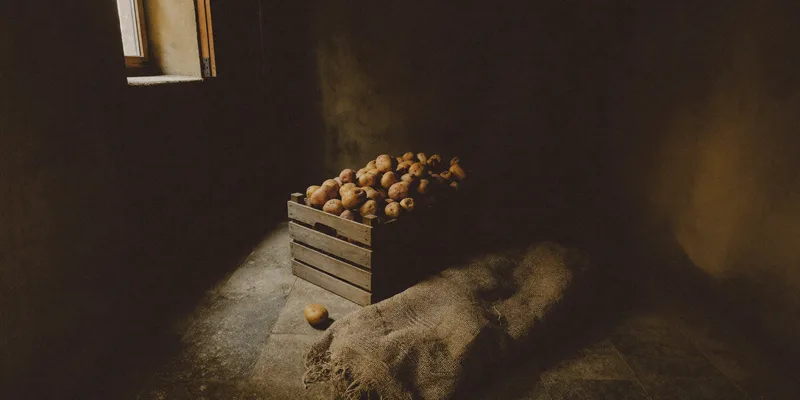
The container has one job: block light while letting air move. A ventilated wooden crate, a slatted bin, a burlap sack or a paper bag with the top folded over all do it. A sealed plastic tub does not, because trapped moisture and no airflow is how one soft potato becomes a whole crate of them.
If you are storing a real harvest rather than a shopping bag, a stackable ventilated bin is worth the shelf space, because it keeps layers shallow enough that you can see problems early. Deep piles hide the one rotting tuber until it has taken its neighbors with it.

Measure Before You Buy Anything
The cheapest useful thing you can add is a thermometer with a humidity reading, left in the storage spot for a week. Most people guess their basement corner wrong by a wide margin in both directions, and a reading tells you whether you need a colder spot, a damp cloth over the crate, or nothing at all.

Green, Sprouted or Soft: What to Do
Green skin means light exposure, and greening is a signal that solanine has developed in that tissue. Cut the green parts away generously, and if a potato is green throughout or tastes bitter, throw it out rather than trying to salvage it. This is not a cosmetic issue.
Sprouts on an otherwise firm potato are a quality problem rather than a safety one, so rub them off and use those first. A potato that has gone soft, weepy or smells sour is finished. The table below is the quick sort.
| What you see | What caused it | What to do | How to prevent it |
|---|---|---|---|
| Green patches on the skin | Light exposure in storage | Cut away generously, discard if green throughout or bitter | Full darkness, opaque bin |
| Long white sprouts | Too warm, or ethylene from nearby fruit | Rub off and use those potatoes first | Colder spot, no fruit nearby |
| Shriveled and rubbery | Humidity too low | Still usable, cook soon | Raise humidity, cover the crate loosely |
| Soft, weeping, sour smell | Rot spreading from a damaged tuber | Discard, and check the whole layer | Cure properly, keep layers shallow |
When Storage Runs Out, Preserve Instead
Even a good crop hits a point where the remaining potatoes are sprouting faster than you can eat them. That is the moment to preserve rather than to buy another bin. Dehydrating turns them into slices, dice or hash browns that store on a shelf for far longer than the fresh tubers ever would.
Potatoes are a vegetable that needs blanching before drying, and the result stores best in sealed jars or mylar with the air pulled out. Our walkthrough on dehydrating hash browns covers the prep, and if you do not have a machine yet, the food dehydrator buying guide explains which capacity actually suits a garden harvest rather than a single tray of apple rings.
Frequently Asked Questions
How long do potatoes last in storage? Iowa State University Extension gives a storage life of 5 to 8 months for potatoes held at 40 degrees F and 90 to 95 percent relative humidity after curing. Warmer or drier than that and you should expect considerably less.
Should I wash potatoes before storing them? No. Brush off loose soil and leave the skin dry. Water on the skin during curing and storage encourages rot, and the dirt is easier to deal with at the sink later.
Can I store potatoes and onions in the same bin? No, and it is one of the most common mistakes. Potatoes want high humidity and onions want low humidity, so the conditions that keep one in good shape spoil the other.
Why do my potatoes sprout so quickly? Usually the spot is too warm, or there is ripening fruit nearby. Iowa State University Extension warns that ethylene gas from apples and other fruit promotes sprouting of tubers, so separate them.
Is a green potato dangerous? Green tissue indicates solanine development. Cut it away generously, and discard the potato entirely if it is green throughout or tastes bitter. Do not try to cook the bitterness out.
What is the best container for potatoes? Anything opaque and ventilated. A slatted crate, burlap sack or paper bag all work. Sealed plastic containers trap moisture and turn one bad potato into a bad layer.
How long do potatoes last in a warm pantry? Far less than in proper cold storage. The Iowa State figure of 5 to 8 months assumes 40 degrees F and high humidity, and a kitchen pantry is nowhere near either. In a warm cupboard the potatoes tell you the time is up rather than the calendar does: sprouting, softening and a wrinkling skin. Buy smaller amounts and keep the bin dark and ventilated.
The Bottom Line
Cure the crop, then put it somewhere cold, humid and completely dark, keep it away from ripening fruit, and check the layers now and then. The gear that helps is a ventilated bin and a cheap thermometer with a humidity reading, not a specialty appliance. For the potatoes you will not eat in time, move to preservation: our food dehydrator guide and the airtight container guide cover the two halves of that job.