Last updated: August 23, 2026
Almost everyone starts with sauerkraut, and almost everyone then stalls. The cabbage worked, the jar is on the counter, and the obvious next question is what else goes in there. The internet answers with a hundred recipes and no map, so people ferment cabbage four more times and call it a hobby.
This page is the map. It groups what ferments well, says what each group needs from your equipment, and points at the detailed method where we have one. There is also an honest section on foods that are technically ferments but not home projects, because half the searches in this area are really the question of whether something already is fermented.
This article contains affiliate links. If you buy through them, we may earn a commission at no extra cost to you. Learn more.
Quick Answer
What foods can you ferment at home?
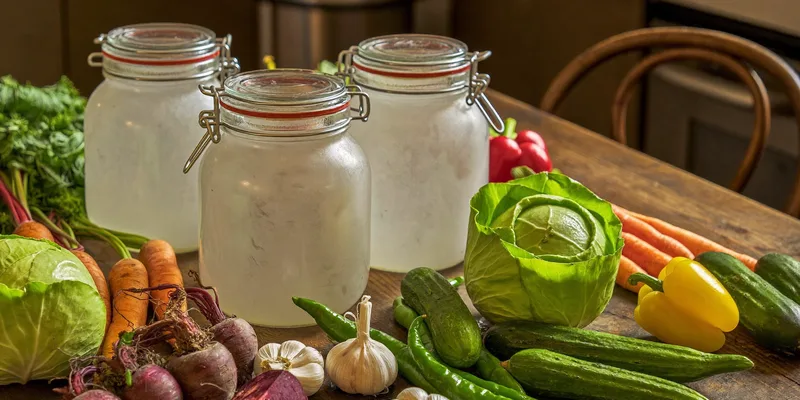
- Firm vegetables are the core: cabbage, cucumbers, carrots, beets, peppers, radishes, green beans.
- Condiments are the highest value per jar: hot sauce, salsa, garlic honey, mustard.
- Drinks and cultured dairy need a starter culture rather than just salt.
- Take salt amounts and curing times from tested NCHFP or extension recipes, not from a ratio you remember.
Bottom line: dense, low sugar vegetables in a salt brine are the reliable category, and the same jar, weight and airlock lid handles nearly all of them.
The Pattern Behind What Ferments Well
Density and sugar decide most of it. Firm vegetables hold their structure through weeks in brine and carry enough sugar for the bacteria to work with, which is why cabbage, cucumbers, carrots and beets are the classics. Soft, watery or very sweet produce turns to mush or runs away into alcohol territory instead.
The second pattern is the culture. Vegetables carry their own lactic acid bacteria, so salt and time are enough. Kombucha, kefir, yogurt and sourdough all need something added, whether that is a scoby, grains, a culture or a starter, and that changes both the shopping list and the routine.
The Rule That Applies to All of Them
Everything stays under the brine. Exposed vegetables are where mold gets a foothold, and NCHFP guidance for brined pickles is to keep the vegetables one to two inches below the surface of the brine. A weight is the cheapest insurance in this entire hobby.
Vegetables: The Core Category
This is where a fermenting habit lives. Cabbage for sauerkraut and kimchi, cucumbers for sour pickles, carrots and green beans as easy first batches, beets for something earthier, radishes and turnips for a fast one, and peppers for sauce. Dense vegetables, salt, patience, and very little else.
Our method pages cover the ones with real technique behind them: fermenting vegetables in general, sauerkraut and its brine ratio, lacto fermented pickles, fermented beets and fermented hot sauce.
Best kit for working through the list
Airlock lids plus weights sized to jars you already own turn a cabinet of mason jars into a fermenting setup, which is far cheaper than buying dedicated vessels for each project. Our kit guide covers what a beginner really needs.

What Ferments Well, Grouped
Sorted by how much the group asks of you on a first attempt, not by how long it takes. Difficulty here means the chance of getting an edible result without prior practice.
| Group | Examples | What it needs | Difficulty |
|---|---|---|---|
| Firm vegetables | Cabbage, cucumber, carrot, beet, radish, green bean | Salt brine, weight, airlock lid | Easy |
| Condiments | Hot sauce, salsa, mustard, relish, ketchup | Same gear, plus a blender and a pH meter for bottling | Easy to moderate |
| Aromatics and fruit | Garlic, ginger, onion, honey ferments | Small jars, close attention, a tested source | Moderate |
| Cultured drinks | Kombucha, water kefir, ginger bug | A living culture, a brewing vessel, cloth covers | Moderate |
| Dairy and grains | Yogurt, milk kefir, sourdough | Starter culture and temperature control | Moderate to advanced |
Salt levels and submersion guidance for brined vegetables follow NCHFP and university extension publications; the rest reflects standard home practice.
Condiments Are the Best Value
A jar of sauerkraut is a side dish. A jar of fermented hot sauce, salsa or mustard is something you reach for several times a week, which makes condiments the highest return in the whole category. They also use up exactly the produce that overwhelms a garden in late summer.
Two cautions worth naming. Blended condiments trap gas more stubbornly than whole vegetables, so an airlock matters more. And anything you plan to bottle rather than refrigerate needs a tested recipe and measured acidity, which our pH meter guide covers.
Best jars for a batch that grows
Half gallon wide mouth jars take a serious pile of peppers or cabbage and still leave headroom for the brine to rise. Wide mouth matters, because you have to get a weight and eventually your hand back out.

Aromatics, Drinks and Cultured Dairy
Garlic and honey is the small jar project people fall in love with, and it is also the one where a source matters, which is why our garlic honey page handles the botulism question with published guidance rather than reassurance. Fermented ginger and onions belong in the same small jar category.
Drinks are a different discipline. Kombucha needs a scoby and a wide vessel with a breathable cover, water kefir needs grains, and both need a routine rather than patience. Our kombucha kit guide covers the vessel and cover question, including the fruit fly problem nobody warns you about.
When to move up to stoneware
Once you are fermenting a garden row rather than a jar, a water seal crock keeps the smell in the vessel instead of the kitchen. That complaint, not capacity, is usually what triggers the upgrade. See our crock guide for sizing.

Foods People Ask About
A lot of searches here are really the question of whether something already is a ferment. Cheese, yogurt, sour cream and cottage cheese are all cultured dairy products, so yes in the technical sense, though the home versions need a starter culture rather than salt and time. Cured olives are traditionally fermented in brine, and commercial ones often are not.
Tofu itself is not fermented, though fermented soy foods such as miso, tempeh and natto certainly are. Vinegar, soy sauce, chocolate and coffee all pass through a fermentation step during production, which is trivia rather than a home project. Most supermarket pickles are not fermented at all, and our pickling versus fermenting page explains why.
Frequently Asked Questions
What is the easiest thing to ferment first? Sauerkraut, because cabbage releases its own brine and needs nothing but salt and a weight. Carrot sticks are a close second and finish faster. Both give you a clear read on whether your jar, weight and lid setup actually keeps everything submerged.
What should you not ferment at home? Meat, fish and low acid mixtures are specialist territory with real risk, and home curing of those belongs with tested, published procedures rather than improvisation. Very soft fruit tends to go alcoholic or mushy rather than sour, which is disappointment rather than danger.
Can I ferment without a starter culture? For vegetables, yes. The lactic acid bacteria are already on the produce, and salt plus submersion is the whole method. Drinks and cultured dairy are the exception, since kombucha, kefir and yogurt each need something living added at the start.
How long do ferments last? Once a vegetable ferment tastes finished and moves to the refrigerator, cold slows it dramatically and it keeps for a long time while continuing to sour slowly. Judge by smell, appearance and taste, and follow a tested recipe if you want a shelf stable canned version instead.
Do I need different gear for each food? No, and that is the good news. A wide mouth jar, a weight and an airlock lid handle vegetables, condiments and aromatics alike. Drinks are the exception, needing an open vessel with a breathable cover rather than an airlock.
Why did my batch grow mold? Almost always because something floated above the brine. Check the weight, top up the brine, and see our page on kahm yeast against mold before deciding to throw a jar away, since the harmless white film gets mistaken for mold constantly.
The Bottom Line
Start with firm vegetables in a salt brine, move to condiments once the routine is familiar, and treat drinks and cultured dairy as a separate hobby with its own cultures and rhythm. One wide mouth jar, one weight and one airlock lid covers most of this list, which makes fermenting the cheapest preserving method to start. Take salt amounts and curing times from tested NCHFP or extension recipes, keep everything under the brine, and let taste rather than the calendar tell you when a jar is done. Next: how to ferment vegetables for the method, or a starter kit for the gear.