Last updated: August 23, 2026
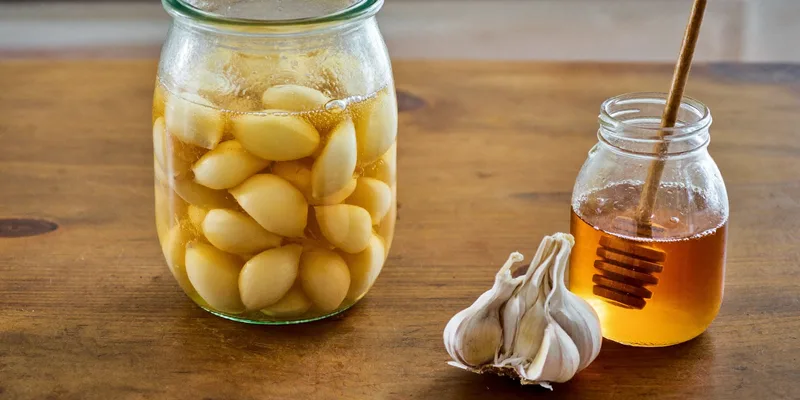
Fermented garlic and honey is one of the most shared preserving projects on the internet. Peeled cloves in a jar of raw honey, a daily flip, bubbles after a week, and a jar that people keep on the counter for months and spoon over everything. It looks like the simplest ferment there is, which is exactly why it deserves a straight answer rather than an enthusiastic one.
The straight answer is that extension food safety specialists are not comfortable with it, and the reason is specific rather than general caution. This article explains what the concern actually is, why the usual reassurances do not settle it, and what people do instead when they want garlic and honey in the same jar.
This article contains affiliate links. If you buy through them, we may earn a commission at no extra cost to you. Learn more.
Quick Answer
Is fermented garlic in honey safe?
- There is no research based home recipe for it. An Oregon State University Extension food safety specialist answering through Ask Extension states there is no data to support the safety of this process.
- The concern is Clostridium botulinum. Honey commonly carries the spores, and garlic is a soil grown crop that is considered higher risk even when peeled.
- Botulinum does not grow below pH 4.6, and a safe ferment needs that acid drop to happen fast, ideally within a day. There is no evidence it reliably happens here.
- Honey is never given to infants under 12 months, which the CDC states because of infant botulism.
Bottom line: this is a popular project without tested backing, and the honest position is that extension services do not recommend it.
What the Extension Position Actually Says
Asked directly about garlic fermented in honey, an Oregon State University Extension food safety specialist answering through Ask Extension said she was not comfortable with the safety of the process and that there is no data to support it. That is not a hedge about home cooking generally. It is a statement that the specific combination has not been studied enough to publish a home recipe.
That matters because the rest of home preserving runs on tested procedures. Every canning time, every pressure setting, every brine ratio in the NCHFP guides exists because somebody measured it in a lab. Garlic in honey has no equivalent, so following a popular recipe online is following somebody’s confidence rather than somebody’s data.
Why This Is Not Just Caution
The same expert notes that botulism causes a few deaths in Oregon each year, so the concern is a live one rather than theoretical. Fermentation deliberately creates an oxygen poor environment, which is precisely the condition Clostridium botulinum needs to grow and produce toxin if the acidity does not stop it first.
Why Garlic and Honey Together Are a Difficult Pair
Each ingredient brings its own issue. Honey commonly contains Clostridium botulinum spores, which is exactly why it is kept away from infants. Garlic is grown in soil, and soil is where those spores live, so garlic is treated as a higher risk ingredient even after it is peeled.
Then there is what happens where they meet. The Oregon State specialist describes the garlic and honey interface as a good environment for C. botulinum to grow, because the two ingredients have contrasting water activities. Honey on its own is too dry for the organism, and garlic sitting in it releases moisture, so the boundary between them is wetter than the jar as a whole.
The pH Question
C. botulinum does not grow below pH 4.6. Garlic starts well above that, and honey is inconsistent, so neither ingredient begins in the safe zone. The specialist’s point is that a safe fermentation depends on the acid drop happening quickly, ideally in less than 24 hours, and there is no evidence that garlic in honey reliably gets there.
The Reassurances You Will Read, and What They Miss
| Common claim | What is true in it | What it misses | Takeaway |
|---|---|---|---|
| Honey is antibacterial | Raw honey is inhospitable to many organisms | It does not destroy botulinum spores, which is why infants are kept away from it | Antibacterial is not the same as spore free |
| Honey is too dry for bacteria | Undiluted honey has very low water activity | Garlic releases moisture into it, and the interface is wetter than the jar average | The dilution is the problem |
| It bubbles, so it is fermenting | Bubbles show something is metabolizing | Bubbling does not tell you the pH dropped below 4.6, or how fast | Activity is not the same as acidity |
| People have done it for centuries | The practice is genuinely old | Tradition is not measurement, and extension services still report no supporting data | Age of a method is not evidence |
The pH threshold and the acid drop timing in this table come from the Oregon State University Extension response through Ask Extension; the infant honey point is CDC guidance.
The Garlic in Oil Parallel
Home preservers already have a well known version of this problem. Garlic in oil is a low acid food held in an oxygen poor medium at room temperature, and extension guidance is consistent that home made garlic in oil must be kept refrigerated rather than stored on the counter. Commercially bottled versions contain acidifying agents that home versions do not.
Garlic in honey is the same shape of problem with a different medium, and it currently has less published guidance rather than more. If the oil version needs refrigeration and a short life, treating the honey version as a shelf stable countertop project is difficult to justify.
If You Are Going to Make It Anyway
Plenty of people will, so it is worth being clear about what changes the risk picture and what does not. Refrigeration slows Clostridium botulinum growth, so a jar in the fridge is in a different situation from a jar on a warm counter. Small batches you finish quickly are better than a large jar kept for months.
The other honest lever is measurement. If your interest is in whether the mixture actually reaches a safe acidity, a calibrated pH meter is the only way to find out, and pH strips are not accurate enough for a decision like this. Understand what a reading does and does not tell you: it measures the liquid you dipped into, not the wetter boundary layer around each clove.
A Meter You Can Actually Trust
A digital pH meter is only as good as its last calibration, so buy one that comes with calibration solution and recalibrate before each session. Owners commonly report drifting readings on cheap meters left uncalibrated for months, which is worse than no reading at all because it feels like data.

Small Jars for Small Batches
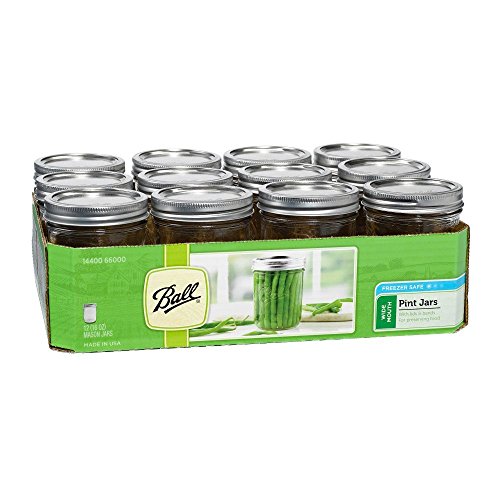
If you make it, make a little. Pint jars mean a batch you finish in weeks rather than a large jar that sits at the back of a shelf for a year, and they fit in a refrigerator door where a quart often does not.
What to Make Instead
If what you want is garlic flavored honey for cooking and dressings, an infusion kept in the refrigerator and used within a short time gives you most of the flavor without the countertop fermentation question. Warm infusions and short refrigerated steeps are ordinary kitchen practice rather than a preservation method.
If what you want is preserved garlic, pickled garlic has tested recipes behind it. Acidifying with vinegar to a known level is exactly the step the honey version lacks, and it puts you back on published guidance. For the acid side of preserving generally, our citric acid for canning guide covers how acidification is used in tested procedures.
Frequently Asked Questions
Can fermented honey garlic cause botulism? The risk is why extension services do not recommend it. An Oregon State University Extension specialist answering through Ask Extension states there is no data supporting the safety of the process, and points to honey carrying C. botulinum spores, garlic being a soil crop, and no evidence that the acidity drops quickly enough to stop growth.
Does the bubbling mean it is safe? No. Bubbling shows that something is producing gas, not that the pH has dropped below 4.6. The safety question is about acidity and how fast it arrives, and you cannot read either of those from bubbles.
Is it safe if I keep it in the refrigerator? Refrigeration slows the organism down considerably and is better than a warm counter, but it is not the same as a tested process. There is still no published home recipe, so the honest answer is that refrigeration reduces the risk rather than resolving it.
Can children eat it? Never give honey in any form to a child under 12 months, which is standing CDC guidance because of infant botulism. For older children, the same unresolved questions apply as for adults.
What about the version with vinegar added? Adding vinegar is aimed at the actual problem, which is acidity, but the amounts in circulating recipes are not tested for this mixture. Acidification only works when the level is known and verified, which is why tested pickling recipes specify vinegar strength and proportions.
Why do so many sources say it is fine? Because nobody they know got sick, which is not the same as the process being validated. Botulism is rare and severe, and rare events are exactly the kind that personal experience is bad at assessing.
The Bottom Line
Fermented garlic and honey is the rare preserving project where the popular consensus and the published guidance point in different directions, and on this site the published guidance wins. Extension food safety specialists report no data supporting the process, and the specific concerns are concrete: honey carries botulinum spores, garlic is a soil crop, and the moisture boundary between them is the part nobody can measure at home. If you want the flavor, infuse and refrigerate. If you want preserved garlic, use a tested pickling recipe. For fermenting projects that do have published procedures behind them, start with the sauerkraut brine ratio guide and the fermentation kit guide.