Last updated: August 23, 2026
The people who buy a pH meter for the kitchen are usually doing one of three things. Making fermented hot sauce and wondering when it has dropped far enough. Watching a crock of sauerkraut and wanting a number instead of a guess. Or worrying about a family salsa recipe that is not in any tested book.
A meter answers the first two well. The third is where honesty is needed, because measuring pH at home does not turn an untested recipe into a validated one. This page covers what the instrument is genuinely good for, what to look for when buying, and the calibration routine that separates a useful reading from a number that means nothing.
This article contains affiliate links. If you buy through them, we may earn a commission at no extra cost to you. Learn more.
Quick Answer
Do you need a pH meter for canning?
- Not for tested recipes. The acidity was validated when the recipe was developed, so following it is the safety step.
- Useful for fermenting, hot sauce and vinegar projects, where you want to watch acidity change over days.
- Buy one that reads to two decimal places, has temperature compensation, and can be calibrated with buffer solutions.
- Calibrate before every session with fresh buffers. An uncalibrated meter gives confident wrong numbers.
Bottom line: a meter is a monitoring tool for ferments, not a license to invent shelf stable canning recipes.
What pH 4.6 Actually Means
It is the line that divides all of home canning. Clemson Extension explains that foods with a pH above 4.6 are classed as low acid and must be pressure canned, while foods below it are high acid and can be processed in boiling water, because the acidity itself prevents Clostridium botulinum from growing.
Commercial acidified food regulation uses the same threshold, which is why the number turns up in FDA material as well as extension publications. In a home kitchen the practical meaning is simpler: it is the number a tested recipe was written to stay comfortably below, with margin.
Margin Is the Point
Tested recipes do not aim to land just under the line. They aim well under it, so that variation in produce, in measuring and in mixing does not push a jar over. That margin is a large part of why a home reading of a single spoonful is not the same evidence as a validated process.
What a Meter Can and Cannot Tell You
It can tell you the pH of the sample on the probe, at that moment, if it is calibrated. That is genuinely useful for anything fermenting, where the acidity changes daily and you want to know whether the culture is doing its job. It is also useful for vinegar projects and for checking a hot sauce before it goes in the refrigerator.
What it cannot do is validate a canning recipe. Process validation involves heat penetration measurement, worst case ingredient assumptions and repeated testing, none of which a countertop meter reproduces. A single reading also misses local variation inside a chunky product, which is exactly where a problem would hide.
The Honest Position on Family Recipes
If a recipe is not in a tested source, a home pH reading is not the missing evidence that makes it shelf stable. The realistic options are to find a tested recipe that resembles it, to make it as a refrigerator product, or to freeze it. Our page on canning mistakes that matter covers why modified recipes are the recurring cause of trouble.
What to Look For in a Meter
Four things decide whether a meter is worth owning. Resolution to two decimal places, since a reading of 4.5 versus 4.6 is a distinction one decimal place cannot make. Automatic temperature compensation, because pH readings shift with sample temperature. Multi point calibration. And a replaceable or serviceable electrode.
Pocket testers from established instrument makers hit all four and are the sensible starting point for a home kitchen. The very cheap unbranded pens are the ones behind most complaints about drifting readings, and they usually cannot be recalibrated properly once they start wandering.

If You Are Testing Thick or Chunky Food
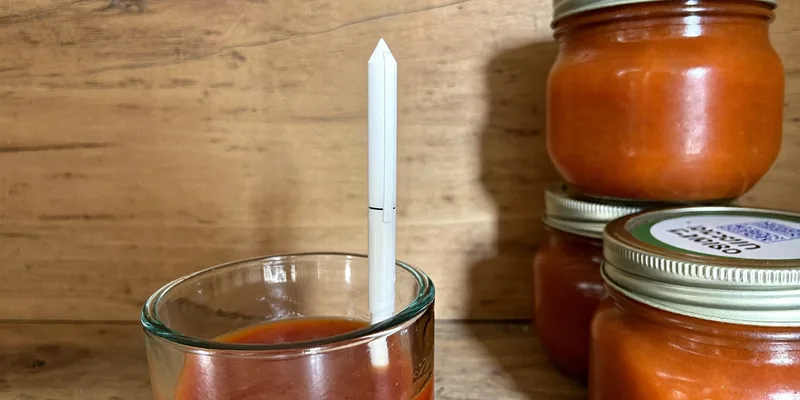
A standard bulb electrode is made for liquids and struggles in salsa, kraut or a thick sauce. A spear tip electrode is designed to be pushed into semi solid food and gives a far more representative reading. If your projects are mostly ferments and thick sauces, this is the accessory that changes the experience.
Calibration Is Most of the Accuracy
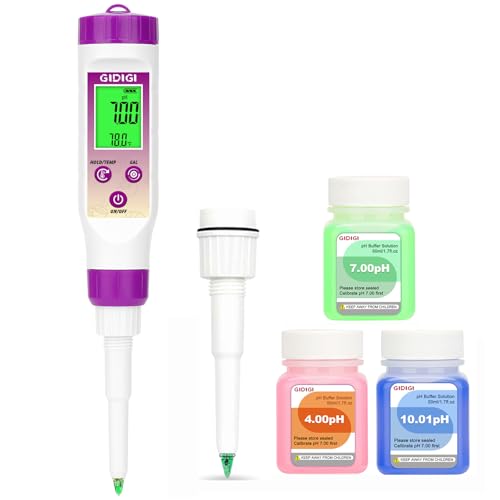
An uncalibrated meter does not tell you it is wrong, it just reads confidently. Calibrate with fresh buffer solutions before each session, using the two point routine most manufacturers describe, with a neutral buffer at 7.00 and an acid buffer at 4.01 for food work. Rinse the probe with distilled water between buffers rather than wiping it.
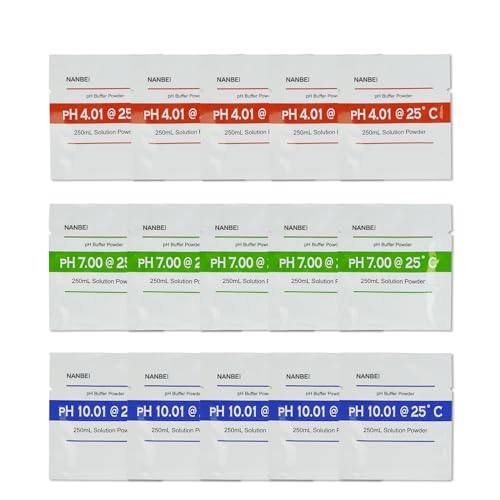
Buffer solutions expire and degrade once opened, and single use sachets avoid the slow drift that an old bottle causes. Reusing buffer from a jar you calibrated into last summer is one of the most common reasons a meter that was fine suddenly is not.
Storing the Electrode
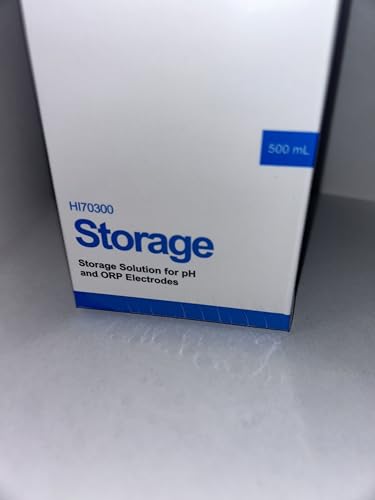
Never in plain water and never dry. A glass electrode is stored in the manufacturer’s storage solution, which keeps the sensing bulb hydrated, and letting it dry out is what kills most probes long before their rated life. Keep the storage cap topped up and the meter will hold calibration far better between sessions.
Meter Types Compared
The table lines up the three ways home canners measure acidity. The pH 4.6 threshold referred to in the last column follows Clemson Extension’s explanation of low acid and high acid foods.
| Type | Typical resolution | Calibration | Good enough for |
|---|---|---|---|
| Paper test strips | Roughly half a pH unit | None possible | Rough tracking, not the 4.6 line |
| Budget pen tester | Two decimals claimed | Often one point only | Hobby ferments, replace when it drifts |
| Pocket meter, replaceable probe | Two decimals | Two or three point | Ferments, hot sauce, vinegar |
| Meter with spear tip probe | Two decimals | Two or three point | Thick sauces, kraut, kimchi |
Strips deserve a note of their own. They are fine for watching a ferment head in the right direction and they are not precise enough to judge a food against the 4.6 threshold, which is a decision no strip should be asked to make.
Where a Meter Really Earns Its Place
Fermenting. A crock of sauerkraut or a jar of fermented hot sauce changes daily, and a number tells you whether the culture took hold long before taste does. It is also the tool that settles the kahm yeast question, since a properly acidified ferment behaves differently from one that stalled.
Hot sauce makers use it most of all, because a fermented sauce that will live in the refrigerator is a product you can measure meaningfully, and blending in fruit or vegetables shifts the acidity in ways worth watching. Our fermented hot sauce bottling guide and the fermentation kit guide cover the rest of that setup.
Frequently Asked Questions
My pH meter gives different readings every time. What is wrong? Almost always calibration or the electrode. Calibrate with fresh buffer solutions before each session, rinse with distilled water between buffers, and check that the probe has been stored in storage solution rather than water or dry air. A probe that dried out will drift no matter how carefully you calibrate.
How often should I calibrate? Before every session where the number matters, and more often if you are working through a long batch. Buffers degrade once opened, so single use sachets are worth the small extra cost over a bottle that sits half full for a year.
Can a pH meter make my own salsa recipe safe to can? No. Validating a canning process involves heat penetration testing and worst case assumptions, not a single reading of one spoonful. Use a tested recipe, or make yours as a refrigerator or freezer product.
Are pH strips good enough for canning? Not for judging a food against the 4.6 threshold. Their resolution is far too coarse for a decision with that consequence. They are useful for watching a ferment trend downward.
Do I need temperature compensation? Yes, unless you plan to bring every sample to the same temperature by hand. Readings shift with temperature, and automatic compensation removes a variable you would otherwise have to control.
Which buffer solutions do I need? For food work, the neutral 7.00 buffer plus the 4.01 acid buffer, which brackets the range you care about. Some meters support a third point, and the manual will say whether that is worth doing.
The Bottom Line
Buy a pH meter if you ferment, make hot sauce or work with vinegar, and want to watch acidity rather than guess at it. Two decimal resolution, temperature compensation, multi point calibration and a serviceable electrode are the specification, and fresh buffers plus proper storage solution are what keep the readings honest. For canning itself, the tested recipe remains the safety system. Read next: our citric acid guide for the tomato acidification step, and botulism and home canning for why the 4.6 line exists.