Last updated: August 23, 2026
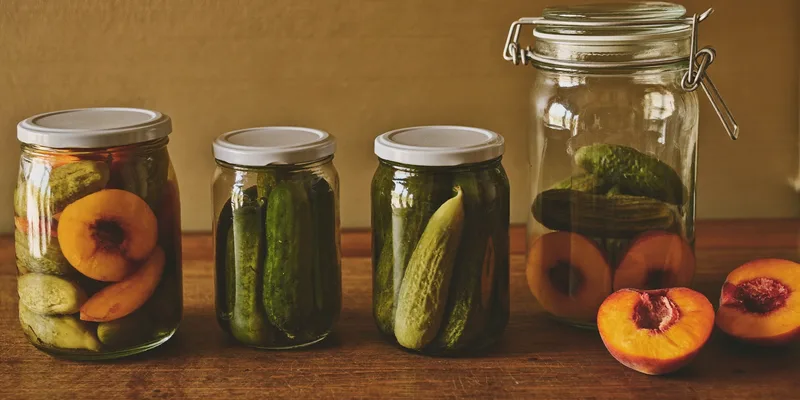
The first time you try to pack peach halves into a regular mouth jar, the case for wide mouth makes itself. Every piece has to go in past a shoulder, the last inch of jar is unreachable with a normal spoon, and washing the thing afterward takes a bottle brush and a grudge.
Wide mouth jars fix all of that by making the opening as wide as the jar body. They also cost a little more, take their own lids, and fit fewer to a shelf. This guide covers which foods actually justify the bigger opening, which sizes to buy, and where regular mouth still wins.
This article contains affiliate links. If you buy through them, we may earn a commission at no extra cost to you. Learn more.
Quick Answer
Should you buy wide mouth mason jars?
- Yes for chunky food: pickle spears, peach halves, whole tomatoes, meat, and anything you scoop out with a spoon.
- Yes for freezing, since straight sided jars handle expansion better than shouldered ones.
- Yes for fermenting and dry storage, because weights, airlocks, and your hand all fit through the opening.
- Regular mouth still wins for jam and jelly, for shelf density, and usually on price per jar.
Bottom line: buy wide mouth for anything you pack or scoop, and keep regular mouth for spreadables and tight storage.
What Wide Mouth Actually Means
A wide mouth jar has an opening the same diameter as the jar body, with no shoulder narrowing the neck. Ball lists both mouth types as standard lines, and the practical difference is that a wide mouth jar is a straight sided cylinder while a regular mouth jar tapers in near the top.
That single geometric difference drives everything else: easier filling, easier emptying, easier cleaning, better behavior in the freezer, and a lid that will not fit a regular mouth jar. It does not change processing times, which are set by the recipe and the jar capacity rather than by the mouth size.
The Foods That Justify It
Anything you pack by hand belongs in wide mouth. Pickle spears stand up straight, peach and pear halves go in without being forced past a shoulder, whole tomatoes keep their shape, and raw packed meat can be pressed down with a spoon instead of a chopstick.
Anything you scoop back out belongs there too. Sauerkraut, chutney, applesauce, and any preserve you serve by the spoonful come out of a wide mouth jar cleanly, and the jar washes in one pass instead of three.
Where Regular Mouth Still Wins
Jam, jelly, juice, syrup, and thin sauces pour out of a regular mouth jar without any of the wide mouth advantages mattering. Regular mouth jars also pack more tightly onto a shelf and are usually the cheaper case, which matters when you are buying jars by the dozen for a big season.

Freezing, Fermenting, and Dry Storage
Straight sided jars are the ones to freeze in. Food expands as it freezes, and a shouldered jar concentrates that pressure at the neck, which is where cracks appear. Leave the headspace the recipe or the jar maker recommends and freeze upright without the band tightened down.
Fermenting is the other clear case. Glass weights, airlock lids, and your own hand all need to fit through the opening, and a quart or half gallon wide mouth jar is the standard vessel for a small batch of sauerkraut or pickles. Our fermentation lids guide covers the hardware that goes on top.

Lids, Bands, and Attachments
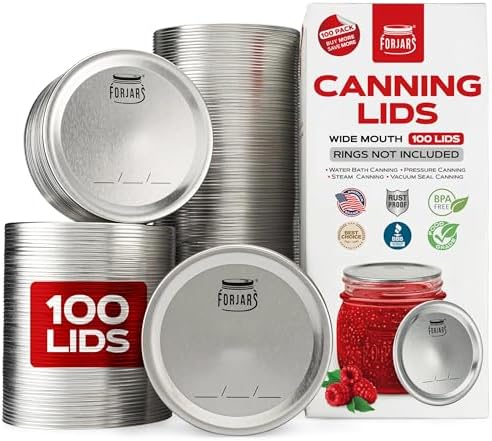
Wide mouth lids and regular mouth lids are not interchangeable, and buying the wrong case of lids is the single most common mason jar ordering mistake. The same applies to plastic storage caps, fermentation lids, and the jar attachments used with vacuum sealers, which are sold per mouth size.
If you run both mouth types in your kitchen, keep the lid boxes visibly separate and check the label before a canning day rather than during one. Our canning lids guide covers lid quality and the reusable alternatives.
Which Sizes to Buy
Wide mouth quarts are the size most kitchens should own, because they handle the foods that most need the opening: tomatoes, beans, broth, and meat. Wide mouth pints suit smaller households and vegetable batches, and half gallon wide mouth jars are the fermenting and dry storage size.
Note that half gallon jars have very limited tested canning uses, so buy them for ferments, flour, rice, and cold storage rather than for processing. Our half gallon jar article explains where the line is.
Wide Mouth Versus Regular Mouth
| Job | Wide mouth | Regular mouth | Why |
|---|---|---|---|
| Pickles and whole fruit | Better | Workable | No shoulder to force food past |
| Jam and jelly | Fine | Better | Cheaper, denser on the shelf |
| Freezing | Better | Risky | Straight sides handle expansion |
| Fermenting | Better | Limited | Weights and airlocks need the opening |
Both types are true canning jars and both use the same tested processing times for a given capacity. The choice is about handling, not about safety.
Storage Caps for Everyday Use
Most wide mouth jars in an active kitchen are not holding canned food at all. They are holding leftovers, dry beans, coffee, and lunch. A plastic storage cap turns a canning jar into a container that opens and closes daily without wearing out a metal lid, and it does not rust in the dishwasher.
These caps are not for processing. They are for the refrigerator, the pantry shelf, and the lunch bag, which is exactly the job that wears out two piece lids fastest.

Frequently Asked Questions
Do wide mouth jars process differently than regular mouth? No. Processing time is set by the food and the jar capacity in your tested recipe, not by the mouth size, so a wide mouth pint follows the same instruction as a regular mouth pint.
Can I use regular mouth lids on wide mouth jars? No. The two sizes are not interchangeable, and that goes for lids, plastic caps, fermentation lids, and vacuum sealer jar attachments.
Are wide mouth jars better for freezing? Straight sided jars handle the expansion of freezing food better than shouldered jars, so wide mouth is the safer choice. Leave headspace and freeze the jars upright.
Why do wide mouth jars cost more? More glass around a wider opening and a larger lid, generally. The gap is small per jar and adds up over a case, which is why a lot of kitchens run regular mouth for jam and wide mouth for everything else.
What size wide mouth jar is most useful? The quart, for tomatoes, beans, broth, and meat. Add half gallons only if you ferment or store dry goods, since those are not general canning jars.
Can I ferment in a regular mouth jar? You can, but fitting weights and getting the finished ferment out is awkward, and most fermentation weights are sized for wide mouth openings. Our fermentation weights guide covers the options.
The Bottom Line
Wide mouth jars are worth the small premium for anything you pack, scoop, freeze, or ferment, and regular mouth remains the better buy for jam, jelly, and shelf density. Whichever way you go, buy the matching lids in the same order so you are not standing at the counter with the wrong case. Read next: the full canning jar guide and the direct comparison of the two mouth sizes.