Last updated: August 23, 2026
The tomatoes came in all at once, the peaches are going soft on the counter, and the pot you own turns out to be two inches too shallow to cover a quart jar with water. That is how most people meet the water bath canner: not as a purchase they planned, but as the thing standing between a full harvest basket and a shelf of jars.
The good news is that this is the least complicated piece of gear in the whole canning kitchen. It is a deep pot, a rack, and a lid. What separates a canner that works from a pot that fights you is depth, a bottom that suits your stove, and a rack that holds jars off the metal. This guide walks through those three things and then lines up the options by kitchen situation.
This article contains affiliate links. If you buy through them, we may earn a commission at no extra cost to you. Learn more.
Quick Answer
Which water bath canner should you buy?
- Deep enough that a quart jar sits under at least an inch of water with room left to boil, which the USDA Complete Guide to Home Canning sets as the minimum water cover.
- Enameled steel is light and cheap and the classic choice; stainless is heavier, easier to keep looking new, and the only sensible pick for induction.
- Flat bottom if you cook on glass or induction, since the ridged bottoms on some speckled canners do not sit well on a smooth top.
- A rack is not optional. Jars sitting on the bare bottom crack, and that is one of the most common complaints from first-season canners.
Bottom line: buy for depth and for the stove you actually own, then let the rack and the jar lifter do the rest.
What a Water Bath Canner Has to Do
A water bath canner has one job: hold jars fully under boiling water for the length of time a tested recipe calls for. The USDA Complete Guide to Home Canning directs that jars be covered by at least one inch of water during the whole process, so the pot has to be deeper than the tallest jar you plan to fill, plus that inch, plus a few inches of headroom so a hard boil does not slosh over the edge.
That is the entire spec. Anything else on the box, the speckled finish, the bundled tools, the wire handles, is comfort rather than function. Where the pot matters is in whether it can hold a rolling boil without your stove struggling, and whether the jars stay off the bottom.
Why It Only Works for High Acid Foods
Boiling water tops out at the boiling point, and the NCHFP is clear that this is not hot enough to make low acid foods such as green beans, corn, meat, or plain soup shelf stable. Those foods need a pressure canner. A water bath canner is for jams, jellies, fruit, pickles, salsa, and properly acidified tomatoes, and using it outside that list is the single most dangerous shortcut in home canning. Our guide to what you cannot water bath can covers the whole list.
Enamel, Stainless, or the Stockpot You Already Own
Enameled steel is the speckled black pot most people picture, and it is light, inexpensive, and heats fast because the walls are thin. Stainless steel costs more, weighs more when empty, holds heat better once it gets there, and does not chip. Chipped enamel is the reason many canners get replaced, since bare steel under the coating rusts on the next wash.
A tall stockpot you already own can work if it is deep enough and you add a rack, and that is a legitimate way to start. What it will not do is stack jars or hold as many at once, and the thin bottom on a cheap stockpot scorches the jars nearest the burner if the boil goes uneven.
Induction and Magnetic Bottoms
Induction cooktops only heat magnetic material. Enameled steel canners are usually magnetic and work, most all clad stainless canners work, and a fully non-magnetic stainless or aluminum pot will not heat at all. Hold a fridge magnet to the base before you buy secondhand, and for a new pot check whether the listing states induction compatibility rather than assuming.
Size: How Many Jars at Once
Most standard water bath canners hold seven quart jars or nine pints in a single layer, which is what tested recipes are usually written around. That is the size to buy if you can only own one. Smaller pots hold four or five pints and suit a two person kitchen making jam.
Think in batches rather than in pot volume. A canner load takes the same time to come to a boil whether it holds four jars or nine, so an undersized pot doubles your afternoon on a heavy harvest day.
Glass Top Stoves and Flat Bottoms
Glass and ceramic cooktop manuals commonly warn against pots that overhang the element by a wide margin and against heavy loads that concentrate weight on one spot, and a full canner is heavy once it is loaded with jars and water. A flat bottomed canner spreads that load and makes contact across the whole element, which matters because a ridged enamel base sits on its ridges and heats slowly.
If your cooktop manual sets a weight or diameter limit, that limit decides the pot, not the canner marketing. A steam canner is the other common answer here, because it uses a shallow water reservoir instead of a full pot and weighs far less when loaded.
Water Bath Canners by Situation
The Classic First Canner
The speckled enameled canner with a wire rack is the default for a reason. It is light enough to lift full with two hands, deep enough for quart jars, and cheap enough that a chip in year three is not a disaster. If you are canning jam and pickles on a coil or gas burner, this is the pot.

Glass Top and Induction Kitchens
A flat bottomed stainless canner solves the two problems a smooth cooktop creates: it makes full contact with the element and it does not have ridges to rock on. Stainless also survives the scrubbing that comes with sticky jam boil overs.

Starting From Nothing
If you own no canning gear at all, a canner sold with the rack, jar lifter, funnel, and bubble remover in the box saves buying five things separately and getting one of them wrong. The tools in these kits are basic, and that is fine, since a jar lifter has one job.

Using a Stockpot You Already Own
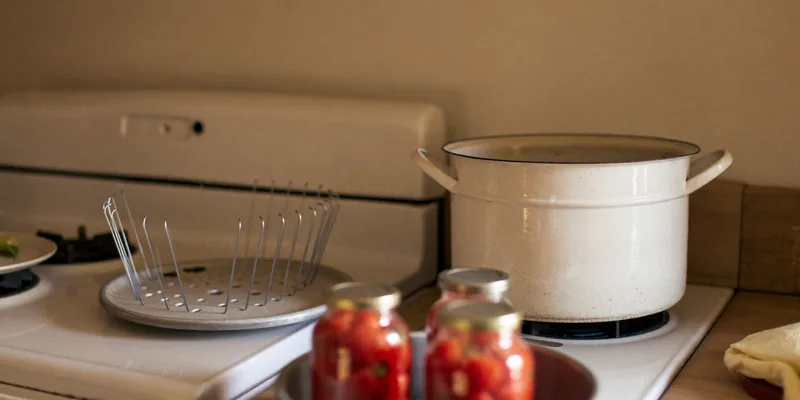
A drop in rack turns a deep stockpot into a working canner and costs a fraction of a new pot. Silicone and coated wire versions both keep jars off the bottom and out of contact with each other, which is what the rack is actually for.

Comparing the Main Types
| Type | Weight when empty | Stove fit | Best suited to |
|---|---|---|---|
| Enameled steel canner | Light | Gas and coil; check ridges on glass | First canner, quart batches |
| Stainless canner | Heavier | Flat bottom suits glass and induction | Long term buy, smooth cooktops |
| Deep stockpot plus rack | Varies | Whatever the pot already fits | Starting cheap, small loads |
| Steam canner | Lightest when loaded | Good on weight limited cooktops | High acid recipes with short processing |
Steam canners are a genuine alternative rather than a gadget, but they carry their own rule set, which our steam canner guide covers in full.
What Trips People Up
The most common complaint in canner reviews has nothing to do with the pot. It is jars cracking, and the usual cause is a jar sitting on the bare bottom over direct heat, or a cold jar going into water that is already boiling. The rack fixes the first, and matching jar temperature to water temperature fixes the second.
The second recurring problem is rust. Chrome plated wire racks that live in a damp pot rust within a season or two, and once the rack goes, people improvise with towels, which is worse. A stainless or silicone rack outlasts the pot, and our canning rack guide compares the options.
Buying a Pot That Is Too Shallow
Measure before you order. Stand your tallest jar in the pot, add an inch above the lid for water, and add another inch of clear rim. If a quart jar plus that water cover reaches the rim, the pot is a pint pot whatever the listing calls it.
Frequently Asked Questions
How do I know whether I need a water bath canner or a pressure canner? What goes in the jar decides. High acid foods such as fruit, jam, jelly, pickles, and acidified tomatoes are water bath foods; the NCHFP states that low acid foods including vegetables, meat, poultry, and soups must be processed in a pressure canner. If your list includes green beans or chili, start with the pressure canner. Our pressure canning guide explains how that process differs.
Can I use my regular stockpot instead of buying a canner? Yes, if it is deep enough to keep an inch of water over the jars with room to boil, and if you add a rack so jars never touch the bottom. That is the whole difference between a stockpot and a canner.
Do the jars have to be fully covered by water? Yes. The USDA Complete Guide to Home Canning specifies at least one inch of water over the jar tops for the entire processing time, and topping up with boiling water partway through is normal on a long process.
Do I need to sterilize the jars first? Only for short processes. The NCHFP says jars that will be processed less than ten minutes need to be pre sterilized, and that longer processing times sterilize the jars as they go. Our guide to sterilizing canning jars walks through the method.
Will a canner work on my glass top stove? Usually, if it is flat bottomed and your cooktop manual does not set a weight or diameter limit that a loaded canner would break. Check the manual first, and consider canning pints rather than quarts to keep the load down.
Why did two of my jars crack in the canner? The usual causes are jars set directly on the pot bottom without a rack, a sudden temperature change between jar and water, or a jar with an existing chip on the rim. Use the rack, keep the temperatures close, and run a fingertip around every rim before filling.
The Bottom Line
A water bath canner is a depth measurement with a handle. Buy the pot that clears your tallest jar with an inch of water and room to boil, match the bottom to your stove, and put a rack in it that will not rust out in two seasons. Everything else is preference. Read next: how water bath canning actually works for the process end to end, and the full canning supplies checklist if you are outfitting a kitchen from scratch.