Last updated: August 23, 2026
The rack that came with the canner is the part owners complain about most, and the complaint is almost always rust. It comes out of the box shiny, it goes through two seasons, and then there are orange streaks along the wires and a brown ring on the bottom of the pot. The second complaint is that the rack rattles, tips, or lets jars lean into each other during a rolling boil.
Both are worth solving, and neither is a reason to skip the rack. Jars sitting on the bare bottom of a canner is a recipe for cracked glass, so the question is which rack, not whether.
This article contains affiliate links. If you buy through them, we may earn a commission at no extra cost to you. Learn more.
Quick Answer
Do you need a canning rack, and which one?
- Yes. The NCHFP names jars placed directly on the canner bottom rather than on a rack as a cause of jar breakage.
- Rust is usually a drying problem first, so try drying the rack in the still warm oven before replacing it.
- Stainless steel and silicone racks do not rust, chrome plated wire racks eventually will.
- Match the rack to the canner: a flat trivet for a pressure canner, a lifting rack for a water bath pot.
Bottom line: any rack beats no rack, and a stainless or silicone one ends the rust complaint for good.
Why the Rack Is Not Optional
The bottom of a canner sitting on a burner is the hottest surface in the pot. A jar resting directly on it heats from one small contact patch while the rest of the glass is surrounded by water, and that difference is what cracks jars. The National Center for Home Food Preservation lists jars placed directly on the bottom instead of on a rack among the causes of jar breakage.
A rack also does two quieter jobs. It lets water circulate underneath the jars so heat reaches them evenly, and it stops jars from sliding into each other during a hard boil, which is the other way glass gets chipped and cracked.
The Break That Tells You What Happened
Thermal shock typically shows as a crack running around the base of a jar, sometimes carrying up the side, and the bottom can come away as a disc. If that is what you are pulling out of the canner, look at the rack and at how the jars were heated rather than at the jars themselves. Our guide to jars that did not seal covers the neighboring failures.
Fix the Rust Before You Replace the Rack
Most rack rust starts with storage rather than with use. A rack that goes back in the pot damp, or into a cupboard still wet at the wire joints, will rust from those joints outward no matter what it is plated with. The free fix is a drying habit, and it works for most people.
Rinse the rack after the canner is emptied, then dry it properly. Setting it in the oven while the oven cools after baking, or on a warm burner for a minute, drives moisture out of the crimped joints where a towel cannot reach. Store it out of the pot, not inside it, so it is not sitting in the last teaspoon of water.
When the Rust Has Already Won
Surface rust can be scrubbed back and the rack will keep working, since it is holding jars rather than touching food. Once the coating has flaked and the wire underneath is pitting, replace it. Flaking chrome leaves particles in the canner water and the rack loses its shape, which is when the jars start leaning.
Canning Racks by Situation
The Rust Proof Replacement
A stainless steel rack is the direct answer to the rust complaint, because there is no plating to fail. Check the diameter against your pot before ordering, since a rack that is slightly too wide will not sit flat and one that is too narrow lets jars slide off the edge. Stainless racks are also stiffer, which is what stops the rattling.

Pressure Canners and Flat Trivets
A pressure canner uses a flat rack on the bottom rather than a lifting rack, and stacking two layers of pints requires a second rack between the layers. Use the rack specified for your canner model, since the fit and the height matter for how the canner vents and heats.

Silicone and Trivet Style Racks
Silicone racks sit flat in the bottom of a pot, will never rust, and are quiet under a rolling boil. They do not have handles, so you are lifting jars out one at a time with a jar lifter rather than raising the whole rack, which is fine for most people and slower for a big batch.

Turning a Stockpot Into a Water Bath Canner
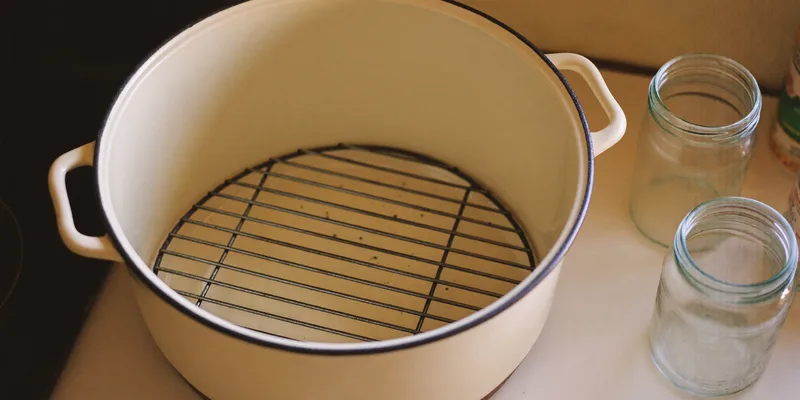
If you are using a deep stockpot rather than a dedicated canner, a rack is the only piece you are missing. A round rack sized to your pot, with handles that hook over the rim, turns a pot you already own into a working water bath canner. Check the pot is deep enough to cover the jars with water and still boil freely.

Rack Types Compared
| Rack type | Rusts | Lifts jars in and out | Best for |
|---|---|---|---|
| Chrome plated wire | Eventually, from the joints | Yes, with folding handles | The one in the box, until it goes |
| Stainless steel | No | Depends on the model | Anyone replacing a rusted rack |
| Silicone mat or trivet | No | No, lift jars individually | Quiet operation, pressure canners |
| Flat pressure canner trivet | Varies by finish | No | Pressure canning, stacked layers |
Match the rack to the canner you own rather than to the type you like the sound of, since fit is what decides whether jars stand level.
What a Rack Cannot Fix
Jars still break for reasons a rack has no say in. Putting cold food into hot jars or hot food into cold jars, dropping a jar into already boiling water instead of hot water, using jars with hairline scratches, and reusing commercial food jars all cause breakage independently of what the jars are standing on.
Keep the jars and the food at similar temperatures, load them into water that is hot rather than boiling, and inspect rims and bases for chips before filling. That combination plus a rack removes almost all of the breakage a home canner sees.
Frequently Asked Questions
Can I can without a rack? You should not. The NCHFP lists jars sitting directly on the canner bottom as a cause of breakage. If you have no rack, a folded kitchen towel or a ring of screw bands wired together is a stopgap, not a solution.
Why does my canning rack rust? Almost always because it is stored damp, since water sits in the crimped wire joints. Dry it in a cooling oven or on a warm burner and store it outside the pot. Once the plating flakes, replace it with stainless or silicone.
Why do my jars keep breaking in the canner? Check the rack first, then temperature differences between the jars, the food and the water, then the jars themselves for scratches or chips. Commercial food jars break far more often than canning jars.
Can I use a cake rack or a trivet instead? A stainless cooling rack cut or sized to the pot works, provided it holds jars clear of the bottom and does not tip. Avoid anything with a coating that can flake into the water.
Do I need a different rack for a pressure canner? Yes, pressure canners use a flat bottom rack, and stacking a second layer of jars needs a second rack between the layers. Use the rack your canner manufacturer specifies.
Should the jars touch each other in the canner? No. Leave a little space so water circulates and jars do not knock together during a boil, which is another job a properly sized rack does for you.
The Bottom Line
The rack is the cheapest part of the canner and the one that keeps jars off the hottest surface in the pot, which the NCHFP names as a cause of breakage. If yours has rusted, fix the drying habit first, because that is what starts it, and replace it with stainless or silicone if the plating has already flaked. Match the rack to the canner and leave a little space between jars. From here, our water bath canner guide covers the pot itself, and the canning tools guide covers the rest of the short list.