Last updated: August 23, 2026
People find Septree the same way. They started with a stacking plastic dehydrator, filled it with apple slices or a marinated flank steak, and discovered two things: the trays warp, and there are never enough of them. The next search is for stainless steel and a lot of trays, and Septree is one of the first names that comes back.
This is a look at what the listings actually promise, where a ten tray box changes how you work, and the safety step that no dehydrator of any brand can do for you. Jerky is the reason most of these machines get bought, and jerky is where the rules come from an agency rather than from a manual.
This article contains affiliate links. If you buy through them, we may earn a commission at no extra cost to you. Learn more.
Quick Answer
Is a Septree dehydrator the right step up from a plastic stacker?
- Yes if capacity is your bottleneck. Septree lists ten stainless trays at roughly 12.5 by 12.5 inches each.
- Yes if you are tired of warped plastic. The listings specify 304 food grade stainless with a glass front door.
- Digital control matters more than the top number. Septree lists a range up to 190F on the ten tray model with a 24 hour countdown timer.
- No if you dry a handful of herbs twice a year. This is a big box that needs a permanent home.
Bottom line: buy it for tray count and stainless trays. Heat your jerky meat before drying regardless of which machine you own.
What Septree Lists for the Ten Tray Model
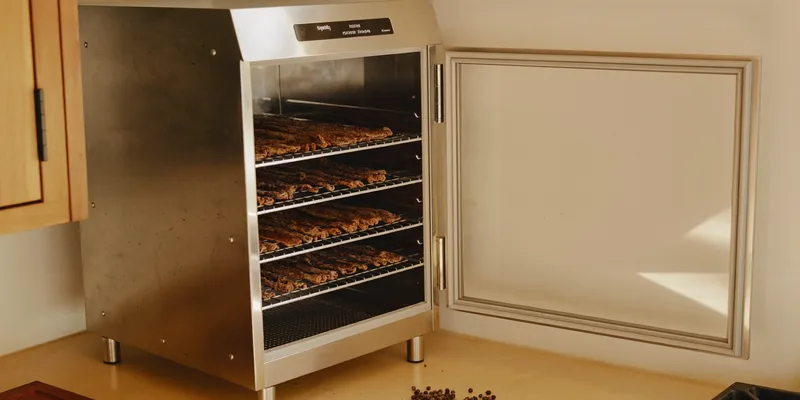
Septree lists the ten tray dehydrator with 304 food grade stainless steel construction, a glass front door, ten stainless trays measuring about 12.5 by 12.5 inches, a digital temperature setting reaching 190F, a countdown timer up to 24 hours with auto shut off, overheat protection and a built in light. The listing gives 800 watts and quotes noise in the range of 45 to 50 dB.
There is a second variant sold as a commercial ten tray unit, listed at 1000 watts with a slightly higher top temperature and a larger quoted drying area. Check which one you are looking at before comparing prices, because the tray count is the same and the wattage is not.
Why Stainless Trays Change the Machine
Plastic trays fail in two ordinary ways. They warp after repeated hot cycles until they no longer sit level, and they hold onto the smell of whatever you dried last, so garlic haunts the next batch of apple rings. Stainless does neither, and it goes in the dishwasher without softening at the corners.
What Stainless Does Not Fix
Sticking. Fruit leather, sliced tomatoes and anything sugary will weld itself to bare mesh regardless of the metal. That is what liner sheets are for, and a set of silicone or fine mesh liners is the accessory most owners buy within the first month. Our guide to trays, liners and mesh sheets covers which liner suits which food.
Weight is the other trade. Ten stainless trays plus a steel cabinet is not a machine you lift onto a shelf between uses. Decide where it lives before it arrives, because a dehydrator in a basement cupboard is a dehydrator that does not get used.

Airflow, Even Drying and Rotating Trays
The complaint that drives most dehydrator upgrades is uneven drying, where the top tray finishes while the bottom is still damp. Box shaped machines with a hinged front door belong to the horizontal airflow family, where air moves across the trays rather than up through a stack, and that layout is the reason people stop rotating trays every hour.
It does not remove the need to load sensibly. Slices cut to an even thickness dry at an even rate, crowded trays block the airflow they depend on, and a tray packed edge to edge will always finish later than one with gaps. The layout differences are set out in vertical against horizontal airflow.
Jerky: The Step the Machine Cannot Do for You
This is the part to get right. The USDA Meat and Poultry Hotline recommends heating meat to 160F and poultry to 165F before the dehydrating process, because a dehydrator alone does not reach a temperature that destroys bacteria, and bacteria become more heat resistant once the meat has dried. The precooking step is what makes home jerky safe.
The same USDA guidance calls for maintaining a steady dehydrator temperature during drying so the process is fast enough to dry the meat before it spoils. A machine with a digital setting and a working timer makes that easy to hold, which is the real safety argument for buying a dehydrator with proper controls rather than a dial. Our jerky temperature reference collects the agency figures in one place.
Where a Septree Fits Against Other Dehydrators
The choice is mostly about batch size and tray material, not brand loyalty. A stacking machine is cheap and fine for occasional herbs, a mid size box handles a garden, and a ten tray stainless cabinet is for people who dry in quantity or make jerky by the pound.
| Type | Tray material | Even drying | Best suited to |
|---|---|---|---|
| Septree ten tray cabinet | Stainless steel | Good, horizontal layout | Jerky by the pound, big harvests |
| Septree compact four tray | Stainless steel | Good, smaller box | Small kitchens that still want steel |
| Stacking round dehydrator | Plastic | Needs tray rotation | Herbs and occasional fruit |
| Mid size box dehydrator | Plastic or steel | Good | A garden year without the bulk |
If you are still choosing a category rather than a model, start with the dehydrator buying guide, and compare the steel options in the stainless dehydrator guide.

Frequently Asked Questions
Is a ten tray dehydrator too big for a household? It is if you dry occasionally. It is not if you make jerky, run a garden, or dry for a hunting season, because half filling a large machine costs almost nothing while a small one forces you into three consecutive runs. Buy for your busiest week, not your average one.
Can I run it overnight? That is how most jerky and fruit batches finish, and the listed 24 hour timer with auto shut off exists for exactly that. Set it on a hard surface away from curtains, give the vents clearance, and use the timer rather than planning to wake up and switch it off.
Do I still need to precook meat if the dehydrator gets hot? Yes. USDA guidance is to heat meat to 160F and poultry to 165F before drying, because dehydrator temperatures are not high enough to do that job and dried bacteria are harder to kill. No brand changes that requirement.
How do I stop dried food from going soft again in storage? Condition it first, then store it airtight and out of the light. Dried food that is packed while any piece is still slightly damp will share that moisture around the jar. See storing dehydrated food for the conditioning routine.
Are the trays dishwasher safe? Septree lists stainless trays, and stainless generally handles a dishwasher without deforming, which is the main advantage over plastic. Check the manual for your unit, and give mesh inserts a rinse before anything dries onto them.
The Bottom Line
The Septree ten tray is a capacity and materials buy. You get stainless trays that will not warp or hold smells, a glass door so you can look without opening, digital control and a long timer, and a cabinet that needs a permanent spot on a counter or bench. That combination suits jerky makers and heavy garden years, and it is more machine than an occasional herb dryer needs. Whatever you buy, heat jerky meat to the USDA temperature before drying. Read next: the jerky dehydrator guide, and the general dehydrator guide if you are still choosing a size.