Last updated: August 23, 2026
Two things go wrong with kimchi in a regular food container. The whole refrigerator smells like it within a day, and the brine pushes up past the cabbage and out under the lid, usually onto the shelf below. Neither is a sign you did anything wrong. Kimchi keeps working after you put it away, it makes gas while it does, and an ordinary snap lid container was never designed for either.
A proper kimchi container solves both problems with one idea borrowed from the traditional Korean onggi: keep the vegetables pressed under the brine and keep the smell inside two layers instead of one. This guide covers the three container types worth considering, how to size one for your refrigerator, and what to skip.
This article contains affiliate links. If you buy through them, we may earn a commission at no extra cost to you. Learn more.
Quick Answer
What kind of container should you ferment kimchi in?
- A dedicated kimchi container with an inner press lid keeps vegetables under the brine and the odor contained.
- Traditional onggi earthenware is the original and suits large batches and cool storage, not a refrigerator shelf.
- Glass jars work for small test batches, ideally with a weight and an airlock lid.
- Measure your refrigerator shelf height first, because that decides the size more than the recipe does.
Bottom line: for a refrigerator, a double lidded container with an adjustable inner press lid is the practical answer.
Why an Ordinary Container Fails
Kimchi is an active ferment. Lactic acid bacteria keep producing gas and liquid for days after you pack the jar, so pressure builds and the brine level rises. In a rigid container with a flat lid, the gas has nowhere to go and the brine finds the gap in the seal. That is the puddle on the shelf.
The second failure is the vegetables floating. Anything that rises above the brine is exposed to air, and exposed vegetable is where surface yeast and mold turn up first. Every good kimchi container is built around holding the cabbage down, which is the same principle behind fermentation weights in a mason jar.
The Inner Press Lid, and Why It Is the Whole Product
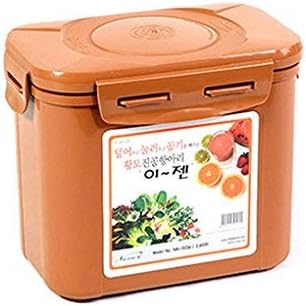
Modern kimchi containers use two lids. The outer lid closes the container, and an inner lid sits directly on the food and is pushed down until it touches the surface of the brine. Manufacturers describe that inner lid as minimizing the air inside and keeping the vegetables submerged, which is exactly what you want.
The double lid also does the smell job. Makers of these containers state that the inner lid plus outer lid arrangement contains odors better than a single lid container, which is the difference between kimchi in the refrigerator and kimchi in everything in the refrigerator. The E-Jen style containers are the ones most home fermenters land on for this reason.
What They Are Made Of
These containers are usually polypropylene rather than earthenware, and the makers list them as food safe, dishwasher safe, freezer safe and free of BPA, DEHP and lead. Some lines add a percentage of natural clay to the plastic, with the maker citing porosity as the reason, which is a nod to the onggi tradition rather than a claim you need to weigh heavily.
Onggi and Earthenware Crocks
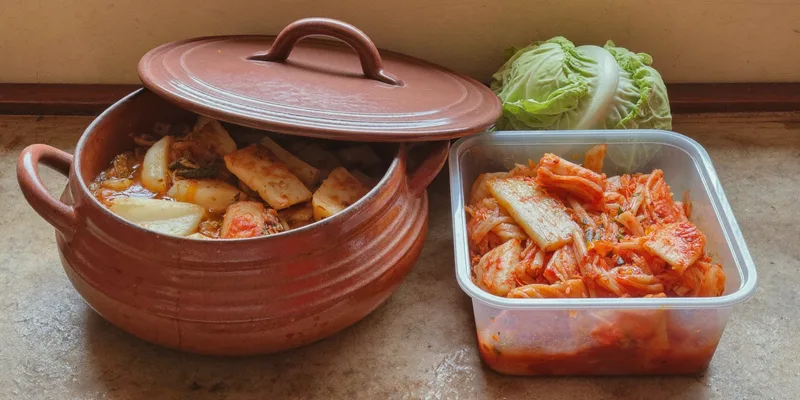
Onggi are the traditional Korean fermentation vessels, and they are still the reference point for the whole category. They are heavy, they are porous, and historically they lived buried or outdoors where the temperature stayed cool and steady through winter. For anyone fermenting large volumes in a cool basement or garage, a crock is a genuinely good tool.
For refrigerator kimchi they are the wrong shape and the wrong weight. A stoneware crock is a two hand lift when full, it does not stack, and it eats a whole shelf. If big batch fermenting is what you are after, our guide to the fermentation crock covers water seal designs that handle the gas problem for you.

Glass, and When It Is Enough
Glass jars are the cheapest way to find out whether you like making kimchi. They do not stain, they do not hold odor in the material, and you can see the brine line without opening anything. Pair a wide mouth jar with a glass weight and an airlock lid and you have a small batch setup that behaves.
What glass will not do is stack neatly, survive being dropped, or hold a whole napa cabbage without a lot of chopping. It also transmits smell through the lid unless the lid seals well, which is why people who make kimchi weekly usually graduate to a dedicated container. Our guides to fermentation jars and airlock lids cover the jar route in detail.

The Three Options Side by Side
Match the container to where the ferment lives rather than to the recipe. Refrigerator space is usually the binding constraint.
| Container | Keeps food submerged | Odor control | Suits you if |
|---|---|---|---|
| Kimchi container with inner press lid | Yes, adjustable inner lid | Best of the three, double lid | You ferment and store in the refrigerator |
| Onggi or stoneware crock | Yes, with a weight | Good, but the vessel stays out | Large batches, cool cellar or garage |
| Glass jar with weight and airlock | Yes, with a weight | Depends entirely on the lid | Small test batches, visible brine line |
| Ordinary snap lid container | No | Poor, brine finds the gap | Not recommended for an active ferment |
Sizing It for Your Refrigerator
Measure the shelf height before you shop, and measure the door shelves too if that is where the kimchi will live. Containers in this category run from small single household sizes up to several gallons, and the large ones are made for people who make a year of kimchi at once during the autumn kimjang season.
Leave headspace when you pack. A container filled to the brim will push brine past even a good inner lid once fermentation gets going, so aim to leave room above the press lid. Two medium containers usually beat one large one in a home refrigerator, since you can open one and leave the other undisturbed.
How Long Kimchi Ferments Before It Goes Cold
Most home kimchi spends a day or two at room temperature to get going, then moves to the refrigerator, where it keeps working slowly for weeks. Fermenting time here is a matter of taste rather than a safety threshold, so start tasting early and chill it once the sourness is where you want it.
That two stage rhythm is exactly what the container has to survive. The room temperature stage makes the most gas and pushes the brine up, so leave headspace above the press lid and stand the container on a tray. Cold slows the ferment without stopping it, which is why a jar that seemed fine on day one can still weep in the refrigerator two weeks later. Our guide to fermenting vegetables covers the timing side in more detail.
Frequently Asked Questions
Will a plastic kimchi container hold the smell forever? Plastic can pick up color and odor over time, especially with heavily spiced kimchi. Washing promptly, avoiding abrasive scrubbing that scratches the surface, and keeping one container dedicated to kimchi are the practical answers. Glass avoids the issue entirely at the cost of weight and stacking.
My kimchi keeps overflowing. What am I doing wrong? Overfilling, mostly. Fermentation raises the brine level and produces gas, so leave headspace above the inner press lid and set the container on a tray for the first few days at room temperature.
Do I need a weight if the container has an inner lid? No, the inner press lid is doing the weight’s job. In a plain jar you do need one, since anything floating above the brine is where surface growth starts.
Is white film on top mold? Not necessarily. A flat white film is commonly kahm yeast, which is a nuisance rather than a hazard, while fuzzy colored growth is mold and means the batch goes out. We cover telling them apart in kahm yeast against mold.
Can I ferment kimchi on the counter or must it go straight in the fridge? Kimchi is normally left at room temperature briefly to get the fermentation going, then moved to cold storage where it continues slowly. Follow a tested recipe for timing, since it depends on your kitchen temperature and how sour you want it.
Can I use a kimchi container for sauerkraut and pickles? Yes. The same press lid design works for sauerkraut, cucumber pickles and other brined vegetables, which is why most of these containers are sold for both. Our guide to fermenting vegetables covers the method.
The Bottom Line
For refrigerator kimchi, a container with an adjustable inner press lid and an outer lid solves both the floating cabbage and the smell in one purchase. Save the onggi crock for large batches in a cool room, and use glass for small test batches while you find your recipe. Measure the shelf first. Read next: the fermentation crock guide for large batches, and fermentation weights if you are working in jars.