Last updated: August 23, 2026
This comparison usually starts after a video. Someone opens a freeze dryer full of strawberries that still look like strawberries, drops one in water and it comes back, and the machine goes straight onto a wish list. Then the price appears, and the question becomes whether the dehydrator on the counter was already doing the job well enough.
Most of the time it was. These are not two grades of the same appliance, they are two different processes with different outputs, different costs and different failure modes. Once you know which one your food actually needs, the decision stops being about capability and starts being about what you preserve and how much of it.
This article contains affiliate links. If you buy through them, we may earn a commission at no extra cost to you. Learn more.
Quick Answer
Freeze dryer or dehydrator, which one do you need?
- Dehydrator if you preserve garden produce, make jerky, dry herbs or make fruit leather. That is the vast majority of home preserving.
- Freeze dryer if you want complete meals, dairy, eggs or food that rehydrates back to something close to fresh.
- The cost gap is not close. A freeze dryer is a major appliance purchase, a dehydrator is a small one.
- Freeze drying also needs floor space, a vacuum pump, ongoing maintenance and a long cycle measured in a day or more.
Bottom line: buy the dehydrator first. Move up only when you can name the foods a dehydrator cannot handle for you.
What the Two Machines Actually Do
A dehydrator blows warm air over food until the water evaporates. The National Center for Home Food Preservation describes these machines as designed to dry foods fast at 140F, with thermostats typically covering 85F to 160F. The food shrinks, darkens and becomes chewy or crisp.
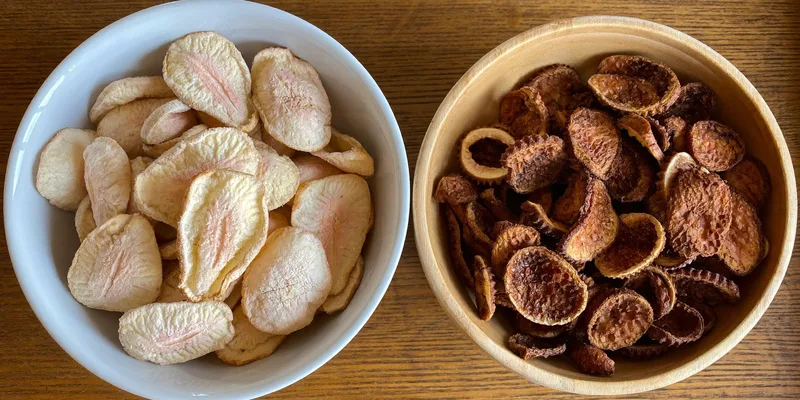
A freeze dryer freezes the food solid, then pulls a deep vacuum so the ice turns straight to vapor without passing through liquid. The structure of the food stays where it was, which is why a freeze dried strawberry keeps its shape and a dehydrated one becomes a small red disc.
Why That Changes the Result
Evaporation collapses the cell structure and leaves a small amount of water behind. Sublimation leaves the structure standing and removes far more of the moisture. That single difference explains almost everything else: texture, weight, rehydration, storage life and which foods each machine can handle.
The Cost Difference Is the Whole Argument
A home freeze dryer is an appliance purchase in the same bracket as a major kitchen upgrade, while a good dehydrator sits alongside a stand mixer. The gap is large enough that the honest first question is not which is better, but whether the food you preserve justifies the difference.
Running costs follow the same pattern. A freeze dryer runs a cycle measured in many hours with a compressor and a vacuum pump working the whole time, and oil pumps need oil changes and filtering. Our cost breakdown covers purchase, power and consumables with sourced figures.
The Space Nobody Plans For
Freeze dryers are heavy, they run loud, and they put heat into the room for the whole cycle. Most owners end up moving them to a garage, a basement or a utility room. That is a genuine constraint if you live in an apartment, and it is easy to miss when watching a video shot in a spacious kitchen.
What Each Machine Is Genuinely Better At
Dehydrators own the garden and the hunting season. Fruit, vegetables, herbs, jerky, fruit leather and pet treats are all dehydrator work, and a freeze dryer offers no meaningful advantage for most of them. Freeze dryers own complete meals, dairy, eggs and anything you want to rehydrate rather than eat dry.
| Factor | Dehydrator | Freeze dryer | Which wins |
|---|---|---|---|
| Purchase and running | Small appliance, low power | Major purchase, long cycles | Dehydrator, clearly |
| Fruit and vegetables | Chewy, shrunken, excellent | Crisp, keeps shape, rehydrates | Tie, depends on use |
| Meals, dairy, eggs | Not suitable | The reason to own one | Freeze dryer |
| Jerky and herbs | Purpose built for it | Wrong process | Dehydrator |
High fat food is a limit for both. Utah State University Extension notes that fat does not freeze like water, which slows freeze drying and increases the risk of spoilage, and recommends avoiding high fat foods where possible. Fat goes rancid in dehydrated food for the same underlying reason.
Neither Machine Sterilizes Anything
This is the point that gets lost. Utah State University Extension states that bacteria can survive the freeze drying process and become active again when water is added back, and that foods requiring rehydration should have a kill step such as cooking. Freeze drying preserves microorganisms in a dormant state rather than destroying them.
The same logic applies to a dehydrator, which is why USDA guidance has you cook meat before drying jerky rather than relying on the machine. Whichever appliance you buy, the safety comes from the process steps and the source of the food, not from the technology.
If the Answer Is a Dehydrator
For the crops and projects that make up most home preserving, the money is better spent on a good dehydrator plus storage supplies than on the cheapest possible freeze dryer. Two machines cover almost every household, split by how much you dry rather than by what you dry.
Best for Most Kitchens
A compact stainless six tray unit with a digital thermostat handles fruit, herbs, jerky and treats without dominating the counter. Cosori lists its premium six tray model with stainless steel trays and digital temperature control, which is what you want for holding a low herb setting or a steady meat setting.

Best for Harvest Volume
A nine tray box dehydrator with a rear mounted fan dries every shelf evenly without rotation, which is what you notice in a bushel week. Excalibur lists the 3926TB with nine trays and a built in timer, and it remains the machine serious home preservers keep recommending.
The Part Both Machines Need
Whatever you dry, it has to be packed properly or the storage life argument disappears. Utah State University Extension describes mylar bags of 5 to 7 mil without clear windows, paired with oxygen absorbers, as the best long term protection. That applies equally to freeze dried and dehydrated food.

If the Answer Is a Freeze Dryer
Buy one when you can name the foods you want that a dehydrator cannot do, and when the volume is real. Complete meals for backpacking, eggs from your own flock, dairy, and produce you want to rehydrate rather than snack on are the honest reasons. Curiosity is an expensive one.
Be aware of how the market works before you shop. The main home brands sell largely direct to consumers rather than through the usual retail channels, so comparison shopping looks different than it does for kitchen appliances. See our size by size breakdown for where the models land.
Frequently Asked Questions
Is a freeze dryer worth it for a normal household? For most, no. If your preserving is garden produce, jerky and herbs, a dehydrator does that work for a small fraction of the outlay. A freeze dryer earns its place when you want meals, dairy and eggs, or when you preserve in genuinely large volumes.
Does freeze dried food last longer than dehydrated? Generally yes, because more moisture is removed, but the storage life you get depends on packaging as much as on process. Mylar with oxygen absorbers, kept cool and dark, is what makes either type last.
Can a freeze dryer replace canning? No. They preserve different things in different ways, and a freeze dryer produces a dry product rather than a wet shelf stable one. Tested canning recipes exist for a reason and freeze drying does not substitute for them.
Which one is better for backpacking meals? Freeze drying, because complete meals with sauces and dairy rehydrate properly, and the weight saving is larger. A dehydrator makes good backpacking food too, within a narrower set of recipes. See the dehydrator route to trail meals.
Can I start with a dehydrator and upgrade later? That is the sensible path. A year of drying tells you exactly which foods you wish you could preserve differently, and dehydrators keep earning their space even after a freeze dryer arrives, especially for herbs and jerky.
The Bottom Line
A dehydrator and a freeze dryer are different processes, not different price tiers of the same idea. Warm air evaporation gives you chewy, compact dried food cheaply and covers almost all home preserving. Sublimation under vacuum gives you food that keeps its shape and rehydrates, at a cost that only makes sense when you can name the meals, dairy or eggs you want it for. Neither machine kills bacteria, so the safety steps stay the same either way. Read next: what a freeze dryer really costs to own and how to pick the dehydrator.