Last updated: August 23, 2026
Almost everyone who looks into home freeze drying does the same thing twice. First they watch someone pull a tray of freeze dried strawberries out of a machine and think about a pantry full of food that keeps for years. Then they see the sticker and close the tab. A home freeze dryer is the single most expensive piece of equipment in home food preservation, several times what a good pressure canner and a good dehydrator cost together.
The sticker is only part of it. There is a pump, there is electricity for cycles that run a full day or longer, there is oil, there are filters, and there are the bags and absorbers that turn a tray of dry food into food that actually stores. This page puts all of it in one place, with the numbers coming from the manufacturers themselves, so you can work out whether the machine pays for the way you eat or whether a dehydrator and a vacuum sealer cover the same ground for a fraction of the money.
This article contains affiliate links. If you buy through them, we may earn a commission at no extra cost to you. Learn more.
Quick Answer
How much does a freeze dryer cost?
- The machine is the big number. Harvest Right and Blue Alpine both sell home units in the low to mid four figures, and price climbs with tray count.
- The pump is usually included on Harvest Right home units, but the oil free upgrade is a separate charge.
- Electricity is small per batch. Harvest Right estimates a small or medium cycle at a couple of dollars.
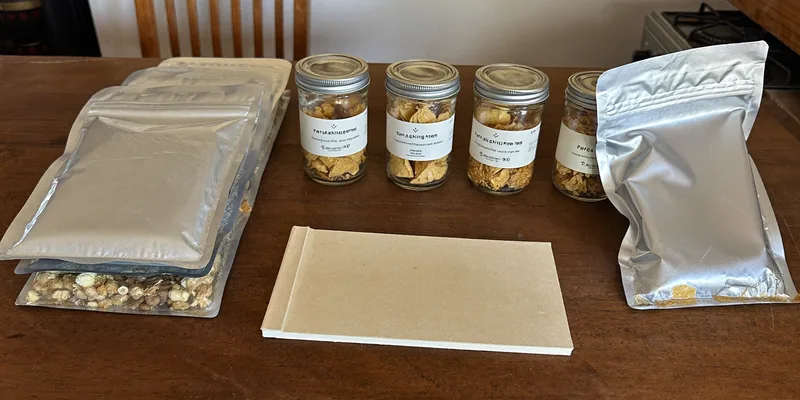
- Consumables are the quiet cost: pump oil, filter cartridges, mylar bags and oxygen absorbers, every batch or every few batches.
Bottom line: budget the machine plus a first year of bags, absorbers and oil, then ask honestly how many batches a year you will really run.
What the Machine Itself Costs
Home freeze dryers sit in the low to mid four figures, and the price is set mostly by tray count. As of August 2026, harvestright.com lists its Small Pro at $1,695 on sale against a regular price of $2,495, with larger sizes above that. Blue Alpine, which sells direct at bluealpinefreezedryers.com, lists its Medium Select at $2,995 and its Large Select at $3,995 as of the same month.
Those two brands dominate the home market and both sell mainly direct to the buyer rather than through Amazon, so the price you see on the maker’s own site is the price that matters. Watch for the difference between a sale price and a regular price, because both companies run promotions and layaway plans, and the number in a video from last year is rarely the number today.
Size Is the Price Lever
Harvest Right lists four home sizes: four trays at 6 to 10 pounds of fresh food per batch, five trays at 10 to 15 pounds, six trays at 18 to 27 pounds, and seven trays at 40 to 50 pounds. Blue Alpine lists a medium at 8 to 10 pounds and a large at 16 to 20 pounds, with tiers it calls Select and Elite. Buying one size up costs real money and buys real throughput, which matters only if you have the harvest to fill it.
The Pump, and the Upgrade Nobody Budgets For
Every freeze dryer needs a vacuum pump, and on Harvest Right home units an industrial oil pump is included in the listed price. The upgrade that catches people out is the oil free pump, which Harvest Right lists as a $1,495 add on as of August 2026. That is a serious line item on top of an already large purchase.
Whether it is worth it depends entirely on how much you will run the machine. An oil pump means draining, filtering and topping up oil on a schedule. An oil free pump removes that chore and the recurring oil purchase, at the cost of paying for it all up front. Our maintenance walkthrough covers what the oil routine actually involves before you decide.
What It Costs to Run a Cycle
Electricity is the cost people overestimate. Harvest Right’s own FAQ states that its small and medium units run on a 110 volt dedicated 15 amp circuit and average roughly 9 to 11 amps, that the large averages about 13 amps, and that the extra large averages about 15 amps. The company estimates a small or medium batch at about $1.25 to $2.80, depending on local power rates.
The practical constraint is not the bill, it is the circuit. These machines want a dedicated circuit, they run for a day or more per batch, and they put heat and noise into whatever room they live in. That is why so many end up in a garage or a basement rather than a kitchen.
Consumables Are the Recurring Cost
Pump oil, filter cartridges, mylar bags and oxygen absorbers are what you buy again and again. Harvest Right states that its Premier pump can run 25 or more batches before the oil needs filtering or changing thanks to its gas ballast, while a standard oil pump wants attention every four to five batches, and that filter cartridges should be replaced after roughly 15 to 20 uses. Bags and absorbers are per batch, forever.
Stock the Storage Side First
Food that comes out of the chamber dry and goes into a zip bag has not been preserved, it has been dried. The sealed mylar and the absorber are the preservation step, and they are also the cheapest part of the whole setup.


Where the Money Actually Goes
Split the spend into four buckets and the decision gets easier. One is the machine, one is the pump path you choose, one is power, and one is the consumables that never stop. Only the first is a shock. The rest is a slow drip that decides whether you keep using the thing in year three.
| Cost line | One time or ongoing | What drives it | How owners cut it |
|---|---|---|---|
| The machine | One time | Tray count and finish | Buy the size you can fill, watch for sale pricing |
| Vacuum pump | One time, plus oil | Oil pump included or oil free upgrade | Stay with the included pump unless you run constantly |
| Electricity | Per batch | Model size and cycle length | Run full trays, not half loads |
| Oil and filters | Every few batches | Pump type and batch count | Filter and reuse oil per the manual |
| Bags and absorbers | Every batch | Portion size and bag count | Buy absorbers and mylar in bulk |
Prices for the machines and the pump upgrade above come from harvestright.com and bluealpinefreezedryers.com as of August 2026 and change with promotions.
Does It Ever Pay for Itself?
Sometimes, and the honest answer depends on what you put in it. The machine returns money when it preserves food you already own for free or nearly free: garden surplus, a bulk meat buy, hunted meat, dairy that would otherwise spoil, leftovers from cooking for a crowd. It does not return money when you feed it store bought snacks.
Do the arithmetic yourself rather than trusting a video. Take what you would actually process in a year, price what the freeze dried equivalent costs from a store, subtract bags, absorbers, oil and power, and see how many years the payback runs. For a lot of households the number is long enough that a dehydrator and a vacuum sealer are the better answer.
The Cheaper Paths That Cover Most of the Job
Freeze drying wins on texture, on rehydration speed and on very long storage of full meals. It does not win on every job. Herbs, fruit slices, jerky and vegetables for soup all come out fine from a dehydrator, and frozen food keeps well behind a vacuum seal. Our comparison of the two machines lays out which foods genuinely need the expensive one.
Buying Routes and What They Change
Both major brands sell direct, which is why you rarely see the machines themselves on Amazon. Costco carries several Harvest Right models, and a handful of specialty dealers carry them too. What changes between routes is warranty handling, delivery, color and pump choices, and whether a layaway plan is on the table.
Accessories are the opposite. Trays, liners, mylar, absorbers, sealers and pump oil are all easy to find from third parties, usually for less than the branded versions. Our page on what Costco actually sells covers that route in detail, and extra trays and dividers is where most owners spend their first accessory money.
Frequently Asked Questions
Is a freeze dryer worth it, or is it just an expensive toy? It is worth it when you have volume you did not pay retail for and storage plans measured in years. It is an expensive toy when it processes candy and store bought snacks. If your honest batch count is a handful a year, the money is better spent on a dehydrator, a vacuum sealer and shelving.
Why are used freeze dryers still expensive? Demand is high, the machines are heavy and awkward to ship, and pumps are serviceable, so old units keep value. If you buy used, ask how many batches it has run, what pump it has, when the oil was last changed and whether the door gasket has been replaced.
Do cheap freeze dryers exist? Not really, at least not in the sense of a working home unit for a few hundred dollars. Low priced listings tend to be laboratory units with tiny chambers, or vacuum chambers with no refrigeration, which is not the same appliance. Treat a bargain listing with suspicion.
What else do I have to buy on day one? Mylar bags, oxygen absorbers and a way to seal them, plus pump oil if your unit uses an oil pump. Tray liners and an extra tray set come next. Budget for those alongside the machine rather than discovering them after the first batch.
Can I plug it into any outlet? Harvest Right specifies a dedicated 15 amp circuit for its small, medium and large home units and a NEMA 5-20 outlet for the extra large. Sharing a circuit with a freezer or a space heater is how people trip a breaker mid cycle.
The Bottom Line
A home freeze dryer costs low to mid four figures for the machine, a possible four figure upgrade if you want an oil free pump, a couple of dollars of electricity per batch by the manufacturer’s own estimate, and a steady trickle for oil, filters, mylar and absorbers. The purchase makes sense when you are preserving food you did not pay retail for, in volume, for years of storage. If that is not your kitchen, the honest recommendation is the dehydrator route first. If it is, read our guide to the Harvest Right sizes before you pick a tray count you cannot fill.