Last updated: August 23, 2026
A bouquet is on the counter, the edges are just starting to go, and throwing it out feels wasteful. Or the roses from February are still sitting in a vase and somebody wants them kept. Drying flowers in a dehydrator is one of the few jobs where a machine bought for jerky and apple rings earns its keep in a completely different way, and it takes a fraction of the time that hanging them in a closet does.
The catch is that petals are not apple slices. They are thin, they weigh almost nothing, and a fan strong enough to move air through a full load of tomatoes will happily blow a dry rose petal into the heating element. This guide is about the gear side of the job: which trays hold petals still, which setting the machine should be on, how to keep a whole bloom from collapsing, and how to store the results so they do not go limp again in a week.
This article contains affiliate links. If you buy through them, we may earn a commission at no extra cost to you. Learn more.
Quick Answer
How do you dehydrate flowers?
- Run the machine on its lowest heat setting, the one most dehydrators label for herbs.
- Lay petals in a single layer on a fine mesh liner so the fan cannot lift them.
- Dry whole blooms face up on a rack, and expect the thick center to take far longer than the petals.
- They are done when a petal crumbles rather than folds, and they go straight into a sealed jar with the lid on.
Bottom line: low heat, mesh liners and an airtight jar afterward are the whole job. The dehydrator you already own is almost certainly the right machine.
What Drying Flowers Actually Asks of the Machine
Very little, which is the good news. Flowers need the lowest heat a dehydrator can hold and gentle, steady airflow. There is no food safety threshold to hit and no minimum temperature to reach. The two things that ruin a batch are heat high enough to bleach the color and a fan strong enough to relocate half the load.
That is why the setting matters more than the model. Any machine with an adjustable thermostat that reaches down into the herb range will dry petals. A single fixed temperature unit built for jerky will work too, but it will cook color out of anything delicate, and you will notice it most on reds and purples.
The Low Setting Is the Herb Setting
Most dehydrators mark their bottom setting for herbs, and that is the band you want. The National Center for Home Food Preservation puts herb drying at 95 degrees F to 115 degrees F, noting that temperatures as high as 125 degrees F may be needed in humid areas. Petals hold a similar amount of moisture to a tender herb leaf, so that same low band is where most people run a flower batch. If you are shopping and the spec sheet only lists a range starting well above that, the machine is built for meat, not for petals.
Trays and Liners: The Part That Decides Everything
A stock dehydrator tray has slots wide enough to lose a petal through, and a rear fan will pull loose petals off the surface within minutes. The fix is a fine mesh liner, sometimes sold as a herb sheet or a screen insert, sitting on top of the normal tray. It holds small pieces still, keeps them off the plastic ribs, and lets air pass through the underside.
Buy liners sized for your machine rather than a universal roll you cut down, because a slightly oversized sheet buckles and creates a gap the airflow escapes through. Our guide to dehydrator trays and sheets covers the difference between mesh screens, solid silicone sheets and the fruit leather trays, and which one belongs on which job.

Whole Blooms Need Height, Not Just Surface
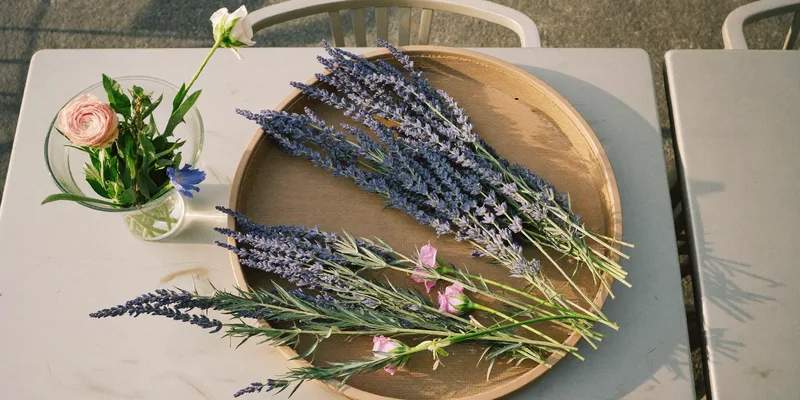
A rose head or a peony will not lie flat, and pressing it flat is how you get a brown disc. Pull one or two trays out of the stack so the bloom has vertical room, set it face up so the petals fall outward rather than folding in, and accept that the dense center will still be damp long after the outer petals are crisp. Small flat flowers like lavender, statice and hydrangea florets are much easier and dry in a single layer without any of this.
Prep by Flower Type
Preparation is short. Shake out insects, trim the stem to whatever length you need afterward, and pull off any leaf that is already yellowing. Do not wash flowers you plan to dry for craft use, because the water sits in the base of the petals and adds hours. The table below covers the ones people ask about most.
| Flower | How to load it | What slows it down | Done when |
|---|---|---|---|
| Rose petals | Single layer on a mesh liner | Overlapping petals stick together | They crumble under a fingernail |
| Whole rose head | Face up, extra tray height | The dense green base holds water | The base is hard, not spongy |
| Lavender | Loose stems laid across a mesh liner | Almost nothing, it is the easy one | Buds drop off the stem when rubbed |
| Hydrangea florets | Separated, single layer | Thick stems left attached | Petals feel papery, not leathery |
None of these times are fixed, and that is worth saying plainly. Load size, room humidity and how fresh the flowers were all move the number by hours. Check by feel rather than by clock.
Edible Flowers Are a Food Job, Not a Craft Job
If the flowers are going into tea, a cake or a spice blend, treat them exactly like herbs rather than like decorations. That means the food safety guidance applies, and it means you should know the plant, not just the color. Only dry flowers you are certain are edible and that were grown without treatment you cannot account for.
For the drying itself, follow herb practice: NCHFP gives 95 degrees F to 115 degrees F for herbs, with drying times of 1 to 4 hours, and says herbs are dry when they crumble and the stems break when bent. Store them the way you would store any dried herb, in an airtight container in a cool, dark place. Our herb dehydrator guide goes into which machines hold that low setting honestly and which ones overshoot it.
Storing Dried Flowers So They Stay Dry
Dried petals reabsorb moisture from the air faster than most dried food, and a humid kitchen will soften a jar of rose petals in a fortnight. Get them into a sealed glass jar as soon as they cool, not the next morning. A cardboard box in a basement is where good batches go to mold.
Add a desiccant packet if the jar will sit for months, and keep it out of direct light, because sunlight fades dried petals much faster than it fades dried fruit. The same rules that keep dehydrated food crisp apply here, and our guide to storing dehydrated food covers jars, absorbers and the conditioning habit in more detail.

When a Freeze Dryer Makes Sense Instead
A dehydrator flattens and shrinks a bloom. A freeze dryer keeps the shape and most of the color, which is why wedding bouquet preservation is done that way rather than with warm air. It is a very expensive answer to a small problem for most people, but if that is the goal, our page on freeze drying flowers explains what the result actually looks like and what the machine costs you in run time.
Frequently Asked Questions
Can I dry flowers in the dehydrator I use for food? Yes, as long as you clean the trays afterward. Ornamental flowers are not food, so treat them like any non-food item in a shared machine: wash the trays and liners before the next food batch rather than after it.
Why did my petals turn brown? Almost always heat. Brown edges on a dried petal mean the machine was running above the low band, or the flowers were already past their best when they went in. Drop to the herb setting and start with fresher blooms.
How long does drying flowers take? Anywhere from a couple of hours for loose lavender to most of a day for a thick rose head. Load size and room humidity move it more than anything you can set on the dial, so test by feel rather than setting a timer.
Do I need a special dehydrator for flowers? No. Any machine with an adjustable thermostat that reaches the herb setting will do it. Fine mesh liners matter more than the machine does, because a fan will move loose petals around the stack.
Are dried flowers from a dehydrator safe to put in tea? Only if the flower is an edible variety and you know how it was grown. Treat edible flowers as a food job and follow herb guidance, including airtight storage in a cool, dark place.
Can I press flowers in a dehydrator? Not really. Pressing needs weight and flatness over days, drying needs airflow. You can dry a flower and then press it, but the machine does not do both jobs at once.
The Bottom Line
Drying flowers is the least demanding thing a dehydrator does, provided you run it low and stop the fan from stealing the load. Fine mesh liners, the herb setting, extra tray height for whole blooms and a sealed jar the moment they cool will get you there. If you are still choosing a machine, our food dehydrator buying guide covers which models hold a genuinely low setting, and the herb dehydrator guide is the closest match to this job.