Last updated: August 23, 2026
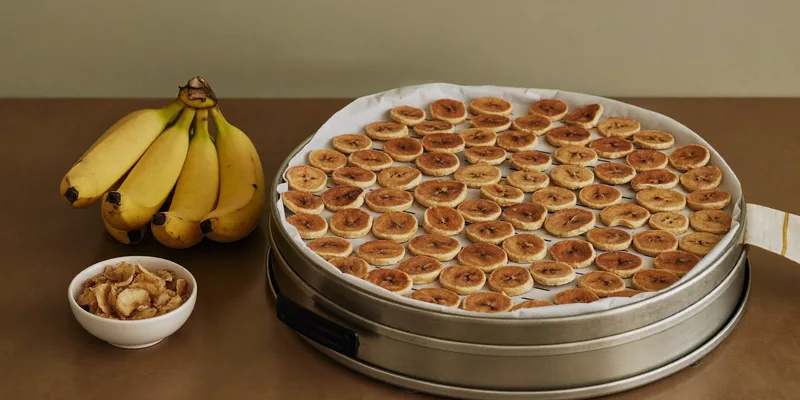
Bananas are the fruit everyone dries first, because there are always three going brown on the counter and drying them feels like rescuing something. It is also the batch most likely to disappoint, and almost always for the same reason: the expectation was the crunchy banana chips from the supermarket, and what came out was a tray of chewy brown strips.
That gap is worth clearing up before anything else, because it is not a technique problem. This guide covers what a dehydrator can and cannot produce from a banana, how to stop the browning, the temperature the extension services specify, and how to store slices that stay tacky by nature without ending up with a solid block in the jar.
This article contains affiliate links. If you buy through them, we may earn a commission at no extra cost to you. Learn more.
Quick Answer
How do you dehydrate bananas?
- Use bananas that are ripe but still firm, and slice them to one even thickness.
- Dip the slices in an acid solution first. Penn State Extension gives an ascorbic or citric acid solution for 10 minutes, or equal parts bottled lemon juice and water as a substitute.
- Penn State Extension gives 145 degrees F while surface moisture is present, dropping after one hour to 135 to 140 degrees F to finish.
- Expect chewy, not crunchy. Store bought banana chips are fried, and a dehydrator does not fry.
Bottom line: an acid dip and even slices give you good chewy rounds. Very thin slices get closest to crisp, but they will never match the fried kind.
Chewy Slices and Crisp Chips Are Different Products
The banana chips in a supermarket bag are deep fried in coconut oil and often sweetened. That is where the crunch and the pale golden color come from. A dehydrator removes water with warm air and adds nothing, so the result is darker, chewier and tastes far more strongly of banana.
Knowing that up front changes what you aim for. Home dried banana is excellent in oatmeal, granola and trail mix, and it is a genuinely good snack on its own. It is not a substitute for the fried chip, and no combination of settings will make it one.
How Close to Crisp Can You Get
Closer than most first attempts manage. Slice very thin, use slightly underripe fruit which has less sugar, and dry past the point where the slices feel pliable. What you get is brittle and snappable rather than crunchy, and it softens again within days unless it is sealed. That is the ceiling.
Ripeness and Slicing
Ripe but firm is the sweet spot. A banana with brown freckles is at peak flavor and still holds a slice. A banana that has gone soft will squash under the knife, stick to the tray and dry into a shapeless disc. Save those for fruit leather instead, where the texture does not matter.
Slice crosswise into rounds of one consistent thickness. Thin rounds dry faster and get closer to crisp; thicker rounds stay chewy and hold up better in cereal. Lengthwise strips work too and are easier to eat, though they take longer. What matters is that every piece in the load matches.
Stopping the Brown
Banana oxidizes within minutes of being cut, and drying locks the color in. Penn State Extension gives an acidic pretreatment solution of 3 and three quarter teaspoons of powdered ascorbic acid, or half a teaspoon of powdered citric acid, in 2 cups of water, with the fruit held in it for 10 minutes, and notes that equal parts bottled lemon juice and water can be substituted.
Lemon juice and water is what most kitchens use, and it works. Drain the slices properly afterward, because a dripping slice adds time to the run and can leave a pale spot where liquid pooled. Some darkening will still happen, and a light amber tone is normal rather than a failure.

They Will Still Stick
Banana is sugary and it welds itself to a tray. Use a mesh liner or lightly oil the tray, and lift the slices at the halfway point so they release cleanly at the end. This is one job where a solid silicone sheet is the wrong choice, because it blocks airflow to the underside and doubles the drying time.
Heat and Finishing
Penn State Extension specifies starting at 145 degrees F when there is surface moisture on the fruit, then reducing after one hour to 135 to 140 degrees F to finish drying. Montana State University Extension puts the optimum drying temperature for food at 140 degrees F and warns that higher temperatures cook the food rather than drying it, which raises the likelihood of molding.
Judge finished slices by the press test. Penn State Extension describes fruit as ready when it is pliable and no beads of moisture form when pressed between your fingers. Let a slice cool first, because a warm banana slice always feels wetter than it is.
Thickness and Outcome
How you cut decides what you end up with more than any other single choice. The table sorts the common options by what they produce.
| Cut | Ripeness to use | Finished texture | Best for |
|---|---|---|---|
| Very thin rounds | Just ripe, still firm | Brittle, snappable, closest to crisp | Snacking, granola |
| Medium rounds | Ripe with freckles | Chewy and flexible | Oatmeal, trail mix |
| Lengthwise strips | Ripe, firm enough to hold | Chewy, easy to eat | Lunchboxes, hiking |
| Pureed into leather | Overripe and soft | Smooth, foldable sheet | Rescuing bananas too soft to slice |
That last row is the useful fallback. Overripe bananas that will not slice make excellent fruit leather, and Penn State Extension gives 140 degrees F for leathers specifically. Our guide to fruit leather trays and dehydrators covers the sheets and the pour depth.
Conditioning and Storage
Banana is high in sugar, so the slices stay slightly tacky even when properly dried, and that makes conditioning more important rather than less. Penn State Extension describes packing the cooled fruit loosely into an airtight glass or plastic container for several days so the remaining moisture distributes evenly. Shake it daily and look for condensation on the glass.
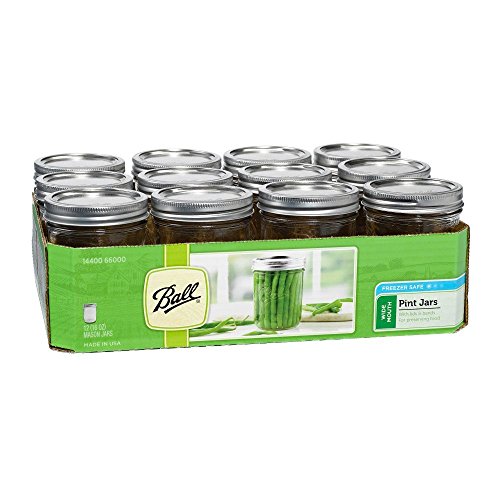
If you see any moisture on the inside of the jar, the batch goes back in the machine. After conditioning, seal in jars and keep them cool and dark, because sugary dried fruit reabsorbs humidity faster than most. Our guide to storing dehydrated food covers desiccants and jar choice, and the mason jar vacuum sealer guide covers pulling the air out for longer storage.
Pasteurize Garden or Sun Dried Fruit
If the fruit was dried outdoors rather than in a machine, Penn State Extension gives two pasteurizing options: heating in the oven at 160 degrees F for 30 minutes, or chilling in the freezer at 0 degrees F or below for 48 hours. Do that before conditioning rather than after.
Frequently Asked Questions
Why are my dehydrated bananas chewy instead of crunchy? Because a dehydrator does not fry. Store bought banana chips are deep fried, which is where the crunch comes from. Slice very thin and use slightly underripe fruit to get as close as the method allows.
What temperature do you dehydrate bananas at? Penn State Extension gives 145 degrees F while surface moisture is present, dropping after one hour to 135 to 140 degrees F. Montana State University Extension puts the optimum drying temperature for food at 140 degrees F.
Do I have to use lemon juice on bananas? Not strictly, but they will brown noticeably without it. Penn State Extension gives an ascorbic or citric acid dip for 10 minutes, and notes equal parts bottled lemon juice and water as a substitute.
Why did my dried bananas stick together in the jar? Sugar plus residual moisture. Condition the batch first, seal it properly, and if the jar lives somewhere humid add a desiccant packet. Small jars beat one large one.
Can I dry overripe bananas? Not as slices, they will not hold together. Puree them into fruit leather instead, which is the better use for fruit that has gone too soft to cut.
How long do dehydrated bananas last? Properly dried, conditioned and sealed in a cool, dark cupboard they keep for months. Left in an often opened jar on a warm counter they soften within weeks, which is what most people are describing when they say theirs went bad.
The Bottom Line
Use ripe but firm fruit, dip it, slice it to one thickness, finish at the temperature the extension guidance specifies, and expect chewy rather than crunchy. Condition the batch in a jar for several days before it goes into storage, because sugary dried fruit hides moisture well. For the wider method, see our fruit drying overview, and for the machine, the food dehydrator buying guide.