Last updated: August 23, 2026
Half a jar of leftover chili, a bag of walnuts that went soft, coffee that tasted flat by Thursday, a jar of dried apple slices from last September that turned chewy in the cupboard. Those are the four complaints that send people looking for a mason jar vacuum sealer, and all four are the same problem: air sitting on top of food you already own.
The good news is that this is the cheapest useful piece of gear in the whole preservation cupboard. If you already have a vacuum sealer with an accessory port, the attachment costs less than a case of jars. If you do not, a cordless jar sealer skips the machine entirely. The part worth getting right is which mouth size you need and what the setup can honestly do.
This article contains affiliate links. If you buy through them, we may earn a commission at no extra cost to you. Learn more.
Quick Answer
Which mason jar vacuum sealer should you get?
- If you own a bar sealer with an accessory port, buy the jar attachment and a hose. Cheapest route by far.
- If you own no sealer, a cordless jar sealer does the same job on its own battery.
- Match the mouth: regular and wide mouth need different attachments, and universal kits cover both.
- It is a storage tool, not a canning method. Sealed moist food still goes in the refrigerator.
Bottom line: pick by which jars are in your cupboard, then by whether you already have a hose to plug into.
What a Mason Jar Vacuum Sealer Actually Does
It pulls the air out of a standard mason jar and holds the flat canning lid down by the pressure difference alone. No heat, no processing, no seal ring melting. The lid dishes down, the jar stays closed, and you break the seal later by lifting the tab or sliding a knife under the edge.
What that buys you is slower staling and slower oxidation. Nuts and coffee keep their fat from going rancid as fast, dried fruit stays leathery instead of hardening, brown sugar and flour stay out of contact with the room, and last night’s chili keeps a couple of days longer in the refrigerator than it would under a plastic lid.
Best if you already own a bar sealer
Most external sealers have an accessory port on the front or side. The attachment sits over the jar lid, the hose runs from the port, and the machine’s accessory or canister button does the rest. This is the least expensive way into jar sealing by a wide margin.

Wide Mouth or Regular Mouth: Get This Right First
Mason jars come in two mouth diameters and the attachments are not interchangeable. Regular mouth is the narrower opening found on most pint and quart jars; wide mouth is the larger opening that makes packing whole fruit and scooping flour easier. An attachment sized for one will simply not seat on the other.
Check your cupboard before ordering. Most households have both, which is the argument for a universal kit that includes each size or a hood designed to cover both diameters. Our wide mouth versus regular mouth guide explains where each size earns its place.
Best if your jars are mostly regular mouth
Pint and quart jars with the narrower opening are the default in most pantries, particularly older jars handed down. The regular mouth attachment is the one that will get used weekly for coffee, spices and nuts.

Best if you want one attachment for both sizes
Universal hood style attachments fit both regular and wide mouth jars, which saves keeping track of two pieces of plastic in a drawer. They run off the same accessory hose and work with most sealers that have a canister port.

Cordless Jar Sealer or Attachment on a Hose?
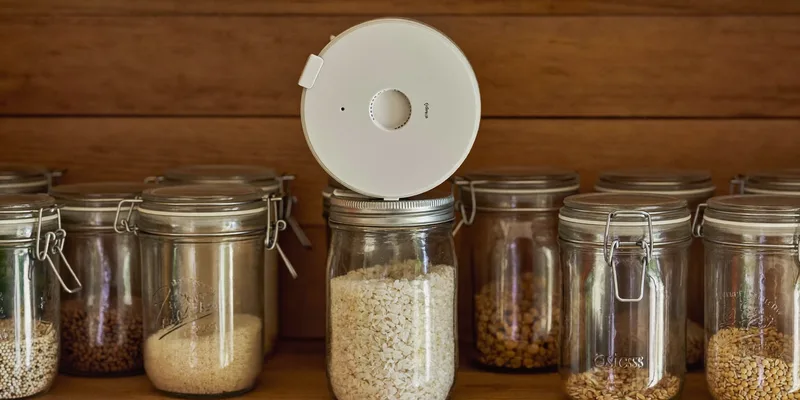
A cordless jar sealer is a self contained rechargeable unit that sits on the jar and pumps on its own, with no machine and no hose. An attachment is a passive plastic hood that needs a sealer with an accessory port to do the pulling. Both end at the same place, a dished lid on a sealed jar.
Choose the cordless unit if you have no bar sealer, if your sealer lacks an accessory port, or if you want to seal jars in the pantry rather than at the counter where the machine lives. Choose the attachment if the machine is already there, because it is far cheaper and there is no battery to charge.
Best if you have no vacuum sealer at all
A rechargeable jar sealer covers regular and wide mouth in one body on most models, runs on a USB charge, and takes up about as much drawer space as a coffee scoop. For dry goods only, it is often all anyone needs.

Best if your machine’s port needs a hose
Some sealers ship without the accessory hose or the hose goes missing. Replacements are sold separately and are the missing link between a machine you already own and the jars in your cupboard.

Which Setup Fits Your Kitchen
The decision comes down to three things: what machine you already own, which jar mouths you use, and whether the jars live near the counter. Everything else is preference. The table sorts the options by what each one requires from you.
| Setup | What it needs | Jar sizes | Best suited to |
|---|---|---|---|
| Jar attachment plus hose | A sealer with an accessory port | One mouth size per attachment | Households that already seal bags |
| Universal hood attachment | A sealer with an accessory port | Regular and wide mouth | Mixed jar cupboards |
| Cordless jar sealer | Nothing but a charge | Usually both, check the listing | No machine, dry goods focus |
| Vacuum canisters | A sealer with an accessory port | Not jars, own containers | Marinating, bulky items |
Compatibility varies by machine, so check the specific attachment listing against your sealer model before ordering.
What Jar Sealing Will Not Do
It will not make food shelf stable, and this is the single most important line in the article. The National Center for Home Food Preservation notes that removing air does not stop Clostridium botulinum, which grows without oxygen, so vacuum packaging is not a substitute for canning or for refrigeration. Sealed jars of moist or low acid food belong in the refrigerator or freezer.
Where jar sealing shines is dry goods on a shelf and cooked food in the refrigerator. Rice, beans, flour, sugar, dried herbs, nuts, coffee, dehydrated fruit and jerky are all fair game at room temperature because they are already dry. Leftovers, stock and cut produce are refrigerator jobs, sealed or not.
Lids: which ones to use
Standard flat canning lids work, and unlike canning, a lid used once for vacuum sealing can be reused as long as the sealing compound is intact and undented. Reusable plastic storage caps do not work, since the attachment needs a flat metal lid to press down on.
Getting a Seal That Holds
Four things cause a jar not to hold: a wet or greasy rim, a lid that has already been dented, an attachment that is not centered, and food packed so high that it touches the lid. Wipe the rim with a dry cloth, center the attachment squarely, and leave a finger of space at the top before running the cycle.
Test by lifting the jar by the lid alone over the counter, or by pressing the center of the lid to check it does not flex. If the lid pops back, run it again with a fresh lid. Regular mouth attachments are fussier about centering than wide mouth ones, which is the most common reason a first attempt fails.
Frequently Asked Questions
My jar attachment will not fit my jars. What is wrong? Almost always a mouth size mismatch. Regular mouth and wide mouth need different attachments, and a wide mouth hood will sit loose on a narrow jar without ever sealing. Check the jar opening, not the jar volume.
Does vacuum sealing jars replace canning? No. NCHFP guidance is explicit that removing oxygen does not prevent the organism responsible for botulism, so vacuum sealed moist food still needs refrigeration. Use jar sealing for dry goods and for refrigerated leftovers, and use a pressure canner or a water bath canner for shelf stable food.
How long do dry goods keep in a vacuum sealed jar? Longer than in an open container, and the honest answer is that it depends on the food, the temperature and the light. Dark, cool and dry does more for shelf life than the vacuum does. Add an oxygen absorber for multi year storage.
Can I reuse canning lids for jar sealing? Yes, as long as the sealing compound is smooth and the lid is not bent. That reuse is fine here precisely because there is no heat processing involved, unlike in canning where single use is the rule.
Will it work on jars that are not mason jars? Only if the jar takes a standard flat canning lid in one of the two mouth sizes. Pasta sauce jars and commercial jars usually have their own thread and lid profile and will not seal.
My leftovers keep going to waste. Is this the fix? Partly. Sealing a jar of cooked food buys days, not weeks, in the refrigerator, and it works best when you portion into jar sized servings before sealing rather than resealing the same jar repeatedly.
How do I open a jar I vacuum sealed? Break the vacuum instead of fighting the lid. Slide a thin butter knife or the tip of a bottle opener under the edge of the flat lid and lever gently until you hear air rush in, and it lifts straight off. If there is no gap to get under, run hot tap water over the lid for a moment first.
The Bottom Line
A mason jar vacuum sealer is the rare piece of gear that costs little and gets used weekly. Match the attachment to your jar mouths, use a cordless unit if you have no machine to plug into, and keep the line clear in your head between dry goods on a shelf and moist food in the refrigerator. For the pantry side of this, see vacuum sealing dry goods in jars, and for the machines themselves, our vacuum sealer guide.