Last updated: August 23, 2026
Cosori is the dehydrator people buy after their first plastic stacking model warps, cracks or dries the bottom tray twice as fast as the top one. The pitch is simple: stainless trays, a glass front door so you can see what is happening, a rear fan pushing air across the shelves instead of up through them, and a digital timer that shuts the thing off in the night.
That pitch mostly holds up, but the range has more than one machine in it and the differences matter for what you dry. This guide works through the specifications Cosori publishes for its stainless model, what the trays actually change, and where the machine is the wrong answer.
This article contains affiliate links. If you buy through them, we may earn a commission at no extra cost to you. Learn more.
Quick Answer
Which Cosori dehydrator should you buy?
- The 6 tray stainless model is the one worth having: Cosori lists 6.5 square feet of drying space and 600 watts.
- Its temperature range runs from 95 to 165 degrees F with a 48 hour timer, per the same listing.
- The compact 5 tray model suits small kitchens and small batches, at lower wattage.
- Stainless trays and a glass door are the two features owners of plastic stackers say they missed.
Bottom line: buy the stainless 6 tray if you dry regularly, and the compact model only if counter space genuinely rules the bigger one out.
What Cosori Actually Sells
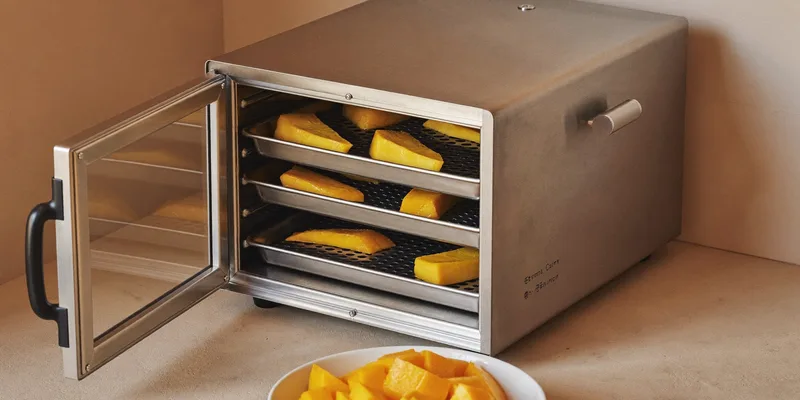
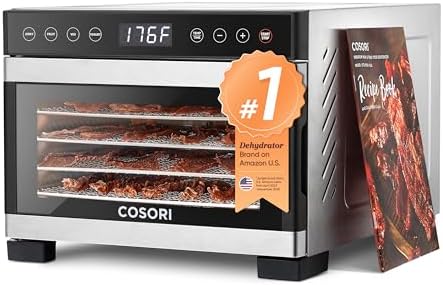
The model that carries the brand in this category is the premium stainless steel dehydrator, listed as CP267-FD. Cosori’s specifications give it six stainless steel trays, 6.5 square feet of drying space, 600 watts, a temperature range of 95 to 165 degrees F, and a 48 hour timer set in half hour increments from a digital panel.
Alongside it sits a compact five tray machine aimed at smaller kitchens, with lower wattage and food presets rather than the same drying area. Both are box style units with a door on the front and the fan at the back, which is the layout that matters more than the badge.
Why the Stainless Trays Change the Experience
Plastic trays are the first thing to fail on a cheap dehydrator. They warp with heat, crack at the corners after a season of jerky, and hold onion and garlic smells no matter how you wash them. Stainless trays do none of that, and they go in the dishwasher after a greasy jerky run instead of getting scrubbed by hand.
The second benefit is heat tolerance at the top of the range. A stainless tray loaded with marinated meat does not sag in the middle the way a thin plastic one does, so the slices stay flat and dry evenly. If your last machine’s trays bowed, that is the specific complaint this model answers, and our guide to stainless steel dehydrators compares the field.

Airflow, Noise and the Glass Door
The fan and heating element sit at the back, so air moves horizontally across each shelf rather than climbing through stacked rings. In practice that means far less tray rotation than a round stacking dehydrator needs, which is the single biggest quality of life difference between the two designs. Our explainer on vertical against horizontal airflow covers why.
Noise is the other reason box units get bought. Cosori’s listing puts operation under 48 decibels with a brushless motor, which is the difference between a machine you can leave running overnight in an open plan kitchen and one that gets banished to the garage. The glass door is not a gimmick either: being able to see the top tray without opening the cabinet stops you dumping heat every time you get curious.
Using It for Jerky
Jerky is what most people buy a dehydrator for in the fall, and this is where the temperature ceiling matters. Cosori lists the stainless model’s range as topping out at 165 degrees F, which sits at the level home jerky guidance is built around.
The safety step is not optional and it is not a machine feature. The NCHFP recommends heating meat to 160 degrees F, and poultry to 165 degrees F, before or after the drying process, because drying alone at typical dehydrator temperatures is not enough to destroy the bacteria of concern. Our jerky time and temperature chart lays out the sourced numbers, and the jerky dehydrator guide covers the machines built for it.
The Two Cosori Setups Compared
Figures below come from Cosori’s own product specifications. The choice is genuinely about counter space and batch size rather than quality.
| Model | Trays and space | Controls | Suits you if |
|---|---|---|---|
| Premium stainless CP267-FD | 6 stainless trays, 6.5 square feet | 95 to 165 degrees F, 48 hour timer | You dry in batches and want dishwasher safe trays |
| Compact 5 tray | 5 trays, smaller footprint | Presets for jerky, fruit, vegetables, yogurt | Apartment kitchen, occasional small loads |
| Older plastic tray models | Varies by generation | Digital, similar range | Budget matters more than tray material |
| Any of them for herbs | Fine at the low end of the range | Low temperature setting | Add mesh liners so leaves do not blow around |
The Smaller Option
If the six tray unit will not fit on your counter and you dry a tray of apple slices now and then rather than a garden’s worth, the compact model does the same job in less space.
Where It Is the Wrong Machine
Two situations. If you process large harvests, say a full orchard picking or a deer, six trays fill up fast and you will be running loads for days. That is where a nine tray box or an expandable stacking system with a lot of trays is the better tool, and our guide to larger dehydrators covers that end.
The other is fine work like herbs and small seeds, which fall straight through open trays. That is a five dollar problem, not a machine problem: mesh liner sheets solve it on any dehydrator, and our guide to trays and sheets covers the liners worth having.

Frequently Asked Questions
Is the Cosori loud enough to keep you awake? Cosori’s listing puts it under 48 decibels with a brushless motor, which most owners describe as a steady low hum rather than a fan roar. It is a machine you can leave running overnight in a kitchen without closing the door on it.
Do the trays go in the dishwasher? The stainless trays are dishwasher safe, which is the main reason people move up from plastic after a season of jerky. Check the manual for the door and the housing, which are not dishwasher items.
Can I make safe jerky in it? Yes, if you add the heat step. The NCHFP recommends heating meat to 160 degrees F, and poultry to 165 degrees F, before or after drying. Drying at dehydrator temperatures alone is not the safety step, which is true of every home dehydrator regardless of brand.
Does it need tray rotation? Far less than a stacking dehydrator does, because the fan sits at the back and pushes air horizontally across each shelf. Loading trays evenly and not overlapping slices matters more than rotation on this design.
How does it compare to Excalibur and Nesco? Broadly: Cosori for stainless trays and a quiet motor, Excalibur for a bigger box and horizontal airflow at nine trays, Nesco for expandable stacking capacity at a lower entry point. We set them side by side in the three brands compared.
What temperature should I use for fruit and vegetables? Follow the drying temperatures in a tested source for the specific food rather than a single number for everything, since fruit, vegetables, herbs and meat all differ. Our dehydrator guide points to where those tables live.
The Bottom Line
The stainless six tray Cosori is a box dehydrator that fixes the two things people hate about cheap stackers, warping trays and constant rotation, and it is quiet enough to run overnight. Buy the compact version only if space forces it, and step up to a nine tray machine if you process big harvests. Read next: Cosori against Excalibur and Nesco, and the jerky dehydrator guide if fall meat is the reason you are shopping.