Last updated: August 23, 2026
You pull seven jars out of the canner, all sealed, and three of them are down an inch of liquid with the beans standing dry at the top. There is a puddle of brine in the canner water and a sticky ring under each ring band. Nothing broke, nothing failed a seal test, and the batch still looks wrong.
That is siphoning, and it is one of the most common complaints in home canning. It is almost always caused by something in the last five minutes of the process rather than by anything you did while filling the jars, which is good news, because those five minutes are easy to change.
This article contains affiliate links. If you buy through them, we may earn a commission at no extra cost to you. Learn more.
Quick Answer
What causes siphoning in canning, and is the food still safe?
- Rapid pressure or temperature change pulls liquid out of the jars. Cooling a pressure canner quickly is the biggest single cause.
- Too little headspace, trapped air bubbles and jars packed too tightly all make it worse.
- Sealed jars that lost some liquid are still safe. Food above the liquid may darken, which is quality rather than safety.
- Do not open a sealed jar to top it up. That breaks the vacuum and the jar is no longer processed.
Bottom line: let the canner cool on its own, get the headspace right, and accept a little liquid loss as cosmetic.
What Siphoning Is
Siphoning is liquid escaping past the lid during processing or cooling. Inside a hot jar, the contents are boiling and pressure is high. If the pressure outside the jar drops faster than the pressure inside it, the contents push out under the lid until the two balance, taking brine or syrup with them.
The lid still seals afterward, because sealing happens later as the jar cools and the remaining steam condenses. That is why siphoned jars usually pass the seal check and still look short. The liquid is not lost through a defect, it is lost through physics.
Why It Happens to Some Jars and Not Others
Because the pressure differential is not identical across the canner, and neither is the pack. The two big drivers are how fast the canner comes down from pressure or off the boil, and how much room the contents had to expand into. Jars nearest the middle of a crowded canner often behave differently from the ones at the edge.
Cooling too fast is the one to fix first. Removing the weight early, running water over the canner, or lifting jars straight out of boiling water into cold air all produce a fast drop. Letting a pressure canner depressurize on its own, and letting the jars stand in the switched off water bath for a few minutes before lifting them, flattens the curve.
Headspace and Air Bubbles
Headspace is the gap between the food and the rim, and it is not a rough guide. The USDA Complete Guide to Home Canning sets it by product type, commonly a quarter inch for jams and jellies, half an inch for most fruits and tomatoes, and an inch for low acid foods going into a pressure canner. Too little space and the contents have nowhere to expand except past the lid.
Trapped air bubbles do the same thing from inside the pack. Running a plastic bubble remover down the inside of the jar before the lid goes on releases them and lets the level settle, which is why the tool exists and why the recipe tells you to do it.

Is Food That Siphoned Still Safe?
Yes, if the jar sealed. The food is processed and the vacuum is intact, so the jar is shelf stable on the same terms as any other. Food sitting above the liquid line may discolor or dry out over the months, which affects quality and appearance rather than safety.
The exception worth watching is the jar that lost most of its liquid. There is no benefit in storing a quart that is half empty, so put those in the refrigerator and use them soon. Any jar that did not seal is a different situation, handled in our guide to jars that did not seal.
Can You Open the Jar and Add Liquid?
No. Opening a sealed jar breaks the vacuum and turns a processed jar back into an unprocessed one, and simply resealing it does nothing, because the added liquid has not been through a process. If you top up and reseal, you have a jar that looks canned and is not.
The two legitimate options are to leave the jar alone and use it sooner, or to empty it, reheat the contents and reprocess in a clean jar with a new lid within a day, following a tested hot pack process. Reprocessing costs quality, so for one short jar the refrigerator is usually the better call.
How to Prevent Siphoning Next Batch
Five changes cover almost all of it: cool the canner slowly, use the headspace your recipe specifies, remove air bubbles, avoid packing food in tightly, and keep the temperature of the jars and the canner water close when they meet. None of them costs anything except the tools that make the measuring easier.
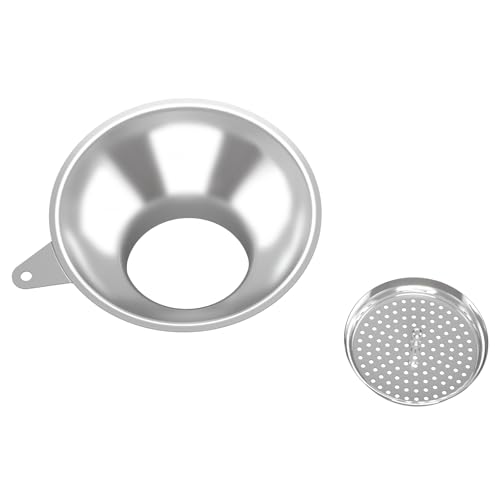
A wide mouth funnel is the practical piece here. It keeps food out of the threads, gives you a clean rim, and makes it far easier to stop at the right level rather than overshooting and then spooning food back out. A clean rim also matters for the seal itself.
Do Not Skip the Rack
Jars sitting on the bare bottom of a canner take heat straight from the burner through the metal, which produces exactly the local boiling that drives liquid out, and it is also the main cause of cracked jars. A rack holds them off the base and lets water circulate underneath.

Causes and Fixes at a Glance
The table pairs each cause with the change that addresses it. Headspace requirements come from your tested recipe and follow the product categories in the USDA Complete Guide to Home Canning.
| Cause | What you see | Fix | When to do it |
|---|---|---|---|
| Fast cooling or venting | Most of the batch lost liquid | Let the canner depressurize on its own | End of the process |
| Too little headspace | Food pushed under the lid, sticky bands | Measure to the recipe’s headspace | While filling |
| Trapped air bubbles | Level drops after processing | Run a bubble remover round the jar | Before the lid goes on |
| Jars packed too tightly | Dense packs siphon, loose ones do not | Pack to the recipe, do not force food in | While filling |
| Jars on the canner base | Scorching, cracks, heavy loss | Use a rack | Loading the canner |
If liquid loss keeps happening in a pressure canner even with slow cooling, the gasket or the vent may be the real culprit, and our pressure canner troubleshooting guide works through those parts.
Frequently Asked Questions
Why did my jars lose liquid in the pressure canner? Almost always a fast pressure drop. Removing the weight before the canner has come down on its own, or moving it off the burner to speed things up, causes the contents to push out under the lid. Let it depressurize naturally and let the jars stand briefly before lifting them out.
Is food above the liquid line safe to eat? Yes, in a sealed jar. It may darken or dry over time, which is a quality change. If more than about half the liquid is gone, refrigerate that jar and use it soon rather than storing it.
Can I add water to a jar that siphoned? No. Opening the jar breaks the seal and the added liquid is unprocessed, so resealing produces a jar that only looks canned. Either use the jar sooner, or reprocess the contents properly in a clean jar with a new lid within a day.
Does siphoning stop a jar from sealing? Usually not, because the seal forms as the jar cools. What does stop a seal is the residue siphoning leaves on the rim, so wipe rims carefully before the lid goes on and check every seal the next morning.
Should I reprocess a batch that all siphoned? Not if the jars sealed. Reprocessing costs texture and color and gains nothing on a sealed jar. Fix the cooling for the next batch and store these as they are.
Does raw pack siphon more than hot pack? It often does, because raw food shrinks in the jar during processing and the level drops. Hot packing shrinks the food first, which is one of the reasons tested recipes prefer it for several vegetables.
The Bottom Line
Siphoning is a pressure story, not a spoilage story. Slow the cooling down, measure headspace to the recipe instead of eyeballing it, get the bubbles out, and keep the jars off the canner base. Sealed jars that lost liquid are fine to store, jars that lost most of it go in the refrigerator, and no sealed jar gets opened to be topped up. Read next: what to do when jars do not seal, and our canning tools guide for the funnel and headspace tool that make the filling stage repeatable.