Last updated: August 23, 2026
Most people buy a vacuum sealer after they throw something away. A half share of a beef order that went gray at the edges, two pounds of blueberries turned to frost, the venison from last November that nobody wants to touch. What you are buying is the end of that particular waste, and the machines differ a lot in how well they end it.
The listings do not help. They lead with suction numbers and the count of bags in the box. What decides whether the machine stays on the counter is simpler: whether it handles the moisture in your food, whether it can run long enough to finish a freezer session, and whether its bags are ones you can afford to keep buying.
This article contains affiliate links. If you buy through them, we may earn a commission at no extra cost to you. Learn more.
Quick Answer
Which vacuum sealer should you actually buy?
- Freezing garden produce and portioning meat a few times a year: a countertop suction sealer with a moist setting and built in roll storage.
- Whole animals, bulk beef orders, long freezer sessions: a heavy machine with a wide seal bar and a fan cooled motor that will not need cooling breaks.
- Soups, marinades, brines, anything wet: a chamber sealer, because suction machines pull liquid toward the pump.
- Fridge leftovers and open bags in the pantry: a cordless handheld pump with zipper bags or containers, not a heat sealer.
Bottom line: match the machine to the wettest, biggest job you will actually do, then check what its bags cost per foot.
What a Vacuum Sealer Actually Buys You
It buys you a barrier against oxygen and against the dry air of a freezer. Freezer burn is moisture leaving the food and frost forming in the space around it, so removing that space slows the damage down. It also compacts the packages, which is why a sealed freezer holds noticeably more.
What it does not buy you is preservation on its own. Removing air slows spoilage organisms that need oxygen, and it does nothing to the ones that do not. That distinction runs through everything below, and it is the reason the safety section near the bottom of this page is not filler.
The Three Machine Types, and Who Each One Is For
Home vacuum sealers come in three shapes: external suction machines, chamber machines, and handheld pumps. They are not tiers of quality. They solve different problems, and buying the wrong shape is the most expensive mistake in this category, because the bags are not interchangeable either.
External Suction Sealers
The bag sticks out of the machine, a pump draws air through the open end, and a heated wire melts the mouth shut. These need embossed bags with channels in them, because a smooth bag collapses flat and blocks its own airflow. This is the type almost everyone means by the word FoodSaver.
They are compact, they cost the least, and they struggle with liquid. Anything loose in the bag travels toward the pump, which is why they all have a drip tray and a moist setting.
Chamber Sealers
The whole bag goes inside a box, the air is removed from the box and the bag at once, and the pressure equalizes before the seal bar closes. Because nothing is being sucked out of the bag mouth, soup stays where it is. Avid Armor lists this pressure equalizing behavior as the reason its Ultra Series handles liquid rich foods.
They are heavy, they take real counter or shelf space, and they use plain smooth pouches that cost less per bag than embossed ones. If your preserving involves stock, sauce or brined meat, this is the honest recommendation even though it is the bigger purchase. Details in our chamber sealer guide.
Handheld Pumps
A cordless pump that pulls air through a valve in a zipper bag, a lid or a container. There is no heat seal at all. Zwilling lists its Fresh and Save pump as a rechargeable unit that stops on its own once the vacuum is reached, and FoodSaver sells a similar handheld for its own zipper bags.
These are fridge and pantry tools. They will not reach the vacuum a freezer needs for a year, and that is fine, because most of what they hold gets eaten in a week. See our handheld sealer guide.
Sealers by the Job You Bought One For
Skill level is not the useful filter here. The useful filter is the job that made you start shopping. Below are the five situations that cover almost every purchase, with the type of machine each one calls for.
If You Want One Machine That Covers Most Household Jobs
A countertop suction sealer with dry and moist settings, a built in roll holder and a cutter bar, plus an accessory port for jars and containers. FoodSaver lists the VS3150 as combining a heat seal strip with a detachable handheld unit and a removable vacuum chamber with an integrated drip tray, which is the cleanup part people underestimate.

If You Seal Wet Food Often but Cannot Fit a Chamber Machine
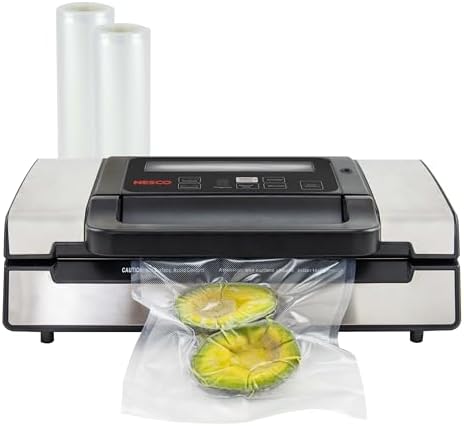
Look for a double seal and a gentle or pulse vacuum mode. Nesco lists the VS-12 with dry, moist and double seal settings, a normal and gentle pressure choice, and a pulse function for delicate items, which is an unusually complete control set on a countertop machine.
If You Cook Sous Vide as Well as Freeze
You want a machine whose bags tolerate a long warm water bath and whose seal you can trust while submerged. Anova lists its Precision Vacuum Sealer Pro with separate dry and moist modes and a double seal, and sells matching roll stock. Our sous vide sealer guide covers the bag side.

If Soups, Stocks and Marinades Are the Point
Skip the suction machines. Avid Armor lists the USV32 with an 11.5 inch seal bar, a glass lid and an accessory hose port, and markets it specifically for soups, sauces and liquid rich foods. It is a large object, and it solves the one problem a countertop sealer cannot.

If Most of Your Waste Happens in the Fridge
Half a cucumber, an opened block of cheese, a bag of coffee. A rechargeable handheld pump with reusable zipper bags or containers handles all of it in seconds and never touches a roll of bag stock. It is also the cheapest way to find out whether you like vacuum storage at all.

The Specs That Change Your Week, and the Ones That Do Not
Suction strength gets the headline and rarely decides anything at home. Seal bar width, duty cycle, bag compatibility and the moisture controls are what you feel in a long session. The table sorts what to weigh and what to ignore.
| Spec | How it is sold | What it changes in practice | Verdict |
|---|---|---|---|
| Seal bar width | A size number | Caps the widest bag you can use, so it caps roast and whole fish portions | Check before buying |
| Duty cycle | Rarely listed at all | Decides whether you finish a bulk session or wait out cooling breaks | Decisive for bulk |
| Moist and dry modes | A toggle | The difference between a sealed bag and juice in the drip tray | Buy for it |
| Suction strength in Hg | The headline number | Home machines cluster close together, and bags fail first | Low priority |
| Bag type required | Buried in the fine print | Embossed for suction, smooth pouches for chamber, and not the reverse | Read the fine print |
Duty cycle separates a household machine from a hunting season machine. LEM lists the MaxVac 250 with a continuous run fan and roughly 250 consecutive seals, and Weston lists the Pro-2300 with a fan cooled motor built for repetitive use. Nothing in the discount tier lists a figure like that.
What Vacuum Sealing Does Not Do
It does not make food shelf stable. The National Center for Home Food Preservation is explicit that vacuum packaging is not a substitute for canning, and USDA guidance on reduced oxygen packaging notes that removing oxygen creates conditions favorable to Clostridium botulinum, which is exactly the organism that does not need air. Sealed food still belongs in the refrigerator or the freezer.
Fresh garlic, onions and mushrooms sealed and left on a counter are the classic warning case in extension guidance, so keep those cold or dry them first. If you want food on a pantry shelf at room temperature, that is pressure canning, drying or freeze drying, and we lay the methods out in vacuum sealing against canning.
Frequently Asked Questions
Can I use regular ziplock freezer bags with a vacuum sealer? Not with a heat sealing machine. A zipper bag has no embossed channel, so the air path collapses and the vacuum stalls, and the film is not built for the seal bar. Handheld pumps are the exception, because brands sell valved zipper bags made for them.
Why does my machine pull liquid out of the bag? Because a suction sealer removes air through the open end, and anything loose follows it. Freeze wet food solid first, use the moist setting, or move to a chamber machine. The full set of workarounds is in our guide to sealing liquids.
Do vacuum sealed foods still need to be frozen? Yes for meat, fish and cooked dishes. Dry goods such as rice, beans and dehydrated fruit are the exception and can sit in a pantry, which is what storing dried food covers.
Is the expensive brand of bag worth it? Sometimes. Thin bags fail at the corners of bone in meat and at freezer temperatures. The mil rating and the channel pattern matter more than the logo, and we break that down in the bag guide.
My sealer worked last season and now it will not hold a vacuum. Usually the foam gaskets, which compress and crack with age. FoodSaver support puts gasket inspection first for exactly this symptom. Walk the checklist in the troubleshooting guide before buying anything.
The Bottom Line
Buy for the wettest and largest job you will genuinely do, not for the average one. A countertop suction sealer with moist and dry modes covers produce, portioned meat and dry goods for most households. A chamber machine is the answer if liquid is routine, and a heavy fan cooled machine is the answer if you process a whole animal in a weekend. Then price the bags, because that is the recurring cost that decides whether you keep using it. Read next: which bags fit which machine and what a full freezer of meat needs.