Last updated: August 23, 2026
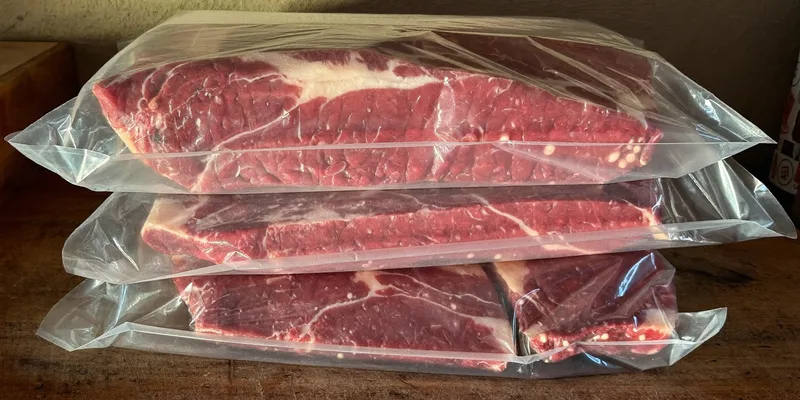
A quarter of beef arrives, or a deer comes back from the processor in white paper, or the salmon share lands all at once in July. Suddenly you are standing at a counter with sixty pounds of protein and a machine that was sold on the promise of keeping half an avocado fresh. This is the job that separates vacuum sealers, and it separates them fast.
Meat is the hardest thing a home sealer handles. It is wet, it is heavy, bones make holes, fat gets into seal lines, and there is far more of it than any other preserving task. A machine that is perfectly good for garden produce can spend an entire afternoon flashing a cool down light while the meat warms up on the counter.
This article contains affiliate links. If you buy through them, we may earn a commission at no extra cost to you. Learn more.
Quick Answer
What do you need in a vacuum sealer for meat?
- A duty cycle that survives a long session. Fan cooled motors keep going, small machines need breaks.
- A wide seal bar, because roasts, whole fish and backstraps do not fit an eight inch bag.
- A moist setting and ideally a double seal, since meat always brings purge to the seal line.
- Heavier film than you use for vegetables, because rib ends and fin spines make pinholes.
Bottom line: size the machine to your biggest processing day, not your average week.
Why Meat Is the Hardest Thing to Seal Well
Four reasons at once. Meat releases purge that runs to the seal line, fat coats the film where the bar needs clean plastic, bones and shells puncture from the inside, and the volume means dozens of cycles back to back. Any one of those is manageable and all four together is what breaks cheap machines.
The failures show up months later. A pack that looked fine in November is loose and frosted by February, and the food inside is safe but gray and dry at the edges. That is freezer burn, and it means air got back in through a pinhole or a seam that never fully closed.
The Four Features That Decide a Long Session
Suction strength is not one of them. Home machines cluster close together on vacuum and separate sharply on how long they can work, how wide they can seal, how they handle moisture, and whether the seam is one line or two. Those are the specs to compare.
Duty Cycle, the Spec Nobody Prints
This is how many seals a machine will do before it needs to cool. Most consumer listings say nothing about it, which is itself informative. LEM lists the MaxVac 250 with a continuous run fan and roughly 250 consecutive seals, and Weston lists the Pro-2300 with a fan cooled motor built for continuous repetitive use. Machines that name a number are the ones built for a processing day.
Seal Bar Width
The bar sets your widest bag, and the widest bag sets your largest cut. Weston lists the Pro-2300 with an extra wide bar for bags up to 15 inches and LEM lists a 13.39 inch bar on the MaxVac 250. Standard household machines usually top out at 11 inches, which handles portions and struggles with a whole loin.
Moisture Control and a Double Seal
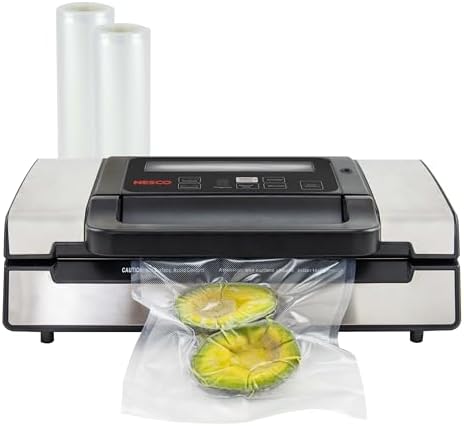
Purge is guaranteed with raw meat, so a moist setting that fires the seal earlier is not optional. A double seal gives you a second line of defense on the seam that most often fails. Nesco lists the VS-12 with dry, moist and double seal settings, which is an unusually complete set at countertop size.
Cleanability
You will spill blood and juice on this machine on day one. A removable drip tray that goes in the dishwasher turns a twenty minute cleanup into a two minute one, and FoodSaver lists a removable vacuum chamber with an integrated drip tray on the VS3150 for exactly this reason.
Sealers by the Kind of Meat Year You Have
Match the machine to the biggest day, because that is where the money is either well spent or wasted. Three patterns cover most buyers: the occasional bulk grocery run, the annual hunt or half animal, and the household that processes something almost every month.
If You Process a Whole Animal or a Bulk Order
A heavy machine with a fan cooled motor and a wide bar. LEM lists the MaxVac 250 with stainless construction, an integrated roll holder and cutter, a one handed locking lid, and both automatic and manual functions so you can control vacuum time on delicate cuts. It is built for hunters and home processors, and it behaves like it.

If You Want the Widest Bar You Can Reasonably Buy
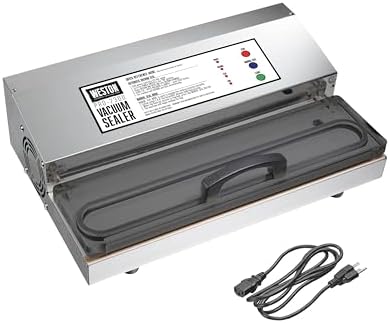
Weston lists the Pro-2300 in stainless with a double piston pump, a wide seal bar for bags up to 15 inches, LED stage indicators, an automatic mode and a manual seal mode for controlling pressure on soft foods. Weston’s listing describes it as commercial grade, which is a marketing term rather than a certification, and the fan cooled motor behind it is the part that matters.
If You Portion Meat Regularly but Not by the Animal
A countertop machine with real controls beats a bigger machine you have no room for. The Nesco VS-12 combination of moist mode, double seal and a gentle vacuum setting covers steaks, ground portions, chicken and fish without a chest freezer sized appliance on the counter.
Whatever You Buy, Upgrade the Bags for Bone
Heavier film is the cheapest freezer burn insurance there is. Bone in chicken, ribs, shellfish and fish with fins all deserve thicker stock or a double bag, and the difference in cost is small against a ruined pack. The reasoning is in the bag guide.

What Actually Causes Freezer Burn in Sealed Meat
Air that got back in, almost always through a specific fault. The table sorts the four ways it happens on meat, in the order they show up in owner accounts, along with what fixes each one.
| Cause | What you see | Fix | Cost |
|---|---|---|---|
| Purge in the seal line | Cloudy seam, pack loose in days | Wipe the bag mouth, moist mode, double seal | Free |
| Bone puncture | Pack slowly reinflates, frost inside | Pad the bone, double bag, heavier film | Bags |
| Machine overheating mid session | Weak seals late in the batch | Rest the machine, or buy a fan cooled one | Free, then the machine |
| Bag too small for the cut | Food against the seam | Wider roll stock, longer tail | Bags |
Notice how many of those are free. Before replacing a machine, run one session where you wipe every bag mouth, leave a longer tail, and double seal everything, and see how many failures survive that.
Handling Meat Safely While You Seal
Sealing is packaging, not preservation. USDA FSIS guidance is that food held frozen at 0 degrees F stays safe indefinitely, with quality rather than safety being what declines over time, so the real job of a good seal is protecting texture and flavor. Getting the meat cold quickly matters more than any machine feature.
Work in batches small enough that the rest stays refrigerated or on ice, label every pack with the cut and the date before it goes in, and get packs flat against the freezer floor or shelf so they chill fast. Vacuum packaging removes oxygen, and USDA guidance on reduced oxygen packaging notes those conditions favor Clostridium botulinum, so refrigeration or freezing is not optional for sealed raw meat.
Frequently Asked Questions
How long does vacuum sealed meat last in the freezer? Longer than paper wrapped meat, and the honest answer is that it depends on the cut, the fat content and the seal. FSIS treats food kept solidly frozen as safe indefinitely and puts a time limit on quality, not safety. Label and rotate rather than trusting a number.
Can I vacuum seal meat and keep it in the fridge instead? Only for a short time, and it is still perishable. Removing oxygen slows some spoilage organisms and does nothing to the ones that prefer no air, so refrigerate as you would any raw meat and freeze what you will not cook soon.
Should I freeze meat before sealing it? It helps with purge and with soft ground meat, and it costs you freezer space and a day. A partial freeze on a tray until the surface firms is the useful middle ground.
Do I need a chamber machine for meat? Not for most people. Meat is wet but not liquid, and a moist setting handles it. A chamber machine earns its place if you also seal brine, stock or marinades in quantity.
My machine stops partway through a big session. That is thermal protection working. Give it the cooling time, keep the remaining meat cold, and if it happens every session, the machine is undersized for your year. See what heavier machines change.
How long does vacuum sealed meat last in the fridge? Treat it as the same clock as unsealed meat. FSIS puts raw ground meat at 1 to 2 days in the refrigerator and raw steaks, chops and roasts at 3 to 5 days, and vacuum packaging does not extend those windows, because the organisms that matter without oxygen are unaffected by it. Seal for the freezer, not for extra fridge days.
The Bottom Line
Size the machine to your biggest processing day. A whole animal or a bulk order wants a fan cooled motor, a wide seal bar and a listed duty cycle, because the cheap machine will finish that afternoon on cool down breaks with meat warming beside it. Regular portioning is different, and a countertop machine with moist mode and a double seal handles it well. Whatever you buy, put money into film heavy enough for bone, wipe every seal line, and get packs cold fast, because those three habits prevent more freezer burn than any spec on the box. Read next: choosing film that survives bone and when a heavier machine is the right call.