Last updated: August 23, 2026
Most food waste in a normal household is not a freezer problem. It is half a bell pepper, an open block of cheddar, the last third of a bag of coffee, a bowl of leftovers that gets pushed to the back. None of that is worth firing up a countertop machine and cutting a length of roll stock for, which is exactly why it gets thrown away instead.
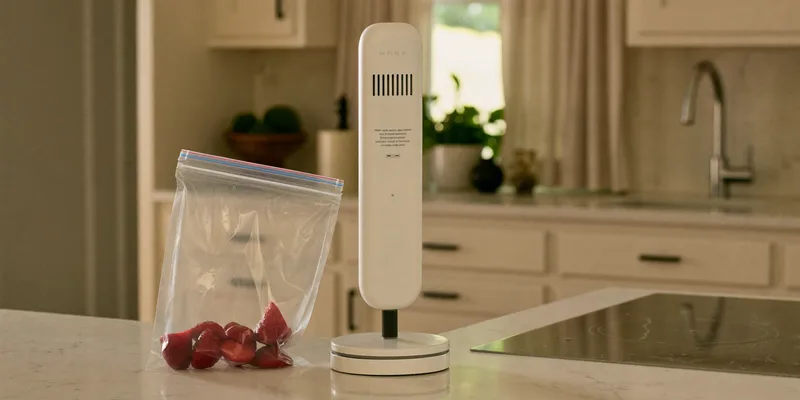
A handheld vacuum sealer is built for that gap. It is a small rechargeable pump that pulls air through a valve in a zipper bag, a container lid or a jar cap. There is no heat seal, no bag cutting, and no cleanup, and the honest tradeoff is that it does not replace a real sealer for freezer work.
This article contains affiliate links. If you buy through them, we may earn a commission at no extra cost to you. Learn more.
Quick Answer
Is a handheld vacuum sealer worth buying?
- Yes for fridge and pantry jobs. Leftovers, cut produce, cheese, coffee and open snack bags all take seconds.
- No as a freezer machine. A valve and a small pump do not reach the vacuum a long freezer stay needs.
- Check the ecosystem before you buy, because bags, lids and containers are brand specific.
- Reusable bags change the running cost, since nothing gets cut off and thrown away.
Bottom line: a handheld is a second machine for most people and the only machine for some. It is not a replacement.
What a Handheld Sealer Actually Is
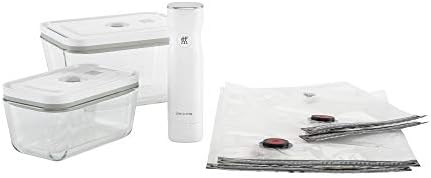
A cordless pump with a nozzle. You press it over a one way valve, it draws air out of whatever is behind that valve, and it stops when the vacuum is reached. Zwilling lists its Fresh and Save pump as a rechargeable lithium ion unit charged over USB that stops automatically once enough vacuum is created, which is how most of them work.
Because there is no heat seal, the container does the sealing. That is the whole design, and it explains both the speed and the limits. Nothing to cut, nothing to clean, and no ability to make a bag out of a roll.
Where a Handheld Beats a Countertop Machine
On small, frequent jobs. The countertop machine is faster per pound and slower per item, and most of a week’s waste is items rather than pounds. A handheld also opens up containers and jars, which bags handle badly.
The Fridge Jobs
Half an avocado, sliced deli meat, a bowl of chili, greens that go limp in three days. These are one press each, and the pack goes into the fridge in the same container you would have used anyway. That is the difference between using the tool and meaning to.
The Pantry Jobs
Coffee beans, nuts, chips, flour in a canister, and dried herbs. Oxygen is what makes fats go rancid and coffee go flat, so pulling it out of a container is genuinely useful even without a deep vacuum. For dried food you preserved yourself, our guide to storing dehydrated food covers when a jar beats a bag.
Where a Handheld Falls Short
Long freezer storage. A valve and a small battery pump pull a shallower vacuum than a heat sealed cycle, and the valve itself is a slow leak path over months. For meat going away until spring, that is not the tool, and no amount of pressing the button changes it.
The second limit is throughput. Sealing forty portions of ground venison with a handheld is not a plan. That job wants a heat sealer with a real duty cycle, which is what the meat sealing guide is about.
The Part People Regret: Ecosystems
Handheld systems are closed. The pump fits its own bags, its own container lids and its own jar caps, and mixing brands mostly does not work. That makes the first purchase a decision about a whole line of storage rather than a decision about a gadget.
Think about what you actually store. If it is mostly leftovers, glass containers matter more than bags. If it is mostly cut produce and cheese, reusable bags are the better spine of the system. Buy the starter set that matches, and add pieces later.
Handheld Systems by What You Store
Four buying patterns cover almost everyone. Decide which storage shape dominates your fridge before you compare pumps, because the pumps are more alike than the systems around them are.
If You Want a Glass Container System
Zwilling lists the Fresh and Save line with dishwasher safe glass containers, vacuum bags in several sizes and a wine stopper, all driven by the same rechargeable pump. A glass based system suits households whose waste is cooked leftovers rather than raw ingredients.
If You Already Own a FoodSaver
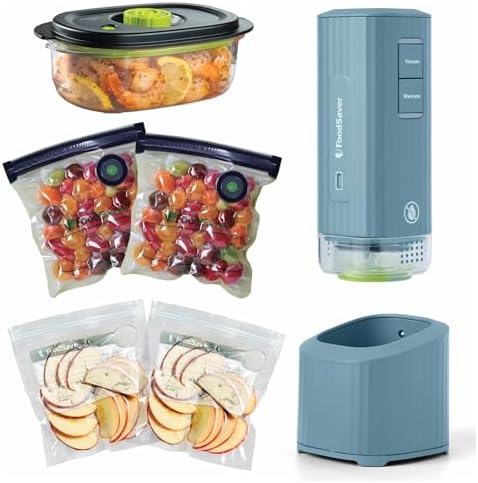
FoodSaver sells a cordless handheld that works with its own zipper bags, and several countertop models ship with one built in. FoodSaver lists the VS3150 as combining a heat seal strip with a detachable handheld, which is the cleanest way to get both jobs from one purchase.
If Reusable Bags Are the Point
Valved zipper bags wash and refill, so there is no film being cut off and binned every time. They are the right choice for produce, cheese, marinating and packed lunches, and they are the reason a handheld can end up costing less to run than a heat sealer.

If You Mostly Store Cooked Food
Vacuum containers with valved lids, in the sizes your fridge shelves actually take. They stack, they do not leak, and soup goes in without any of the drama a bag brings. More in the container guide.

Handheld Against a Countertop Sealer
These are complements, not competitors. The table lines up the four differences that decide which one you reach for on a given evening.
| Factor | Handheld pump | Countertop sealer | Who wins |
|---|---|---|---|
| Vacuum depth | Enough for fridge and pantry | Deep enough for long freezing | Countertop for the freezer |
| Speed per item | Seconds, no setup | Cut, position, cycle, wipe | Handheld for one item |
| Running cost | Reusable bags and lids | Roll stock every time | Handheld over a year |
| Bulk sessions | Not practical | What it is built for | Countertop, clearly |
Which is why plenty of kitchens run both: the heat sealer comes out when a bulk order lands, and the handheld lives in a drawer and gets used four times a week.
What a Vacuum Container Does Not Do
It does not extend refrigerator safety windows. Removing oxygen slows spoilage organisms that need it and does nothing to the ones that do not, and USDA guidance on reduced oxygen packaging notes that low oxygen conditions favor Clostridium botulinum. A vacuum sealed container of leftovers is still a refrigerator item on the normal clock.
The same applies to fresh garlic, onions and mushrooms, which extension guidance flags as poor candidates for airtight room temperature storage. Keep them cold or dry them first, and if you want food on a shelf at room temperature, that is canning or drying rather than a vacuum lid.
Frequently Asked Questions
Can a handheld sealer replace a FoodSaver? For fridge and pantry work, yes. For freezing meat for months, no. The valve and the shallower vacuum are the limits, not the battery.
Do handheld pumps work on regular zipper bags? No. They need a valve to pull through, so the bag has to be made for the system. That is the main ecosystem lock in to check before buying.
Can I use one on mason jars? Some systems sell jar lids for exactly that, and a countertop machine with an accessory hose does it too. The jar route is covered in the jar sealer guide.
How long does the battery last? Long enough for a normal week of fridge use between charges on the units that publish a figure, and it varies by model. Buy one that charges over USB rather than a proprietary dock.
Are the reusable bags actually reusable? Yes, with washing and full drying. Do not reuse bags that held raw meat or fish, for the same reason you would not reuse the film from a heat sealer.
The Bottom Line
A handheld sealer fixes the waste that a countertop machine never touches, because the barrier was never suction power, it was effort. Half a vegetable and an open bag of coffee get sealed when it takes one press and no cleanup. Buy for the storage shape that dominates your fridge, since the pump matters less than the containers and bags around it, and go in knowing that meat for the freezer still belongs in a heat sealed bag. Read next: which containers earn their shelf space and the full sealer type comparison.