Last updated: August 23, 2026
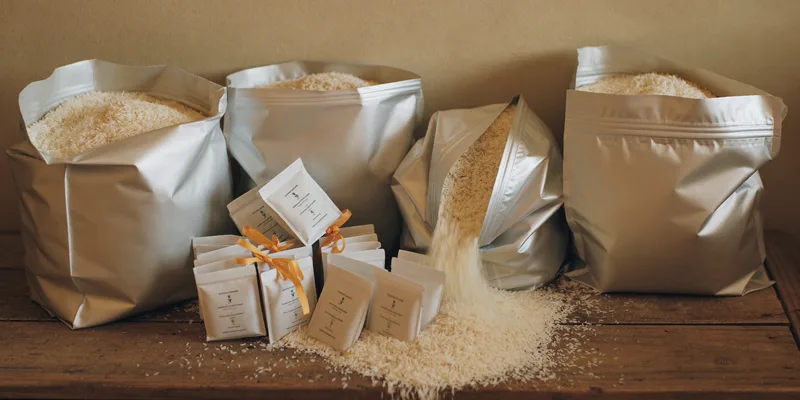
The reason people buy mylar bags is almost always the same story. A twenty five pound sack of rice bought in a burst of good intentions, kept in its paper bag on a garage shelf, and opened eighteen months later to find either pantry moths or a smell that means the oils have gone. Paper and thin plastic do not keep out light, oxygen, moisture or insects, and bulk grain needs all four kept out.
A mylar bag is a foil laminate pouch that blocks essentially all of them, and Utah State University Extension lists exactly that type of packaging, describing PET and foil laminate pouches whose foil layer dramatically reduces oxygen and moisture transmission. The choices you actually have to make are thickness, size, and what goes in the bag with the food.
This article contains affiliate links. If you buy through them, we may earn a commission at no extra cost to you. Learn more.
Quick Answer
Which mylar bags should you buy?
- Thickness is quoted in mil, the total thickness of the laminate. Suppliers describe bags at or above 5 mil as fully light blocking, with 7 mil and up chosen for puncture resistance.
- Size to the container, not the food: 1 gallon bags for shelf storage, 5 gallon bags to line a bucket.
- The bag is half the system. Oxygen absorbers do the actual oxygen removal.
- Only dry foods belong in reduced oxygen packaging. USU Extension warns that removing oxygen increases the ability of botulism bacteria to grow.
Bottom line: 5 mil for shelf bags, 7 mil for bucket liners and anything handled often, always with absorbers and always with dry food.
What Mil Actually Measures
Mil is one thousandth of an inch, and the number on a mylar bag is the total thickness of the laminate, not the foil layer alone. That distinction matters because two bags at the same stated mil can have different foil content, which is why supplier specifications rather than the headline number are worth reading on a bulk purchase.
Practically, thickness buys you two things. Suppliers describe bags under about 4 mil as thin enough to let light through, and bags at 5 mil and above as meeting the no light requirement. Above that, extra mil is about puncture resistance, which is why heavier bags are recommended for sharp or heavy contents and for bags that get moved around.
Where 7 Mil Earns Its Keep
Bucket liners and anything containing pasta, dried corn or beans with hard edges. A 5 gallon bag full of grain is heavy, it gets dragged into position, and the bottom corners take the punishment. A pinhole you cannot see undoes the whole point of the packaging, since oxygen will find it long before you do.
Sizing Bags to What You Are Doing
Match the bag to the container it lives in rather than to the food. A 5 gallon bag is sized to line a standard food grade bucket, a 1 gallon bag is the shelf and tote size, and quart bags exist for portioning things you open regularly. Buying one size for everything is the usual first mistake.
There is a real argument for smaller bags. Every time you open a sealed bag you lose the low oxygen environment inside it, so a single 5 gallon bag of rice becomes an ordinary open container the day you cut it. Splitting bulk into gallon bags means you break one seal at a time.
Mylar Bags by Situation
Lining a Bucket for Bulk Grain
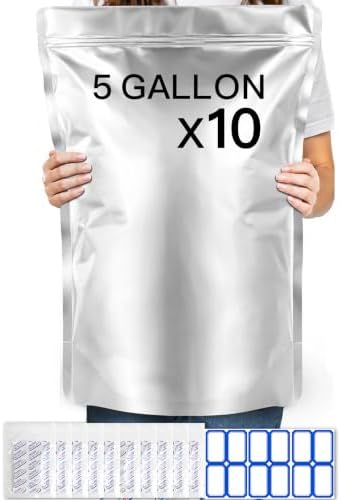
The standard long term setup is a heavy mylar bag inside a food grade bucket. The bag handles oxygen, moisture and light; the bucket handles rodents, crushing and stacking. Neither does the other’s job well, which is why the pairing has stayed standard for decades.
Shelf Sized Bags for Rotation
Gallon bags are the size most households actually use. They hold a useful amount of rice, beans, oats or flour, they stack in a tote, and they let you open one at a time. Zipper topped versions are convenient, though the zipper is a resealing feature rather than a substitute for a heat seal.

Small Bags for Things You Open Often
Quart bags suit spices, dehydrated vegetables, seeds and portioned freeze dried snacks. At this size a lighter bag is usually fine, since these are not being dragged across a garage floor. The advantage is that opening one costs you very little stored food.
Buying the Bags and Absorbers Together
Combination packs pair bags with the absorber size intended for them, which removes the most common ordering error. Check the absorber count against the bag count, since some kits include fewer absorbers than bags on the assumption you will use two per large bag.

If You Want a Known Brand
Wallaby is one of the more visible mylar brands in this category and publishes thickness and dimension specifications clearly, which is genuinely useful when you are comparing bags whose listings otherwise all claim the same things. Read the stated mil and the flat dimensions rather than the marketing copy.
Choosing Thickness and Size
| Bag | Typical thickness | Use | Watch out for |
|---|---|---|---|
| Quart | Around 5 mil | Spices, seeds, dehydrated vegetables, snack portions | Too small to be worth an oversized absorber |
| 1 gallon | 5 to 7 mil | Shelf storage of rice, beans, oats, flour | Sealing over a wrinkle, which leaks |
| 5 gallon | 7 mil and up | Bucket liners for bulk grain | Corner punctures from dragging a full bag |
| Under 4 mil | Thin | Not recommended for long term food | Suppliers note light passes through at this thickness |
The thickness guidance here reflects supplier and manufacturer specifications for mylar food storage bags rather than a food safety standard, since thickness is a packaging property rather than a processing rule.
The Rule That Decides What Can Go In
Dry foods only. Utah State University Extension is direct that vacuum packaging will increase the ability of the botulism bacteria to grow by removing oxygen, which is the whole reason reduced oxygen packaging is limited to low moisture products. Rice, beans, pasta, flour, sugar, oats, dehydrated vegetables and properly freeze dried food are the category.
What does not belong: anything moist, anything with a meaningful oil content that will go rancid regardless of oxygen, and home dehydrated food you are not confident is fully dry. If a batch of dehydrated fruit is still pliable and tacky, it is not a candidate for a sealed low oxygen bag.
Salt, Sugar and Absorbers
Salt and sugar do not need an oxygen absorber, and an absorber can turn granulated sugar into a solid block by pulling moisture around inside the bag. Bag them for pest and moisture protection, and leave the absorber out. Our oxygen absorbers guide covers which foods want one and at what capacity.
Sealing and Storing Them Properly
A mylar bag has to be heat sealed to work. A household vacuum sealer cannot pull air through smooth walled mylar, which is a separate problem worth understanding before you buy the wrong machine; our guide to mylar bags and vacuum sealers covers why. An impulse sealer or a heat sealing iron is the right tool, and the mylar bag sealer guide compares the options.
Store the sealed bags off concrete, out of light and somewhere cool. USU Extension’s storage guidance emphasizes cool conditions, and heat is the variable most people can actually control by choosing a closet over a garage. Bags going into long term storage belong inside buckets or totes, because mylar stops oxygen and does nothing about a mouse.
Frequently Asked Questions
I want my bulk snacks and grain to stay sealed, is a mylar bag enough on its own? The bag handles light, moisture and oxygen ingress, but the oxygen already inside the bag stays there unless you add an absorber. The working combination is a heat sealed mylar bag plus an oxygen absorber sized to the bag, then the whole thing inside a bucket or tote for physical protection.
What thickness mylar bag is best? Suppliers treat 5 mil as the point where light no longer passes through, and recommend 7 mil and up where puncture resistance matters, which in practice means bucket liners and anything with hard edges. For small shelf bags that stay put, 5 mil is normally sufficient.
Can I put freeze dried food in mylar bags? Yes, and it is one of the best uses for them, because freeze dried food is very dry and very vulnerable to picking moisture back up. Seal it with an absorber and keep the bag out of light and heat.
Can I reuse a mylar bag? You can, by cutting below the old seal and resealing higher up, which costs you an inch or two of bag each time. Wash and dry it thoroughly first, and do not reuse a bag that held anything oily.
Do mylar bags stop pantry moths? A properly sealed bag keeps insects out and keeps any that were already in the food from spreading, which is why bulk grain is worth transferring on the day you buy it. Larvae can chew through a bag under some conditions, which is another argument for the bucket around it.
Are mylar bags food safe? Buy bags sold as food grade from a supplier that says so. USU Extension lists foil laminate pouches among appropriate long term food storage packaging, alongside glass canning jars, number 10 cans and food grade plastic.
The Bottom Line
Mylar bags solve the problems paper sacks and thin plastic cannot: light, oxygen, moisture and insects. Pick 5 mil for shelf sized bags and 7 mil for bucket liners, size the bag to the container rather than the food, and remember the bag is only half the system without an oxygen absorber. Keep it to dry foods, because USU Extension is clear that removing oxygen favors botulism bacteria in anything moist. Next: the oxygen absorbers guide for capacity, and the food storage buckets guide for what goes around the bag.