Last updated: August 23, 2026
It is one of the most reasonable assumptions in home food storage, and it does not work. You own a vacuum sealer, you have just bought a stack of mylar bags for the rice, and putting the two together looks obvious. So you clamp the bag mouth in the machine, press the button, the pump runs, and nothing happens. The bag stays exactly as loose as it started.
Nothing is broken. The machine is doing what it was designed to do, and the bag is not built for it. Once you know why, the workarounds are straightforward, and one of them is arguably a better result than the vacuum you were trying to get.
This article contains affiliate links. If you buy through them, we may earn a commission at no extra cost to you. Learn more.
Quick Answer
Can you use mylar bags in a vacuum sealer?
- Not a plain mylar bag in a clamp style household sealer. Those machines pull air through the embossed channels in their own bags, and mylar walls are smooth.
- Embossed or textured mylar vacuum bags exist and do work in a household sealer, because they have the channels built in.
- A chamber vacuum sealer works with any bag, since it evacuates the whole chamber rather than sucking through the bag.
- For dry pantry goods you do not need a vacuum at all. A heat sealed bag plus an oxygen absorber removes more oxygen than a vacuum does.
Bottom line: buy embossed mylar if you want to use the sealer you own, or switch to impulse sealing with absorbers, which is the standard for a reason.
Why the Machine Cannot Pull Air Out
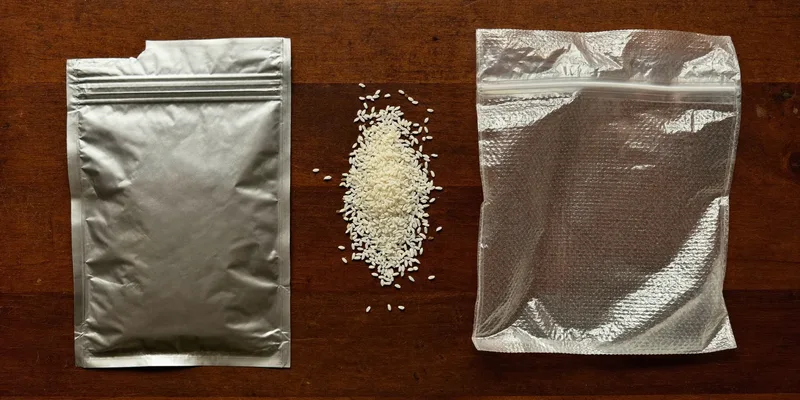
A clamp style household vacuum sealer grips the bag mouth and draws air out through the open end. For that to work, air deeper in the bag has to be able to travel to the mouth, and that path is the embossed waffle pattern molded into the inside of a proper vacuum bag. Without it, the bag walls collapse against each other at the first suction and seal off everything behind them.
Mylar bags have smooth interior walls. The moment the pump starts, the walls flatten together at the top and the air below is trapped. The machine reads no progress, or times out and seals a bag that is still full of air. It is a bag design mismatch rather than a fault.
The One Thing Your Sealer Can Still Do
Most household sealers have a seal only button that runs the heat strip without the pump. That will fuse a mylar bag, though the seal band is usually narrower than a dedicated impulse sealer produces. Check your machine’s manual first, because heavy laminate is outside what some sealing strips are specified for.
What Actually Works: Embossed Mylar Bags
Manufacturers make mylar lined bags with the embossed channel pattern on the inside, sold specifically for household vacuum sealers. These give you the foil barrier and the vacuum in one step, and they behave exactly like ordinary vacuum bags in the machine you already own.
Two things to check before ordering. They cost more per bag than plain mylar, and they are generally sold in smaller sizes, so they suit portioned food rather than bucket liners. Confirm the listing says embossed or textured rather than just describing the bag as mylar.

What Also Works: A Chamber Sealer
A chamber machine puts the whole bag inside a sealed box and evacuates the box, so pressure drops everywhere at once and nothing has to travel through the bag to a nozzle. Bag texture becomes irrelevant, which means smooth mylar seals perfectly well in one.
The honest caveat is scale. Chamber sealers are bigger, heavier and a different class of purchase, and buying one purely to seal mylar makes little sense. If you already have one for liquids and meat, it is a genuine bonus. Our chamber vacuum sealer guide covers where they earn their place.

Why You Probably Do Not Want the Vacuum Anyway
The point of long term dry storage is removing oxygen, and a vacuum is only a rough way to do that. Even a good vacuum leaves residual air behind, while an oxygen absorber chemically consumes the oxygen that remains in the bag, including the oxygen trapped between grains of rice where no pump was ever going to reach.
That is why the standard setup for bulk grain is a heat sealed mylar bag with an absorber inside, then the whole thing in a bucket. It also avoids the other problem with vacuuming dry goods: pulling hard on a bag of pasta or dried beans crushes the contents and the sharp edges can puncture the bag from the inside.
What the Absorber Route Needs
A plain mylar bag, an absorber sized to the bag volume, and a way to heat seal it. Our oxygen absorbers guide covers capacity, and the mylar bag sealer guide covers the sealing tools, which start cheaper than most people expect.

The Four Routes Compared
| Approach | Does it work | Best for | Watch out for |
|---|---|---|---|
| Plain mylar in a clamp sealer | No vacuum, seal only | Nothing, unless you just want the heat seal | Machine may time out or seal a full bag |
| Embossed mylar vacuum bags | Yes | Portioned food with the sealer you own | Higher cost per bag, limited sizes |
| Chamber sealer with plain mylar | Yes | Households that already own one | Size, weight and cost of the machine |
| Impulse seal plus oxygen absorber | Yes, and removes more oxygen | Bulk dry goods and long term storage | Needs a sealer and correctly sized absorbers |
The last row is the standard approach for long term dry storage because it addresses residual oxygen rather than just visible air, which is what actually degrades stored grain.
Mistakes That Follow From the Misconception
The first is buying a large stack of plain mylar in the belief that the sealer will handle it. If that has already happened, the bags are fine and you need a sealing tool rather than new bags. An inexpensive impulse sealer turns the whole stack into usable storage.
The second is trying to bodge a channel into the bag, usually by inserting a strip of textured vacuum bag or a straw at the mouth. Both leave a path for air after the seal is made, which is the exact opposite of what you were trying to achieve. Do not build a leak into the seal on purpose.
Do Not Vacuum Moist Food Into Mylar Either
Reduced oxygen packaging belongs to dry foods. Utah State University Extension states that vacuum packaging increases the ability of the botulism bacteria to grow by removing oxygen, which is why moist products do not belong in a sealed low oxygen bag whatever the bag is made of.
Frequently Asked Questions
Why will my FoodSaver not vacuum a mylar bag? Because the bag has smooth walls. Clamp style sealers pull air through the embossed channels molded into their own bags, and without those channels the bag walls seal against each other at the mouth and trap everything behind them.
Are there mylar bags that work with a vacuum sealer? Yes, embossed or textured mylar vacuum bags. They have the channel pattern built into the inner layer, so they behave like standard vacuum bags while keeping the foil barrier.
Can I heat seal a mylar bag with my vacuum sealer? Often yes, using the seal only function, though the seal band is narrower than a dedicated impulse sealer gives. Check the manual, because thick laminate is not what every sealing strip is rated for.
Is a vacuum better than an oxygen absorber? Not for dry goods. A vacuum removes bulk air but leaves residual oxygen, while an absorber consumes the oxygen that remains, including the air trapped between individual grains. The absorber is why the standard method does not bother with a vacuum.
Can I use both a vacuum and an absorber? In a chamber sealer or with embossed bags you can, and there is no harm in it. It is simply not necessary, and pulling a hard vacuum on pasta or beans risks crushing the food and puncturing the bag.
Do I still need a bucket if the bag is vacuum sealed? For anything stored long term, yes. A vacuum does nothing about rodents, crushing or a dropped bag, and the bucket is what protects the bag itself.
The Bottom Line
A plain mylar bag will not vacuum in a household clamp sealer, and no setting fixes that, because the bag has no channels for the air to travel through. Buy embossed mylar vacuum bags if you want to keep using the machine you own, use a chamber sealer if you already have one, or do what long term storage has always done and heat seal a plain bag around an oxygen absorber. Start with the mylar bags guide for sizing, then the mylar bag sealer guide for the tool that finishes the job.