Last updated: August 23, 2026
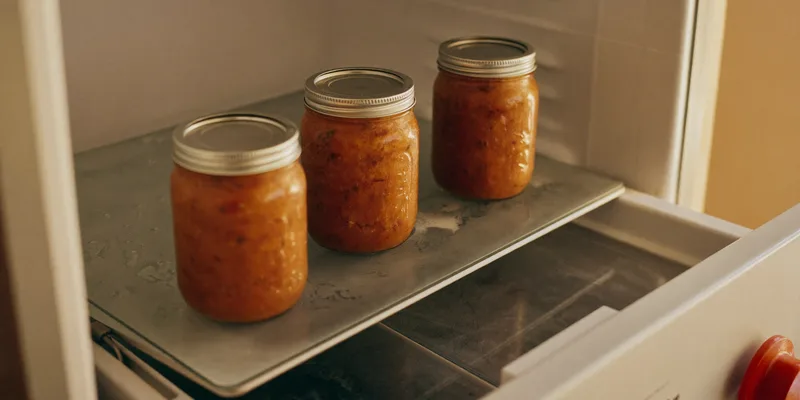
Almost everyone who freezes in glass has the same story. A batch of soup went into the freezer in quart jars, and a week later one of them had a hairline crack running up the shoulder, or worse, the bottom had let go and there was an orange puck of frozen stock sitting on the wire shelf. The jar was a perfectly good canning jar. That was the problem.
Freezing in mason jars works, and it works reliably, but only if you match the jar shape to the job and leave the contents room to grow. Water expands as it freezes, and a jar with shoulders has nowhere to send that expansion except into the glass. This guide covers which jars go in the freezer, how much room to leave, and the lid choice that saves you from rusted bands.
This article contains affiliate links. If you buy through them, we may earn a commission at no extra cost to you. Learn more.
Quick Answer
Which mason jars are safe for the freezer?
- Straight sided jars with no shoulder, so expanding contents push straight up.
- Smaller sizes first. Half pints and pints freeze far more forgivingly than quarts.
- Enough headspace for the pack style, following the freezing guidance from the NCHFP.
- Plastic storage caps instead of two piece canning lids, because bands rust and lids are for canning.
Bottom line: shape and headspace decide whether the jar survives, not the brand printed on the glass.
Why Jars Crack in the Freezer
Two things break freezer jars, and neither is bad glass. The first is expansion. Water takes up more room as ice than it does as liquid, so anything wet pushes outward as it freezes. The second is thermal shock, which is what happens when very cold glass meets hot liquid or hot glass meets cold air.
Expansion is the one that catches people. In a jar with shoulders, the widest point of the contents sits below the neck, so the growing block of ice cannot slide upward. It presses sideways instead, and the shoulder is where the glass gives.
What a shoulder actually is
Look at a classic quilted jelly jar from the side. The body swells out, then curves back in toward a narrower mouth. That curve is the shoulder. A straight sided jar, sometimes sold as a freezer jar or a wide mouth jar, has walls that run parallel from base to rim, so the frozen contents can only travel up.
Straight Sided Jars Are the Whole Trick
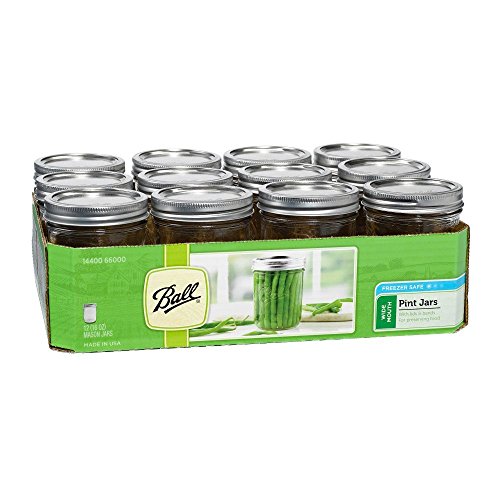
If you buy one thing after reading this, buy straight sided jars. Manufacturers mark freezer safe jars on the packaging, and the jars they mark are almost always the straight sided ones. Wide mouth pints and wide mouth quarts qualify in most lines, which is handy because those are also the easiest jars to fill and to clean.
The wide mouth is a second, smaller advantage. A frozen block slides out of a straight wide mouth jar under warm running water. It does not slide out of a shouldered jar at all, which means waiting for the whole thing to thaw before you can use any of it.
Best all round freezer jar
Wide mouth pints are the size most home freezers end up standardized on. One pint is a portion of soup for two, a batch of stock for a pan sauce, or a jar of berries. They stack, they thaw fast, and a cracked one costs you a small loss rather than a whole batch.
Best for bulk soup and stock
Wide mouth quarts hold a family sized portion and still freeze safely if you respect headspace. They are less forgiving than pints because there is more liquid moving, so give them the full headspace and freeze them upright and uncovered until solid.

Headspace: The Step People Skip
Headspace is the empty gap between the surface of the food and the rim of the jar. In canning it controls the seal. In freezing it is purely mechanical room for ice to grow. The NCHFP publishes a freezing headspace table organized by container opening and by pack style, and liquid packs need noticeably more room than dry packs.
Two practical habits go with it. Freeze jars upright, spaced apart so cold air reaches every side, and leave the lid loose or off until the contents are frozen solid. A sealed jar of half frozen liquid has nowhere to vent the pressure it is building.
Dry packs are easier
Berries, chopped peppers, shredded zucchini and anything you freeze loose on a tray first behave much better than soup. There is little free water to expand, so the risk drops sharply. Those are the jars you can fill closer to the rim, still following the NCHFP table for your container type.
Lids and Bands for Freezer Storage
Two piece canning lids work in the freezer, but they are the wrong tool. Flat lids are designed for a single canning seal, and metal bands left on damp jars in a frost free freezer rust at the rim. Plastic storage caps screw on and off endlessly, do not rust, and let you open a jar with cold hands.
Buy them in the mouth size you standardized on. Mixing regular and wide mouth across a freezer full of jars is a small daily annoyance that adds up fast.
Best lid for freezer jars
One piece plastic storage caps are the sensible default for anything that is not being canned. They also cover the jars you keep in the refrigerator and the pantry, so a single pack covers three jobs.
![AOZITA [16 Pack] WIDE Mouth Mason Jar Lids for Ball, Kerr and Mor...](https://m.media-amazon.com/images/I/414UP-cksmL._AC_.jpg)
Best small jar for portions and toppings
Half pints are the freezer workhorse for pesto, stock cubes, baby portions, herb butter and leftover tomato paste. They freeze quickly, thaw in minutes, and the loss when one cracks is trivial.

What to Check Before You Freeze in Glass
Four checks separate a freezer full of intact jars from a freezer full of cracks. Run them once and they become automatic. None of them depends on the brand of jar you own.
| Check | Why it matters | Good sign | Warning sign |
|---|---|---|---|
| Jar shape | Ice can only expand upward | Straight walls, no curve at the neck | Quilted or shouldered body |
| Headspace | Liquid grows as it freezes | Filled to the NCHFP table for your pack | Filled to the shoulder or rim |
| Lid choice | Bands rust, plastic does not | One piece plastic storage cap | Two piece lid and band left on |
| Freezing method | Slow, even freezing stresses glass less | Upright, spaced, lid loose until solid | Packed tight, sealed, laid on its side |
Headspace guidance referenced here comes from the NCHFP freezing tables; jar and lid details come from manufacturer packaging.
Thawing Without Losing the Jar
Move the jar to the refrigerator and let it thaw slowly. That single habit prevents nearly every thawing crack, because thermal shock needs a fast temperature swing to do damage. Overnight in the fridge costs planning, not money.
When you are in a hurry, stand the jar in a bowl of cool water and let the water warm gradually. Never pour boiling water over a frozen jar and never set one on a hot burner or in a hot oven.
The reverse mistake
Filling a jar with something hot and putting it straight into the freezer is the same shock in the other direction, and it also freezes the contents unevenly. Cool the food first, ideally to refrigerator temperature, then fill, then freeze. If you also can, our guide to canning jars explains which jars in your cupboard are which.
Frequently Asked Questions
Can I freeze in regular canning jars? You can freeze in straight sided canning jars, which many wide mouth pints and quarts are. Shouldered jars such as quilted jelly jars are the ones to keep out of the freezer, because the shoulder is where expanding ice concentrates its pressure.
Why did my jar crack even with headspace? Usually thermal shock rather than expansion. A hot fill, a jar pressed against the freezer wall, or a fast thaw under hot water all produce a sharp temperature difference across the glass. Cool before filling and thaw in the refrigerator.
How much headspace should I leave? Follow the freezing headspace table published by the NCHFP, which varies by container opening and by whether the pack is liquid or dry. Liquid packs need the most room, and quarts need more than pints.
Should I leave the band on in the freezer? Leave the jar loosely covered or uncovered until the contents freeze solid, then close it. For long term freezer storage a one piece plastic storage cap avoids the rust that metal bands develop in a humid freezer.
Can I freeze a jar I already canned? There is no reason to. A sealed shelf stable jar belongs in the pantry, and freezing it risks breaking the seal and the jar. Freeze the surplus you did not can instead.
Are wide mouth jars better than regular mouth for freezing? For anything you want to remove in one frozen block, yes. The block slides out of a straight wide mouth jar. See our wide mouth versus regular mouth comparison for the rest of the trade offs.
The Bottom Line
Buy straight sided jars, standardize on one mouth size, use plastic storage caps for anything that is not being canned, and follow the NCHFP freezing headspace table instead of filling by eye. Do that and glass becomes the cheapest reusable freezer container you own. If you are also building a canning setup, start with our mason jar guide, and if the freezer is your main storage plan, a vacuum sealer handles the flat packed items that jars handle badly.