Last updated: August 23, 2026
Dog treats are the quiet line item that grows every year. A training week goes through a bag, a big dog goes through more, and the single ingredient chews that owners actually want are the most expensive shelf in the store. Meanwhile the same chicken breast on offer at the grocery store costs a fraction of what the dried version does in a resealable pouch.
That gap is why a dehydrator ends up in a lot of kitchens for reasons that have nothing to do with the garden. Dried meat, sweet potato slices and liver are simple to make, and the ingredient list is whatever you put on the tray. The trade is time, a machine that can handle meat, and following the same food safety steps you would for human jerky.
This article contains affiliate links. If you buy through them, we may earn a commission at no extra cost to you. Learn more.
Quick Answer
What do you need in a dehydrator for dog treats?
- A thermostat that reaches the meat range and holds it, since treats are mostly protein rather than fruit.
- Trays that wash properly. Chicken, liver and sweet potato all leave residue that plastic ribs hold onto.
- Enough tray area to make a batch worth the run time, because a small load costs the same hours as a full one.
- A cook step before drying, exactly as USDA guidance describes for jerky.
Bottom line: any machine that does jerky properly does dog treats. Prioritize temperature control and easy cleaning.
Why Home Made Treats Add Up in Your Favor
Single ingredient dried treats are one of the highest markup products in the pet aisle, because the manufacturing is simple and the packaging is small. When you make them, you are paying grocery prices for the raw ingredient and electricity for the run, and one full dehydrator load produces a jar that lasts weeks of training.
The other gain is control. You choose the cut, you know there is nothing else in it, and you can match the treat to what your dog tolerates. That matters most for dogs on restricted diets, where the commercially available options narrow quickly.
What It Costs You Instead
Time and attention. A meat load runs for hours and needs a cook step first, the trays need proper washing afterward, and the machine will make the house smell like whatever is on the shelves. None of that is difficult, but it is the reason people buy the pouch.
The Safety Step You Cannot Skip With Meat
Meat gets cooked before it gets dried. USDA’s Food Safety and Inspection Service recommends heating meat to 160F and poultry to 165F before the dehydrating process, because a dehydrator will not bring the meat to those temperatures before drying begins, and bacteria become far more heat resistant once the food is dry.
FSIS also notes that maintaining a constant dehydrator temperature of 130F to 140F during drying matters, so the process is fast enough to dry the food before it can spoil. Treat those as the rules for your dog’s treats as much as for your own jerky, and see the jerky temperature reference for the full picture.
What About Your Dog’s Diet
Which foods suit your dog, in what quantity, and whether a given ingredient is safe for them is a question for your veterinarian, not for a gear site. Several common kitchen foods are not safe for dogs at all. Ask before you dry something new, especially with puppies, seniors or dogs on medication.
Which Dehydrator Handles Treat Making
Meat and sweet potato are harder on a machine than apple rings. You want a temperature range that covers the drying band, trays that survive scrubbing, and enough capacity that a batch justifies the run. Cheap fixed temperature units are the wrong tool here.
Best All Round Treat Machine
A stainless six tray unit with a digital thermostat is the practical middle. Cosori lists its premium six tray model with stainless steel trays and digital temperature control, and stainless is the material difference that matters once chicken and liver are involved regularly.

Best If You Have a Big Dog or Several
A nine tray box dehydrator with a rear fan turns treat making into a monthly job rather than a weekly one. Excalibur lists the 3926TB with nine trays and a timer, and the even airflow means the tray of chicken at the top finishes with the one at the bottom.
Best Budget Route Into It
A classic stackable unit with an adjustable thermostat gets you started without committing counter space. Nesco lists the Snackmaster Pro FD-75A with an adjustable thermostat and expandable trays. Expect to rotate trays on a long meat run, since vertical airflow is less even than a rear fan.

The Accessory That Saves the Cleanup
Liners. Liver and marinated meat drip, sweet potato sticks, and a solid sheet on the shelf below catches all of it. A set of liners costs a fraction of the machine and is the difference between treats every month and a dehydrator in the basement. See which liner fits which tray.
What to Put on the Trays
Simple, lean and single ingredient works best. Fat does not dry, it goes rancid, so trim it off before slicing. Uniform thickness matters as much here as with fruit, because a tray of mixed thicknesses means either underdried pieces or scorched ones.
| Treat | Prep | Before drying | Notes |
|---|---|---|---|
| Chicken breast strips | Trim fat, slice thin and even | Cook to the FSIS poultry temperature | Most popular training treat |
| Lean beef or venison | Trim all fat, slice against grain | Cook to the FSIS meat temperature | Fat is what turns treats rancid |
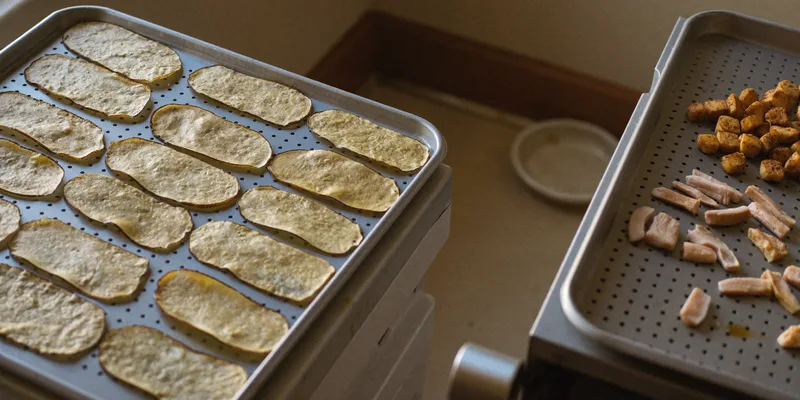
| Sweet potato slices | Wash, slice uniformly | No cook step needed | Thick slices stay chewy, thin go crisp |
| Liver | Rinse, slice, use a solid liner | Cook first, as with other meat | Strong smell, wash trays promptly |
Storing Home Made Treats
Home dried treats have no preservatives, so store them the way you store any dried meat: cooled completely, in a sealed jar, kept cool and dark, with anything you will not use within a short window going into the refrigerator or freezer instead.
Check a jar a few days after filling. Condensation on the glass means the batch went in before it was fully dry, and that batch should go back on the tray. Our guide to storing dehydrated food covers jars, sealers and desiccants.
Frequently Asked Questions
Do I really need to cook meat before dehydrating it for my dog? Yes. FSIS recommends heating meat to 160F and poultry to 165F before the dehydrating process, because the dehydrator itself will not reach those temperatures before drying starts. The same reasoning applies whether the jerky is for you or for the dog.
Can I use the same dehydrator for dog treats and human food? Yes, with proper cleaning between loads, exactly as you would with the same cutting board. Liver in particular leaves a smell in plastic trays, which is one reason stainless is worth it if treats become routine.
How long do home made dog treats keep? Less time than a store bought pouch, since they contain no preservatives. Keep them sealed, cool and dark, refrigerate or freeze anything beyond short term use, and discard anything that softens or smells off.
Which foods should I avoid drying for a dog? Ask your veterinarian, because several everyday kitchen ingredients are unsafe for dogs and the answer also depends on your individual animal. A gear guide is the wrong place for that decision.
Is a freeze dryer better for pet treats? It makes a different product, drier and lighter, and it costs a great deal more. For most owners a dehydrator is the sensible tool. We compare the two in making freeze dried treats at home.
The Bottom Line
Making your own dog treats is one of the clearest wins a dehydrator offers, because single ingredient chews carry a high markup and the ingredients are ordinary groceries. Buy a machine with a real thermostat and washable trays rather than the cheapest fixed temperature unit, cook meat to the temperatures FSIS publishes before drying, keep the slices uniform, and store the results sealed and cool. Ask your veterinarian about ingredients rather than guessing. Read next: choosing a dehydrator and the jerky machines that handle meat best.