Last updated: August 23, 2026
Fermenting is the one preserving method where the literature genuinely changed the hobby. Canning has a federal manual and a manufacturer’s recipe book and that is more or less the shelf. Fermenting has a small number of books that took a practice most American kitchens had abandoned and made it ordinary again, and people still buy them by name twenty years later.
Which makes the choice harder rather than easier, because these books are not interchangeable. One is a set of projects for your first month, one is a five hundred page explanation with almost no recipes, one is a vegetable reference, and one belongs to a Copenhagen restaurant. Here is what each is actually for.
This article contains affiliate links. If you buy through them, we may earn a commission at no extra cost to you. Learn more.
Quick Answer
Which fermentation book should you buy first?
- Wild Fermentation by Sandor Katz is the starter: short projects, low equipment, gets you fermenting this week.
- The Art of Fermentation, by the same author, is the reference you graduate to. Theory rather than recipes.
- Fermented Vegetables by the Shockeys is the practical vegetable by vegetable manual.
- The Noma Guide to Fermentation is the ambitious one, and it assumes gear most kitchens do not have.
Bottom line: one project book to start, one reference to keep, and NCHFP or extension publications for the tested pickle and sauerkraut numbers.
Why These Books Differ So Much
Because fermenting spans two worlds. Traditional home fermentation is a folk practice with wide tolerances, while food preservation guidance is a research discipline with tested numbers. The books sit at different points between those poles, and knowing where each one sits tells you what to use it for.
The practical consequence: read the narrative books for method, culture and confidence, and take salt concentrations and curing times for brined pickles from a tested source. NCHFP and university extension publications exist precisely for those numbers, and they are free.
What a Good Fermentation Book Does
It explains what is happening in the jar rather than only what to do, because a fermenter who understands the process can troubleshoot a batch that a recipe list cannot help with. It also says plainly what the failure modes look like, which is the section most beginners need in week two.
Wild Fermentation by Sandor Katz
The book that restarted the hobby in the United States. First published by Chelsea Green in 2003 and revised in a second edition in 2016, it is a compact, project led collection covering kraut, pickles, kimchi, yogurt, kefir, sourdough, tempeh, meads and more, written in a voice that removes the fear rather than adding rules.
Its strength is that it gets you fermenting immediately with what you already own, and its limit is the same thing. It is deliberately loose about quantities and timings, in keeping with the traditional practice it describes. Pair it with published extension guidance when you want an exact salt ratio for a brined pickle.
Best if you have never fermented anything
Start here. It is short, cheap, encouraging and covers enough different ferments that you will find one you actually want to eat, which is what makes the habit stick.

The Art of Fermentation
Katz’s second and much larger book, published by Chelsea Green in 2012 and a James Beard Foundation award winner. It is close to five hundred pages of process, history and troubleshooting, organized by category of ferment, and it contains very few conventional recipes. That is a deliberate design rather than an omission.
This is the book you consult when something is behaving strangely, when you want to understand why a technique works, or when you are inventing rather than following. Bought as a first book it can stall a beginner who wanted a list of steps for Saturday. Bought as the second book, it is the one that stays on the shelf permanently.
Best if you already ferment and want to understand it
A reference volume rather than a cookbook. Buy it when your questions have moved from what do I do to why did that happen.

Fermented Vegetables by the Shockeys
Kirsten and Christopher Shockey’s vegetable manual, published by Storey in 2014 and revised since. It is the most practical book on this list for the thing most people actually do, which is putting vegetables in jars, and it is organized so you can look up a specific vegetable and find out how it behaves.
It also does the two things beginners need most: clear photographs of what normal and abnormal look like, and a straightforward treatment of brine, weights and vessels. If your fermenting is going to be kraut, kimchi, pickles and the occasional experiment with whatever the garden produced, this is the most used book of the four.
Best for a vegetable garden and a shelf of jars
Vegetable by vegetable coverage with real troubleshooting photographs. The one to own if the crock and the mason jars are already in the kitchen.

The Noma Guide to Fermentation
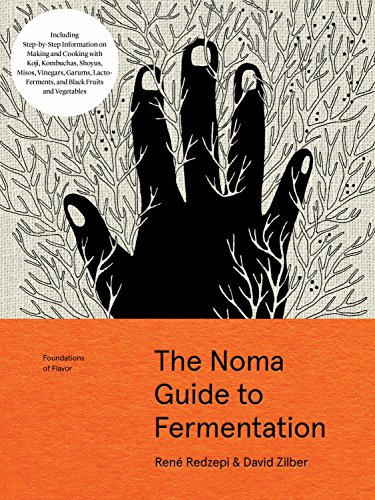
Rene Redzepi and David Zilber’s book from the Copenhagen restaurant, published by Artisan in 2018. It covers lacto ferments, kombucha, vinegars, koji, misos, shoyu and garums with the precision of a professional kitchen, and the photography and diagrams are the best in the category by a distance.
Be honest with yourself about the gear, though. Several of its central techniques assume a temperature and humidity controlled chamber, and a good deal of it assumes weeks of attention. Home fermenters do adapt these methods successfully, often using a dehydrator or a converted cooler, but this is an ambition book rather than a beginner’s book.
Best if you want koji, miso and restaurant technique
Buy it for the ideas and the precision, not as a first manual. It rewards a reader who already knows what a healthy lacto ferment smells like.
Which Book For Which Fermenter
Match the book to where you are, not to which one has the best photographs. Most kitchens end up with two, one that gets used and one that gets consulted.
| Book | Style | Strongest at | Best for |
|---|---|---|---|
| Wild Fermentation | Short, project led, informal | Getting started without buying anything | Complete beginners |
| The Art of Fermentation | Reference, theory, few recipes | Understanding and troubleshooting | The second book, kept permanently |
| Fermented Vegetables | Manual, vegetable by vegetable | Practical vegetable ferments and photos | Gardeners and jar fermenters |
| The Noma Guide to Fermentation | Professional technique, illustrated | Koji, miso, vinegar, precision | Experienced fermenters with ambition |
Publishers and publication years above come from the publishers themselves. Editions change, so check the edition on the cover before buying secondhand.
The Free Sources Worth Having Open
Not everything belongs in a book. For brined pickles and sauerkraut, where salt concentration and curing conditions are doing preservation work, the National Center for Home Food Preservation and university extension services publish tested guidance for free, and the USDA Complete Guide to Home Canning includes fermented pickles.
So Easy to Preserve, from University of Georgia Cooperative Extension, is the paid extension volume that covers fermentation alongside canning, freezing and drying, and our canning books page covers it in detail. Use those sources for the numbers and the narrative books for everything else.
Frequently Asked Questions
Which Sandor Katz book should I buy, Wild Fermentation or The Art of Fermentation? Wild Fermentation if you have not started, because it is a set of doable projects. The Art of Fermentation if you already ferment and want to know why things happen. They are complementary rather than competing, and many people eventually own both.
Do I need a book at all when free guides exist? For the tested numbers, no, since NCHFP and extension publications are free and authoritative. For method, confidence and range, a book is a much better teacher than a search results page, and it stays open on a counter without locking its screen.
Is the Noma book realistic for a home kitchen? Partly. Its lacto ferment and vinegar chapters translate reasonably well, while the koji and garum work assumes controlled temperature and humidity. Home fermenters adapt those methods with dehydrators and converted coolers, which is a project in itself rather than a weekend.
Are older fermentation books unsafe? Not in the way older canning books are, because vegetable fermentation is more forgiving than canning. The caution is different: take salt concentrations and processing times for anything you plan to can from a current tested source. Our fermented pickle page explains where those numbers come from.
Which book covers kimchi best? Fermented Vegetables covers it practically, and dedicated Korean cookbooks go deeper into regional variation and paste making. For the container question, which matters more than most people expect, see our kimchi container guide.
Are e-book versions worth it? For The Art of Fermentation, searchability is genuinely useful given the size. For the project books, print wins, because a screen locks halfway through packing a crock and your hands are covered in salt and cabbage.
The Bottom Line
Buy Wild Fermentation if you are starting, Fermented Vegetables if your fermenting is going to be jars of garden produce, and The Art of Fermentation as the reference you keep for good. The Noma Guide is the one to want rather than the one to start with. Then keep the free NCHFP and extension guidance bookmarked for the salt ratios and curing times, because that is the part no narrative book is written to supply. When you are ready to put the reading to work, start with fermenting vegetables or browse what else is worth fermenting.