Last updated: August 23, 2026
Jelly jars are the ones with the diamond pattern pressed into the glass, and they are the reason a shelf of homemade preserves looks like a shelf of homemade preserves. The quilted crystal style has been on store shelves for generations, and it is still the jar most people picture when they think of putting up jelly.
Underneath the pattern they are ordinary regular mouth canning jars, which is good news and slightly deflating at the same time. The real decision is not decorative. It is which of the small sizes you actually need, whether the quilted glass costs you anything in practice, and how many you should buy before the fruit comes in.
This article contains affiliate links. If you buy through them, we may earn a commission at no extra cost to you. Learn more.
Quick Answer
Which jelly jars should you buy?
- Quilted regular mouth half pints are the standard, and four ounce jars are the gifting size.
- Quilted and plain jars are the same glass and take the same lids, the pattern is cosmetic.
- Straight sided jelly jars unmold a set jelly cleanly, shouldered ones do not.
- Jelly jars and jam jars are effectively the same jars, so do not buy two collections.
Bottom line: half pints for the pantry, four ounce for gifts, and pick the pattern purely on looks.
What Makes a Jar a Jelly Jar
Size and shape, not construction. Jelly jars are small regular mouth canning jars, typically four, eight or twelve ounces, most often in the quilted crystal pattern. They are made from the same tempered glass as any other mason jar and take the same regular mouth two piece lids.
The one genuine functional difference is the taper. Many jelly jars are slightly wider at the top than the bottom with no shoulder, which is what lets a firmly set jelly slide out in one piece onto a plate. If you have ever tried to turn out a jelly from a shouldered jar, you already know why that shape exists.
Quilted or Plain
The quilted pattern does nothing for the preserve. It does not affect processing, sealing, cleaning or shelf life, and quilted and plain jars in the same size are interchangeable in every recipe. Choose it because you like it or because the jars are going to be gifts.
There are two small practical notes. The pattern hides fingerprints and minor scuffs better than smooth glass, which matters on jars that get handled a lot. And a curved label sits slightly less flat on a quilted jar, so a smaller label or one designed for the lid works better than a large wraparound.
Jelly Jars by Situation
The Everyday Pantry Jar
Eight ounce quilted regular mouth. It is the size most jelly recipes are written to yield in, it fits the fridge door, and a batch turns into a respectable row of them. If you are only buying one kind of jelly jar this season, buy this one by the case.

Gifts, Favors and Sampler Sets
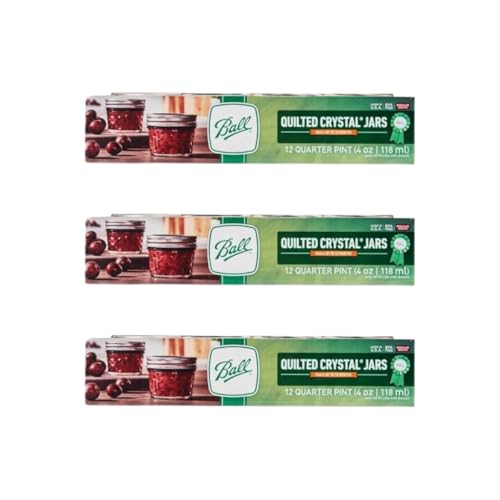
Four ounce jars turn one pot of jelly into a dozen small gifts, and they suit strong or unusual flavors that people want to try rather than commit to. They are also the size that disappears from stores in the run up to the holidays, so buy them earlier than feels necessary.
For Households That Actually Eat Jelly
Twelve ounce jars exist for the households where a half pint lasts a week. Same regular mouth lid, more jelly, fewer jars to process. The trade off is that an opened jar sits in the fridge longer, which matters more for a low sugar preserve than for a traditional one.
The Lids You Will Run Out Of
Regular mouth flat lids are the consumable in this whole setup. Ball’s own use and care guidance is that the flat lid is single use because its sealing compound forms to one jar rim, while the band is reusable. Buy the flats in a bulk box out of season and you will never be short mid batch.

Jelly Jar Sizes Compared
| Size | Best for | Shape note | Watch out for |
|---|---|---|---|
| 4 oz quilted | Gifts, favors, sampler sets | Straight sided, unmolds cleanly | Sells out before the holidays |
| 8 oz quilted | The standard jelly jar | Straight sided, fits a fridge door | Nothing, this is the workhorse |
| 12 oz quilted | Heavy jelly households | Squatter profile, same lid | Longer open time in the fridge |
| 8 oz plain smooth | Wraparound labels, resale | Flat surface for labeling | Shows fingerprints more |
All four take the same regular mouth lids and bands, so mixing styles across a season costs you nothing in lid inventory.
Filling Jelly Jars Without a Mess
Hot jelly is thin, and a four ounce jar has a small target. A canning funnel sized for regular mouth jars is the difference between a clean rim and a sticky one, and a sticky rim is the most common reason a small jar fails to seal. Wipe every rim with a damp cloth before the lid goes on, without exception.
Headspace matters here too. The NCHFP’s general information on canning jams and jellies calls for filling hot into jars leaving one quarter inch of headspace, which is tighter than most other preserves and easy to overshoot in a small jar. Our canning funnel guide and canning tools guide cover the two utensils that make this part painless.
Have More Jars Ready Than the Recipe Says
Jelly yields move around. Fruit varies in juice content, a batch that cooks a little longer reduces further, and skimming foam takes volume out. A recipe that says it makes six half pints can easily give you five and a bit, or seven if the fruit was juicy, and the awkward outcome is the one where you are short.
Wash and warm two more jars than you expect to fill. The extra ones cost you nothing but a rinse, and the small partial jar at the end goes straight in the fridge to be eaten first rather than being processed on its own. Getting caught with hot jelly in the pot and no clean jar is the version of this that ruins the afternoon.
Frequently Asked Questions
What is the difference between jelly jars and jam jars? Almost nothing. Both terms describe small regular mouth canning jars in four to twelve ounces. Jelly jars usually means the quilted pattern specifically, but the glass, the lids and the uses overlap completely.
Does the quilted pattern affect canning? No. It is cosmetic. Quilted and smooth jars of the same size and mouth are interchangeable in any tested recipe and take the same lids.
Can I use jelly jars for other foods? Yes, within their size. They are standard canning jars, so any tested recipe written for a half pint or four ounce jar works. They are also fine for spice storage, sauces and small ferments outside canning entirely.
Why does my jelly not slide out of the jar? Because the jar has a shoulder. A set jelly can only unmold from a straight sided or slightly tapered jar. If unmolding matters to you, check the profile before buying rather than the pattern.
Are jelly jars freezer safe? Only the straight sided ones, and only filled to the freeze line if the jar has one. A shouldered jar is a poor freezer jar because expanding contents press against the narrowing, which is where glass cracks.
Do jelly jars need different lids? No. They use standard regular mouth flat lids and bands, the same as any other regular mouth jar in your pantry.
The Bottom Line
Jelly jars are regular mouth canning jars in small sizes with a decorative pattern, so buy them for the size and the straight sided shape rather than the glass. Half pints for the pantry, four ounce for gifts, twelve ounce only if a half pint genuinely does not last. Everything else, the lids, the funnel, the processing, is identical to the rest of your canning. Next, our jam jars guide covers the sizing decision from the jam side, and the canning lids guide covers the part that actually seals.