Last updated: August 23, 2026
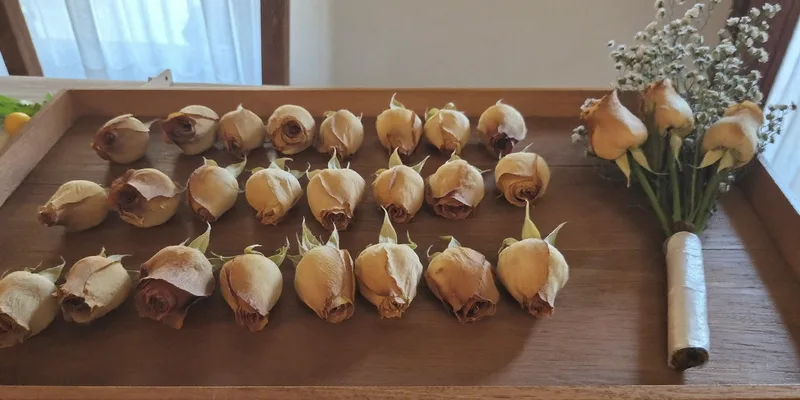
Sooner or later every freeze dryer owner gets asked the same favor. Someone in the family is getting married, the bouquet is beautiful, and by Tuesday it will be brown in a vase. Can the machine save it? The answer is yes, partly, with caveats that nobody mentions in the videos where a rose comes out looking untouched.
Flowers are not food, and the differences matter more than they look. Petals are thin and dry fast, flower heads are dense and dry slowly, stems hold water longest of all, and the machine you use for strawberries has trays that will now carry floral residue. This page covers what a home unit genuinely does well with flowers, where a preservation service or a bag of silica gel is the better answer, and how to keep the result from collapsing six months later.
This article contains affiliate links. If you buy through them, we may earn a commission at no extra cost to you. Learn more.
Quick Answer
Can a home freeze dryer preserve flowers?
- Petals and small blooms come out very well, keeping shape and most of their color.
- Dense heads and thick stems are the hard part. They hold moisture long after the petals are done.
- Whole intact bouquets are a specialist job. Preservation studios use dedicated equipment and long cycles.
- Silica gel is the low cost alternative and handles many flowers without a machine at all.
Bottom line: brilliant for petals and keepsake blooms, imperfect for a full bouquet, and worth a dedicated tray set.
What a Home Machine Does Well With Flowers
Individual blooms and loose petals are where home freeze drying shines. A rose head, a peony, a handful of hydrangea florets or a tray of petals comes out light, three dimensional and close to its original color, in a way that pressing and air drying never match. That is the honest headline result.
The catch is uniformity. A tray of petals finishes evenly because everything on it is the same thickness. A tray with a mixture of buds, open heads and stems does not, and the batch is only as done as its wettest piece. Sort by type and thickness the way you would sort fruit.
Where It Gets Difficult
Dense flower centers, thick calyxes and woody stems hold water long after the petals feel crisp, and pulling a batch early is what produces the classic failure: a keepsake that looks perfect for a month and then browns or slumps from the inside. Cut stems short, split thick ones, and give mixed loads far more dry time than a food batch of the same volume.
The Wedding Bouquet Question
A full bouquet is a different project from a tray of blooms. Professional floral preservation studios disassemble the arrangement, support each flower’s shape during the cycle, run much longer programs, and often reassemble the bouquet in a display case afterward. That labor is most of what you pay for, and it is why the results look so much better than a first home attempt.
If the bouquet matters emotionally, be honest about what a first try risks. A reasonable compromise is to send the arrangement to a studio and keep a handful of blooms back to practice on yourself, or to preserve the bouquet as separated flowers and arrange them in a shadow box rather than trying to keep the original form.
Timing Beats Technique
Flowers keep degrading from the moment they are cut, and no method restores what is already browning. Get them into the machine, or into silica, as soon as possible after the event. Keep them cool and out of water in the meantime, because wet petals dry unevenly and bruise where droplets sit.
Silica Gel, the Cheap Route That Often Wins
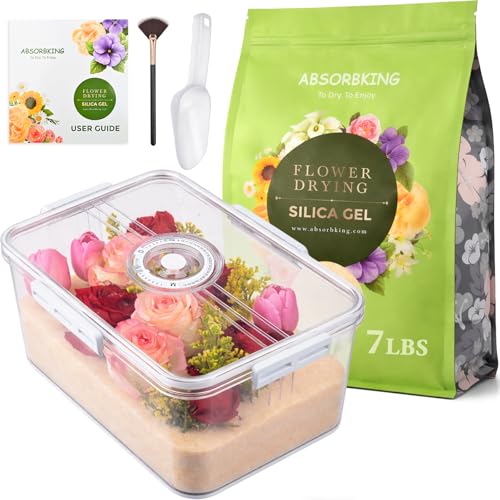
For anyone without a machine, or unwilling to tie one up for days, silica gel drying crystals do a genuinely good job on roses, daisies, carnations and most garden flowers. You bury the bloom in fine crystals in a sealed container and let them draw the moisture out over several days, per the instructions on the product you buy.
Most kits sold for this use color indicating crystals that change shade when saturated and can be recharged in an oven or microwave, which makes them reusable across many projects. The trade against freeze drying is a slightly flatter, less lifelike result on delicate flowers, and more hands on fiddling to bury petals without crushing them.
Choosing a Method
Three routes cover almost every request: your own machine, silica gel at the kitchen table, or a preservation studio. They differ in cost, in how much of your time and equipment they consume, and in how forgiving they are of a keepsake you cannot replace. The table sorts them.
| Method | What it costs you | Typical result | Best for |
|---|---|---|---|
| Home freeze dryer | Days of machine time, tray space | Light, three dimensional, good color | Petals, single blooms, garden flowers |
| Silica gel | Several days, some fiddly handling | Good shape, slightly flatter petals | Roses and firm flowers, no machine needed |
| Preservation studio | The most money, weeks of waiting | Reassembled bouquet in a case | An irreplaceable wedding bouquet |
| Air drying or pressing | Almost nothing | Flat, faded, rustic look | Craft projects and potpourri |
Keeping Flowers and Food Apart
Cut flowers from a florist are not grown as food, and they may carry pesticide residue, floral preservative from the water, dyes or glitter. None of that belongs on the trays where you dry strawberries next week. Owners who do a lot of floral work keep a separate tray set and separate liners for it, and label them clearly.
Liners are the cheap version of that separation. They keep pollen, dye and plant sap off the stainless, and they lift a delicate bloom out in one piece instead of forcing you to pry it up.

A Second Tray Set for Non Food Work
If flowers, crafts and pet projects are becoming a regular part of what the machine does, dedicating a tray set to them is the simplest way to keep the food side clean.

Storing and Displaying the Result
Freeze dried flowers are brittle and thirsty. They pull moisture out of humid air and go limp, and they crush if handled casually. Display them under glass, in a shadow box or a dome, and tuck a desiccant packet into the case where it will not be seen. A sealed display is what keeps a keepsake looking right in year three.
Keep them out of direct sun as well. Color loss in preserved flowers is driven by light more than by time, and a bouquet on a sunny windowsill fades far faster than the same flowers on an interior wall.
Frequently Asked Questions
Will the colors stay the same? Mostly, with shifts. Whites often warm slightly, deep reds can darken, and some blues change more than expected. Freeze drying holds color far better than air drying, but no method is a photograph. Expect a faithful version rather than an identical one.
How long does a flower batch take? Longer than food, and highly variable with the flower. Petals finish comparatively quickly, dense heads and stems take much longer, and pulling early is the most common mistake. Plan on tying the machine up for a stretch rather than fitting flowers around a food batch.
Can I freeze dry flowers in the same trays as food? You can, but use liners and clean thoroughly, and think about what was on the flowers first. Florist blooms may carry pesticide residue, dye or preservative solution. Many owners keep a dedicated tray set for non food work, which removes the question entirely.
Is silica gel as good as a freeze dryer? For firm flowers like roses and carnations it is surprisingly close, at a fraction of the cost and without occupying a machine. For delicate, papery petals the freeze dried result looks more alive. If you do not already own a machine, flowers alone are not a reason to buy one.
Do preserved flowers need special storage? They need dryness, gentle handling and shade. A closed display case with a hidden desiccant packet, away from direct sun and away from a bathroom or kitchen humidity, is what keeps them intact for years.
The Bottom Line
A home freeze dryer preserves petals and individual blooms beautifully, struggles with dense heads and stems, and is not a substitute for a studio when an intact wedding bouquet is the goal. Sort by thickness, give flowers far more dry time than food, keep a dedicated tray set for non food work, and display the result under glass with a desiccant. If you are weighing whether the machine earns its keep across all these uses, our cost breakdown is the honest place to start, and extra trays and liners covers the gear that keeps flower work separate.