Last updated: August 23, 2026
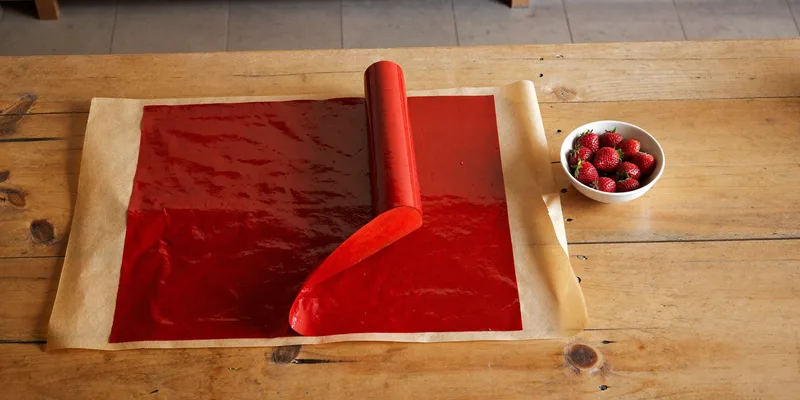
Fruit leather is the cheapest thing a dehydrator makes and the one most likely to go wrong on the first try. The puree goes on the tray, the machine runs all night, and in the morning the middle is still tacky while the edges have gone to glass. Peel it up and it tears down the middle, which is exactly the complaint that fills the reviews of fruit leather trays.
Almost none of that is the fruit. It is thickness, tray surface and temperature, in that order. Get those three right and the same puree that failed last week comes off the tray in one sheet you can roll while it is still warm.
This article contains affiliate links. If you buy through them, we may earn a commission at no extra cost to you. Learn more.
Quick Answer
What makes fruit leather come out in one piece?
- An even layer. Thin in the middle and thick at the rim is why the center stays tacky and the edge shatters.
- A solid sheet with a raised lip, not parchment and not foil, so the puree cannot creep or bond.
- The temperature NCHFP publishes for leathers, held steady. Running hotter to save time is what causes case hardening.
- Peeling while it is still warm. Cold leather is brittle and tears at every thin spot.
Bottom line: the tray and the thickness decide the outcome far more than which dehydrator you own.
What Temperature Fruit Leather Needs
The National Center for Home Food Preservation directs you to dry fruit leathers at 140F, and warns that at higher temperatures the leather can case harden, meaning it cooks and hardens on the outside while trapping moisture inside. That trapped moisture is what makes a finished looking sheet go moldy in the jar a week later.
NCHFP also describes 140F as the optimum temperature for drying food generally, so on most machines this is simply the standard fruit setting. If your dehydrator has a single thermostat dial rather than a digital readout, this is the load worth checking with an oven thermometer on the tray.
Why Turning It Up Backfires
Water leaves the surface faster than it can migrate up from below. Push the heat and you build a dry skin over a wet layer, so the sheet stops losing water and the drying time gets longer, not shorter. The batch also comes out with a leathery top and a sticky underside that never rolls properly.
Thickness Is the Variable Nobody Measures
Aim for a layer that is the same depth everywhere and no thicker than roughly an eighth of an inch, spread slightly thinner at the outer edge than in the middle. Edges dry first because they get airflow from the sides, so a deliberately thinner center is the classic mistake.
Pour into the middle of the tray and push outward with the back of a spoon or an offset spatula. Lift the tray and look across it at eye level before it goes in. Thin patches show up as translucent windows and those are the spots that will tear when you peel.
How Much Puree per Tray
A standard square dehydrator sheet takes roughly two cups of puree for an even layer, and a round stackable tray takes rather less. Rather than measuring, pour and level, then stop when the tray is covered and the lip is not in danger of overflowing when you slide it in.
Why Leather Tears and Sticks
Tearing comes from uneven thickness plus peeling cold. Sticking comes from the surface. Bare mesh lets puree run through and then glues the mesh into the finished sheet, and improvised parchment curls up in the airflow and lifts one corner of the batch with it.
Solid fruit leather trays with a raised lip solve both. They are non stick, they contain the puree, and they let you lift a whole sheet off in one movement. If your machine came without them, they are the single accessory that makes this recipe reliable.

Peel Warm, Roll Warm
Leather is flexible at drying temperature and brittle once it cools. Take the tray out, let it sit for a couple of minutes so it is warm rather than hot, then lift a corner and peel steadily. Roll it in plastic wrap while it still bends easily and cut the roll into pieces afterward.
Which Dehydrator Suits Leather Best
Any dehydrator with a thermostat can make fruit leather. What changes between machines is how many sheets you can run at once and whether the trays sit level, because a tray that tilts sends the puree to one edge before the surface sets.
Best If You Want Multiple Sheets in One Run
A nine tray box dehydrator with a rear fan takes full size square sheets and dries them evenly without rotation, which matters over a long leather run. Excalibur lists the 3926TB with nine trays and a timer, and the square trays match the standard sheet sizes sold everywhere.
Best If Counter Space Is Tight
A compact stainless six tray unit will do two or three leather sheets per run and takes up much less room the rest of the year. Cosori lists its premium six tray model with stainless trays and a digital thermostat, which is what you want for holding a steady temperature on a long batch.

Best If You Already Own the Machine
Buy the sheets, not another dehydrator. Non stick silicone leather sheets fit the common tray footprints and turn a machine you already have into a leather machine. Check the inside dimension of your tray first, since these are cut to a small number of fixed sizes.

Fixing the Four Things That Go Wrong
Almost every failed batch is one of four faults, and each has a fix you can apply to the next load rather than a reason to give up. The table lists them in the order they show up in a first season.
| Symptom | Cause | Fix next batch | Salvage this batch |
|---|---|---|---|
| Tears when peeled | Thin patches, peeled cold | Level the layer, peel warm | Cut into strips instead of rolling |
| Sticky center, hard edges | Too thick in the middle | Spread thinner at center | Return to the tray for another run |
| Dry surface, wet underneath | Temperature too high, case hardening | Hold the NCHFP leather temperature | Peel, flip, dry the underside |
| Glued to the tray | Bare mesh or improvised liner | Solid sheet with a raised lip | Warm the tray briefly, then lift |
If the whole load dried unevenly rather than one sheet, that is an airflow question rather than a leather question, and the trays and sheets guide covers which surface belongs on which shelf.
Storing Leather So It Stays Rolled
Wrap each sheet in plastic, roll it, and keep the rolls in an airtight container away from light. Leather still holds some moisture by design, which is why it stays flexible, and that same moisture is why it does not belong in a warm cupboard for months.
For anything you want to keep past a few weeks, treat it like other dried fruit and store it cool and dark in a sealed jar. Our guide to storing dehydrated food covers conditioning and the containers that hold up.
Frequently Asked Questions
Why does my fruit leather tear every time? Uneven thickness and peeling it cold. Thin windows in the sheet become tear lines, and cold leather has no flex. Level the puree with a spatula, check it at eye level before the run, and peel while the sheet is still warm from the machine.
How long does fruit leather take to dry? Longer than sliced fruit, because the solid tray blocks airflow from underneath, and it varies with how juicy the puree is. Judge by touch rather than the clock. It is done when the surface is not tacky anywhere and the sheet lifts cleanly from the tray.
Do I need to add sugar or lemon juice? Neither is required for drying. Acid helps color, particularly with apple and pear purees, and sugar affects flavor and texture rather than safety. If you follow an NCHFP leather recipe, use the proportions it publishes rather than improvising.
Can I make leather in the oven instead? You can, if your oven holds a low temperature and you prop the door for airflow, but most home ovens will not hold anything close to the drying range steadily. That is why the results are far less consistent than in a machine with a thermostat.
Can I use canned or frozen fruit? Yes. Drain canned fruit well and thaw frozen fruit completely before pureeing, since the extra liquid is what turns a four hour run into an overnight one. Very watery purees can be simmered down slightly first.
The Bottom Line
Fruit leather rewards three habits: an even layer no thicker than about an eighth of an inch, the drying temperature NCHFP publishes for leathers rather than a hotter shortcut, and a solid non stick sheet with a lip instead of parchment or bare mesh. Peel it warm and roll it before it cools. If your batches keep failing in the same way, it is almost always thickness, and that is free to fix. Read next: how to choose a dehydrator and what changes from fruit to fruit.