Last updated: August 23, 2026
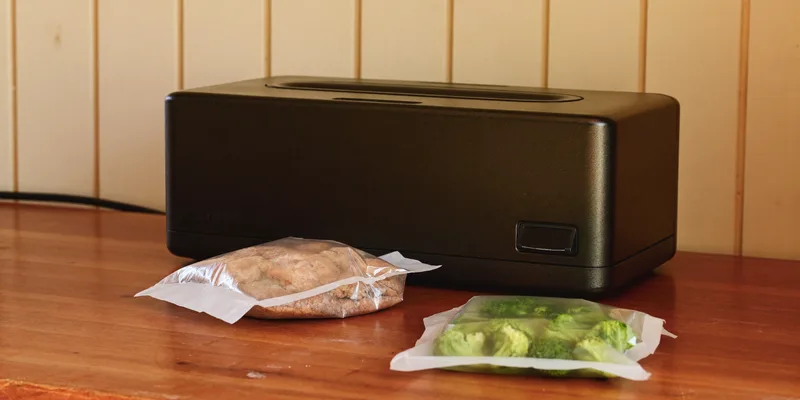
The FM2000 is the FoodSaver most people meet first. It turns up as a gift in December, as the cheapest machine on the shelf next to the bags, and as the answer to a freezer full of half used packages. It has two buttons and a lid, and that is close to the whole story.
Which makes it a useful machine to be honest about. There is a real case for buying the simplest FoodSaver and spending the difference on bags, and there is a real case for stepping up. The deciding factor is not features, it is how many bags you will seal in a sitting.
This article contains affiliate links. If you buy through them, we may earn a commission at no extra cost to you. Learn more.
Quick Answer
Should you buy the FoodSaver FM2000 or a bigger model?
- Buy the FM2000 for weekly sealing. FoodSaver lists an automatic vacuum and seal button plus a seal only button for making bags from a roll.
- The removable drip tray is the feature that matters most day to day, and FoodSaver lists it as dishwasher safe.
- The accessory hose opens up jar sealers and containers, which is where a lot of the value hides.
- Step up if you seal in bulk, want built in roll storage and a cutter, or need a wider bag than the machine takes.
Bottom line: the FM2000 is a fine everyday sealer. Buy it for the hose and the drip tray, not for the badge.
What FoodSaver Lists for the FM2000
FoodSaver describes the FM2000 as a manual operation countertop system with an automatic vacuum and seal button that stops once the bag is airtight, a separate seal button for closing rolls into custom sized bags, a patented removable drip tray that is dishwasher safe, and an accessory hose. The listing gives 120 watts and a starter set of quart bags, gallon bags and an 11 inch roll.
FoodSaver also claims food stays fresh up to five times longer than with ordinary storage, and that its current bag design uses less material than earlier units. Those are the brand’s own figures. The parts you can verify by using the machine are the two buttons, the tray and the hose port.

Why the Drip Tray Is the Underrated Part
Every external sealer eventually pulls a little juice out of a bag of chicken or a bag of berries. On machines without a removable tray, that liquid ends up in a channel you clean with a cotton swab and a lot of patience. A tray that lifts out and goes in the dishwasher turns a chore into a rinse.
It also has a practical effect on seal quality. A clean, dry channel means the bag mouth sits flat on the strip, which is where most failed seals begin. Owners who never clean the trough are the same owners who report bags letting go in the freezer three weeks later.
The Accessory Hose Is Where the Value Hides
The hose port turns a bag machine into a jar and container machine. Plug in the hose, fit a jar sealer to a mason jar of coffee, flour, dried herbs or nuts, and you have reusable storage with no bag cost at all. For a lot of households that becomes the feature they use most.
Jar sealing has one important boundary. It is for the refrigerator, the freezer and dry goods on a shelf, and it does not preserve wet low acid food the way canning does. That distinction is spelled out in mason jar vacuum sealing and in jar sealing for dry pantry goods.

What You Give Up Against a Bigger FoodSaver
Three things, and none of them affect seal quality. There is no built in roll storage or cutter, so you cut bags with scissors. There is no bag detection or express mode, so you press the button yourself. And there is no fan cooling, so a long run of bags means pauses while the machine cools.
Whether any of that matters depends on your volume. For a weekly session of eight or ten bags it does not. For an afternoon of processing it does, and the case for a heavier machine is made in sealing meat for the freezer and the heavy duty tier.
What the FM2000 Does Well and Where It Stalls
Sorted by the job rather than the spec. The pattern is the one every entry level external sealer shares: dry and moderate work is smooth, wet and high volume work is where the friction appears.
| Task | On the FM2000 | Friction you will hit | Verdict |
|---|---|---|---|
| Weekly freezer portions | Straightforward, two buttons | Cut every bag with scissors | Good fit |
| Dry pantry goods in jars | Very good with the hose | Need a jar sealer attachment | Best use of the machine |
| Bulk meat or a harvest day | Possible in batches | Cooling pauses, no roll cutter | Buy a heavier machine |
| Soup, stock and marinade | Only after pre freezing | Liquid drawn toward the pump | Chamber sealer territory |
For the bulk row, compare the tiers in FoodSaver against Nesco before assuming the answer is simply a more expensive FoodSaver.
Frequently Asked Questions
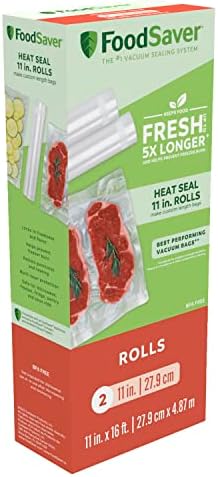
Does the FM2000 work with all FoodSaver bags and rolls? It uses standard FoodSaver embossed bags and rolls, and third party embossed bags of the same width work too. Rolls cost less per seal than pre cut bags because you cut only the length you need. See the FoodSaver bag guide for what to buy.
My FM2000 will not seal any more. What do I check first? The free fixes come first. Empty and dry the drip tray, wipe the bag mouth, look for a fold or wrinkle crossing the seal strip, check the foam gaskets for a nick or a smear of grease, and press both corners of the lid down. Let it cool for twenty minutes if you have been sealing back to back. The full order of checks is in FoodSaver troubleshooting.
Can I seal liquids like soup? Not directly. Freeze the portion solid in a container first, then bag the block, or use the seal only button to stop the vacuum manually before liquid reaches the strip. Regular liquid work wants a chamber machine.
Is the FM2000 still worth buying compared with newer models? If you want the simplest machine that seals well and takes the accessory hose, yes. Newer models add convenience such as roll storage, cutters and automatic bag detection. They do not weld a better seal, they save you steps.
How long does vacuum sealed food actually last? Longer than the same food in air, and the exact figure depends on the food, the bag and the freezer temperature. Treat brand freshness multipliers as marketing rather than a storage rule, and remember that sealing is not preserving. Wet low acid food still belongs in the fridge, the freezer, or a canner.
The Bottom Line
The FM2000 remains a sensible entry FoodSaver because it does the one job well and takes the accessory hose that unlocks jars and containers. You cut bags with scissors, you press the button yourself, and you wait when the machine gets warm. If those are acceptable, the money saved goes further in rolls and a jar sealer than in a fancier lid. If they are not, the volume tier is a different purchase entirely. Read next: the countertop sealer guide, and how to use a FoodSaver properly to get clean seals from the start.