Last updated: August 23, 2026
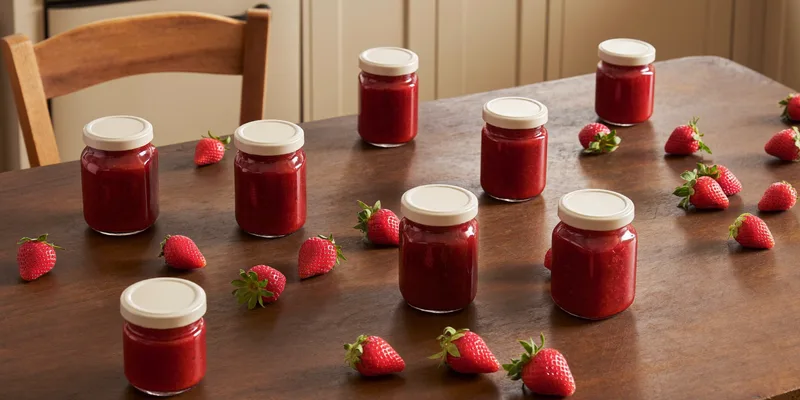
Jam is the preserve most people make first, and it is also the one where jar size gets decided badly. A quart of strawberry jam sounds efficient right up to the moment it is open in the fridge and nobody is eating it fast enough. Jam gets used a spoonful at a time, which means the right jar is small, and you need more of them than you think.
The other half of the decision is what goes on top and on the front. Jam is sticky, jam is what gets given away, and a lid that rusts or a label that curls off in the fridge undoes a good batch. Here is how to size, lid and label a jam pantry properly.
This article contains affiliate links. If you buy through them, we may earn a commission at no extra cost to you. Learn more.
Quick Answer
What size jars should you use for jam?
- Half pint, eight ounces, is the standard jam jar and the size most tested recipes are written around.
- Four ounce jars for gifts and variety sets, twelve ounce for households that go through jam fast.
- Regular mouth is the better fit here, since jam pours and a wide opening buys you nothing.
- Flat lids are single use, bands are reusable, and a labeled jar is worth more than a pretty one.
Bottom line: buy half pints by the case, add four ounce jars for gifting, and never reuse a flat lid.
Why the Half Pint Is the Default Jam Jar
Eight ounces is roughly how much jam a household finishes before it starts looking tired in the fridge. It is also the size most tested jam and jelly recipes yield in, which matters because the published process is written for a specific jar size and you should not move a recipe into a bigger jar than it was tested in.
The practical case is just as strong. Half pints stack neatly, they fit a fridge door shelf, they are light enough to hand to somebody, and a batch of jam turns into a satisfying number of them rather than three lonely quarts. If you buy one jar size for preserves, buy this one.
When to Go Smaller or Larger
Four ounce jars are the gifting size and the way to make a variety set from one afternoon of cooking. Twelve ounce jars suit a household that gets through jam quickly and would rather open fewer of them. Anything above a pint is generally the wrong shape for jam, since the surface area exposed once opened grows faster than the household’s appetite.
Jam Jars by Situation
The Case You Should Buy First
Regular mouth half pints, bought by the case rather than the dozen. Jam is one of the few preserves where you will genuinely use twelve at a time, and buying a case means you are never short mid batch. Regular mouth is the right choice because jam pours, and the narrower rim uses the cheaper of the two lid sizes.

Gift Jars and Variety Sets
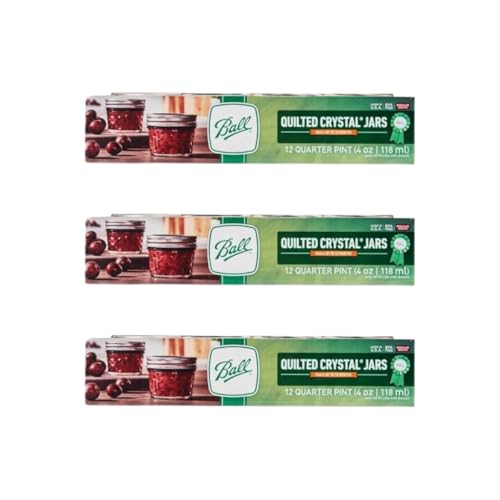
Four ounce jars turn one batch into a dozen small gifts, which is why they sell out in November. They are also the right size for a jam somebody might not love, a strong marmalade or a chili jam, where a full half pint is a commitment. Quilted glass is the traditional look and needs no decoration beyond a label.
Lids for a Whole Season
Lids run out before jars do, every year, because the flat lid is single use and the jar is not. Buying flat lids in a bulk box during the off season is the standard fix, and it means you never pay a premium at the peak of the harvest when the shelves are picked over. Bands you buy once and keep.

Labels That Survive the Fridge
A jam jar without a date on it becomes a mystery within a season, and the fridge is where paper labels give up. Dissolvable labels are the neat option if you rotate jars back into service, since they wash off cleanly instead of leaving adhesive behind. Waterproof vinyl is the option if the jar is a gift and the label needs to look intact months later.

Jam Jar Sizes at a Glance
| Size | Best for | Mouth | Notes |
|---|---|---|---|
| 4 oz | Gifts, variety sets, strong flavors | Regular | Quilted glass is the classic look |
| 8 oz half pint | The default jam jar | Regular | Matches most tested jam recipe yields |
| 12 oz | Households that use jam daily | Regular | Often sold as a quilted or squat jar |
| 16 oz pint | Butters, conserves, large households | Regular or wide | Bigger than most jams need |
Stay in the jar size your recipe was tested in. Moving a boiling water process into a larger jar than the tested one is not something you can adjust for at home, and the NCHFP is explicit that processes cannot be extended to larger jars by any formula.
Headspace Is the Detail That Bites
Jam is filled hot and fills to a tighter headspace than most other preserves. The NCHFP’s general information on canning jams and jellies calls for filling hot into jars leaving one quarter inch of headspace. Too little and the jam can push out under the lid during processing, too much and there may be too much air left to pull a strong vacuum.
The practical answer is to stop guessing and use the notch on a headspace tool, which most canning utensil sets include. It takes a second and it removes the most common reason a jam jar fails to seal properly. Our canning tools guide covers where that tool sits in a minimal kit.
Frequently Asked Questions
My jam did not set, can I fix it? Often yes, and the cause is usually pectin, acid or cooking time rather than the jar. Recooking with added pectin according to the pectin maker’s remake directions is the standard route, and a thermometer helps you hit the same endpoint twice.
What is the difference between jam jars and jelly jars? In practice, very little. Jelly jars are usually the quilted four and eight ounce styles, jam jars is a looser term for the same small regular mouth sizes. Both take the same lids. Our jelly jars guide covers the quilted styles specifically.
Can I reuse the flat lids for jam? No. Ball’s own use and care guidance is that the sealing compound on a flat lid forms to one jar rim and the lid is single use, while the band can be reused. Reused lids are a leading cause of seals that fail later.
Why did my jam jars seal and then pop open weeks later? Usually headspace or rim contamination. A smear of jam on the rim prevents a clean seal, and headspace outside the range the recipe calls for affects the vacuum. Wipe every rim before the lid goes on.
Do I need wide mouth jars for jam? No, and regular mouth is generally the better choice. Jam pours, so the extra opening buys nothing, and regular mouth lids are the cheaper of the two.
How many half pints does a typical jam batch make? It depends on the recipe, which is exactly why buying jars by the case matters. Have more clean jars ready than you expect to need, because coming up short with hot jam in the pot is the worse problem.
The Bottom Line
Buy regular mouth half pints by the case, keep a stack of four ounce jars for gifting, and buy flat lids in bulk before the season starts rather than during it. Match the jar to the size your recipe was tested in, wipe every rim, and put a date on the label while the jar is still warm. The rest of a good jam pantry is habits rather than gear. From here, our canning lids guide covers which lids actually hold, and the water bath canner guide covers the pot everything gets processed in.