Last updated: August 23, 2026
It is a small plastic jar of white granules that sits next to the lids in the canning aisle, and it generates more confusion than anything else on that shelf. People assume it is a preservative, or a salt substitute, or something that makes pickles safe. It is none of those. It is calcium, and it has exactly one job.
Knowing what that job is changes how you use it, and more importantly it stops you from relying on it for something it cannot do. Here is what is in the jar, when it earns its place, and how it compares with the alum and pickling lime your grandmother used.
This article contains affiliate links. If you buy through them, we may earn a commission at no extra cost to you. Learn more.
Quick Answer
What is pickle crisp and does it work?
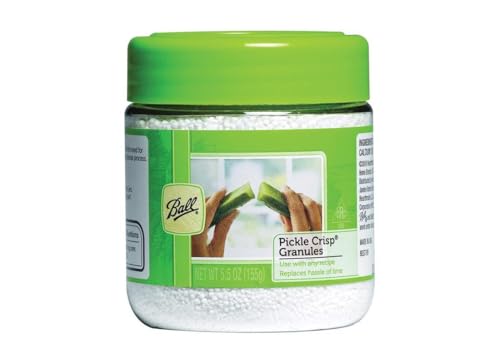
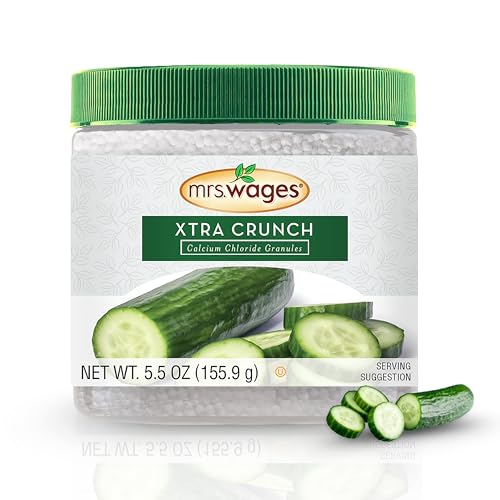
- It is calcium chloride, a granular firming agent used in commercial pickling. Ball sells it as Pickle Crisp and Mrs. Wages as Xtra Crunch.
- It firms the pectin in the vegetable so it holds structure through heat. That is the whole function.
- It does not preserve, does not change acidity and does not make an unsafe recipe safe.
- Iowa State University Extension notes it lacks the hydroxide component of lime, so it needs no soaking and no repeated rinsing.
Bottom line: a texture product, added dry to the jar at the small dose on the label, never a substitute for a tested brine.
What Is Actually in the Jar
Calcium chloride, and usually nothing else. It is a generic food additive used throughout the commercial pickling and canning industry, and the retail canning versions are the same compound in a small container with a scoop. Ball’s Pickle Crisp and Mrs. Wages Xtra Crunch are the two brands most home canners meet.
Because it is generic, bulk food grade calcium chloride from a supplier is chemically the same thing, which matters if you put up serious volume. The retail jars are convenient and the dose is tiny, so most households never need more than one.
What It Does, and What It Does Not
Calcium ions bind to the pectin in plant cell walls and cross link it, so the structure resists the softening that heat and enzymes cause. In practice that means a pickle that still snaps after a boiling water process, and a jar of beans or okra that is not limp in February.
What it does not do is preserve anything. It has no antimicrobial role, it does not extend how long a jar keeps, and it does not affect pH. A jar of pickles is safe because of the acidity of a tested brine and the process it received, and adding calcium chloride to an untested or diluted brine changes nothing about that.
It Is Not a Salt Substitute Either
The name confuses people, and so does the fact that it tastes vaguely saline in isolation. It is not pickling salt, it does not replace the salt in a recipe, and the quantities are not comparable. Keep using canning or pickling salt for the brine and treat the calcium as a separate, much smaller addition.
How to Use It
Dry, straight into the jar, before the brine goes in. There is no soaking stage and no rinsing stage, which is the main practical advantage over pickling lime. Use the amount printed on the product label, which is measured in fractions of a teaspoon per jar and scales with jar size.
More is not better. Overdosing calcium chloride produces a bitter or metallic edge that you cannot remove afterward, and it does not make the pickle any firmer past the point where the pectin is bound. If you are eyeballing it, you are using too much.
Where It Fits in the Recipe
It is an addition to a tested recipe rather than a modification of one. Adding calcium chloride does not require you to change the vinegar, the process time or anything else, because it is not affecting the acidity. That is precisely why it is the low friction option among the firming agents.
Compared With Alum and Pickling Lime
All three are calcium or aluminum based firming approaches with very different handling. NCHFP states that alum may be safely used to firm fermented pickles but that it is unnecessary and is not included in its recipes. On lime, NCHFP says the calcium in lime definitely improves pickle firmness, while insisting that excess lime be removed by rinsing and soaking in fresh water three times.
That rinsing requirement is the crux. Pickling lime is calcium hydroxide, and hydroxide left on the cucumbers raises the pH of the finished jar, which works directly against the acidity the process depends on. Iowa State University Extension makes the comparison plainly: calcium chloride has no hydroxide component, so it does not lower the acidity of the pickled food.
The Three Firming Agents Side by Side
The table compares them on handling and on the thing that matters most, which is whether the agent interferes with acidity. Statements about alum and lime follow NCHFP, and the calcium chloride comparison follows Iowa State University Extension.
| Firming agent | How it is used | Effect on acidity | Extra steps |
|---|---|---|---|
| Calcium chloride | Dry into the jar, label dose | None | None |
| Pickling lime | Long soak before packing | Raises pH if not removed | Rinse and soak in fresh water three times |
| Alum | In fermented pickles only | Not the issue, but unnecessary | NCHFP does not include it in recipes |
| Grape or oak leaves | One leaf per jar, traditional | None | Not in tested recipes |
For the full picture on texture, including the blossom end rule and the low temperature pasteurization option, see our guide to making crunchy pickles.
Beyond Cucumbers
Calcium chloride is used well beyond pickles. Home canners add it to green beans, carrots, okra, beets and asparagus for the same reason, and it turns up in fermenting where the vegetable would otherwise go slack over a long ferment. The dose logic is identical, small and per jar.
Buying in bulk makes sense once you are dosing dozens of jars a season, and food grade bulk calcium chloride is the same compound sold in a bigger container. Check the listing says food grade, since the same chemical is sold for de icing and for pool treatment in grades that do not belong in a jar.

Frequently Asked Questions
Does pickle crisp make pickles safe to store? No. It is a texture product with no preserving role. Safety comes from the acidity of a tested brine and the process the jar receives, and adding calcium chloride to a weak or untested brine does not change that at all.
How much do I use per jar? Follow the dose printed on the product label, which is a fraction of a teaspoon and scales with jar size. Overdosing gives a bitter or metallic taste and adds no extra firmness, so measure rather than guess.
Can I use it in fermented pickles? Yes, and it is common in long ferments where texture slides over weeks. It does not interfere with the fermentation or with the acidity the ferment produces.
Is calcium chloride the same as pickling lime? No. Lime is calcium hydroxide and the hydroxide raises pH, which is why NCHFP requires rinsing and soaking in fresh water three times when lime is used. Calcium chloride has no hydroxide component and needs no soaking or rinsing.
Will it fix pickles that are already soft? No. Nothing restores texture after processing. Add it at packing time, along with trimming the blossom end and keeping the heat down, which are the free parts of the same job.
Can I use bulk calcium chloride instead of the retail jar? Yes, as long as the listing states food grade. The compound is the same, and the retail jars are mainly paying for the small container and the scoop.
The Bottom Line
Pickle crisp is calcium chloride, it firms pectin, and that is all it does. Added dry at the label dose it needs no soaking and does not touch the acidity of the jar, which makes it the least troublesome of the firming agents. It is an addition to a tested recipe, never a fix for a weak one. Read next: our guide to crunchy pickles for the free steps that matter more, and the pickling jars guide for the jars themselves.