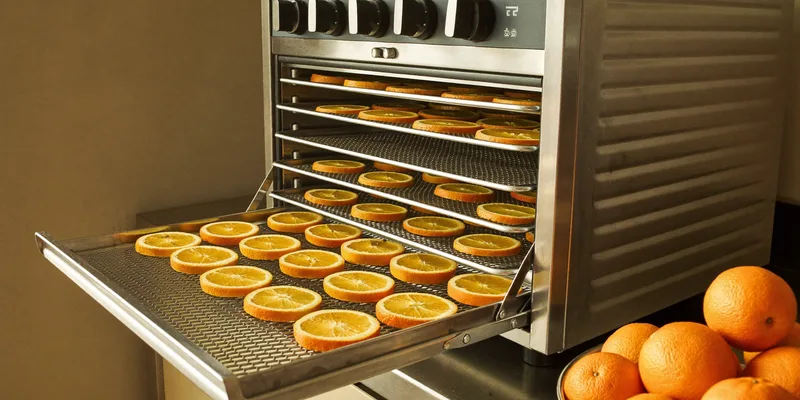
Last updated: August 23, 2026
Two things send people looking for a stainless steel dehydrator. The first is a cracked tray. Plastic trays get brittle after a few seasons of heat and scrubbing, and a tray that snaps at the corner turns a working machine into a partly working machine, especially when replacements are no longer listed.
The second is discomfort about warm plastic sitting under food for twelve hours at a stretch. That is a preference rather than a settled question, and it is a perfectly reasonable one to spend money on. Either way, the durability argument on its own is usually enough to justify the upgrade for anyone who dries regularly.
This article contains affiliate links. If you buy through them, we may earn a commission at no extra cost to you. Learn more.
Quick Answer
Is a stainless steel dehydrator worth the extra money?
- Yes if you dry often. Steel shelves do not crack, warp or stain the way plastic trays do.
- Yes if warm plastic under food bothers you. Stainless removes the question entirely.
- Not automatically better at drying. Airflow and thermostat accuracy still decide results.
- Check whether the housing and door are also steel, or only the shelves.
Bottom line: buy stainless for durability and cleaning, and still judge the machine on airflow and temperature control.
Why People Replace Plastic Trays
Because they break. Repeated heating and cooling makes thin plastic brittle, dishwasher cycles accelerate it, and the corners where trays slide on rails take the stress. Owners of budget machines report cracked or warped trays as the most common failure, well ahead of anything electrical.
Plastic also holds onto things. Turmeric, tomato, chili and jerky marinade stain it permanently, and mesh liners pick up odors that survive a wash. None of that ruins the food, and all of it makes the machine less pleasant to open.
Availability of spares
Before replacing a whole machine over one tray, check whether the manufacturer still lists spares for your model. Some brands sell trays and mesh liners individually, which is far cheaper than a new dehydrator. Our tray and sheet guide covers what fits what.
The Plastic Question, Honestly
Food grade plastics used in dehydrators are made for the temperatures these machines run at, and manufacturers typically label them free of BPA. Whether that fully settles the concern is a judgement each household makes, and we are not going to pretend a gear guide can resolve it for you.
What we will say is that stainless steel sidesteps the debate at a cost that is no longer extreme, and that a steel shelf is easier to sanitize after raw meat than a plastic mesh liner. If the concern is what pushed you here, that is a legitimate reason to buy, and you also get shelves that outlast the machine.
Check what is actually steel
Listings often say stainless steel when only the shelves are. The housing, the door, the fan shroud and the drip pan may still be plastic, which is fine functionally but worth knowing before you pay a premium expecting an all metal cabinet.
Machines Worth Considering
Stainless shelf machines come in two broad sizes: a six shelf counter unit for everyday drying, and a ten or eleven shelf cabinet for harvests and hunting seasons. Both are box designs with a rear fan, which is the airflow layout that dries evenly without tray rotation.
Compare shelf area rather than shelf count when you cross brands, and check whether the door seals well, because a loose door on a large cabinet leaks the warm air you are paying to make.
Best six shelf machine for a kitchen counter
Cosori’s stainless tray dehydrator pairs steel shelves with digital control, and independent testing has repeatedly rated this line among the most accurate at holding a set temperature.

Best large cabinet for harvests and jerky
Magic Mill’s stainless machines run to ten and eleven shelves with a digital timer and temperature control, which covers a deer’s worth of trim or a full picking of apples in one load.

Best value ten shelf option
Septree’s ten tray stainless machine is positioned as a lower cost alternative to the long established ten shelf cabinets, with the same horizontal airflow layout and a wide temperature range according to the manufacturer’s listing.
Best if you want the established box machine in steel
Excalibur builds stainless versions of its box dehydrators, which keeps the square shelf format and full width rear fan that made the range the default for serious drying.

Stainless or Plastic: What Changes
Stainless changes durability, cleaning and how the machine feels after five years. It does not change how well the machine dries, which comes down to fan placement, wattage and thermostat accuracy. Do not let the material distract from those.
| Aspect | Stainless shelves | Plastic trays | Verdict |
|---|---|---|---|
| Durability | Effectively permanent | Cracks and warps over seasons | Clear win for steel |
| Cleaning | Scrubs and sanitizes easily | Stains and holds odors | Win for steel |
| Sticking | Needs liners for fruit leather | Mesh liners usually included | Even, both need sheets |
| Drying performance | Same as any rear fan machine | Same as any rear fan machine | Material is not the factor |
Shelf materials and capacities described here come from the manufacturers’ current product listings.
Living With Steel Shelves
Sticky foods stick harder to steel than to a mesh liner, so fruit leather, banana slices and anything sugary want a silicone sheet or parchment on top of the shelf. That is a small purchase and it is the one thing plastic machines handle out of the box.
Steel shelves are also heavier, which matters when a full cabinet load comes out at midnight. Slide them out onto a tray rather than carrying them across the kitchen, and let them cool before washing so nothing warps in cold water.
Retrofitting an existing machine
Some plastic box machines accept aftermarket stainless shelves sized to the same footprint, which upgrades the food contact surfaces without replacing the motor and cabinet. Measure the shelf opening carefully, since a shelf that binds on the rails is worse than the tray you replaced.
Frequently Asked Questions
My plastic trays keep cracking. Is stainless the fix? Yes, that is the main reason people upgrade. Steel shelves do not become brittle with heat cycling, and they survive scrubbing after jerky batches in a way thin plastic does not.
Is plastic in a dehydrator unsafe? Manufacturers use food grade plastics rated for these temperatures and typically state they are BPA free. Whether that satisfies you is a personal call, and stainless removes the question if it does not.
Does stainless dry food faster? No. Drying speed comes from airflow, wattage and temperature, not from the shelf material. A well designed plastic machine will outperform a poorly designed steel one.
Do I still need liners with stainless shelves? For fruit leather, small pieces and anything sticky, yes. Silicone sheets or mesh liners sit on top of the shelf and keep food from bonding to the metal.
Are stainless shelves dishwasher safe? Usually, and the listing will confirm. They are also easy to hand wash, which is often faster than fitting large shelves into a rack.
Which stainless machine is best for jerky? A rear fan cabinet with enough shelf area for a whole batch and a thermostat you can read. Our dehydrator for jerky guide covers the temperature requirements in detail.
The Bottom Line
A stainless steel dehydrator is worth the upgrade if you dry often, if you have already replaced a cracked tray, or if warm plastic under food is something you would rather not think about. Just do not let the material do all the deciding: airflow layout, thermostat accuracy and shelf area still separate a good machine from a frustrating one. Compare the wider field in our food dehydrator buying guide.