Last updated: August 23, 2026
The first batch of homemade jerky is usually seasoned from the spice cupboard, and it is usually fine. The second batch is where people notice that the flavor sat on the surface instead of going through the meat, or that the salt landed unevenly, or that it tastes like a marinade rather than like jerky.
Packaged jerky seasoning solves that with two things in one box: a spice blend measured for a stated weight of meat, and a separate cure packet. The spice half is a matter of taste. The cure half is the part that comes with instructions you follow to the letter, and it is worth understanding what it is doing before you buy.
This article contains affiliate links. If you buy through them, we may earn a commission at no extra cost to you. Learn more.
Quick Answer
Which jerky seasoning should you use?
- Kits pair a spice blend with a cure packet and state how many pounds of meat they treat.
- Measure the cure by the manufacturer’s instructions. It is not a season to taste ingredient.
- Original and pepper garlic blends suit beef and venison; sweet and spicy suits leaner game.
- Cure does not replace the USDA heat step for jerky.
Bottom line: pick the flavor you like, then follow the packet’s weight instructions exactly.
What Is Actually in a Jerky Kit
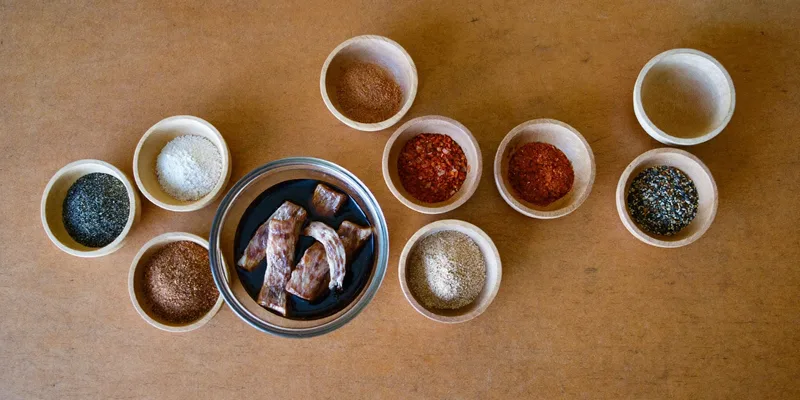
Two packets. The seasoning packet holds salt, sugar, spices and often a smoke flavoring, measured so that one packet treats a stated weight of meat. The cure packet holds a curing salt, and the label lists sodium nitrite among the ingredients along with salt and, in most brands, a coloring agent so it cannot be mistaken for table salt.
Brands state their coverage on the pack. Hi Mountain’s kits are listed as seasoning up to fifteen pounds of whole muscle meat or ten pounds of ground meat, and LEM’s Backwoods seasoning is sold in packet sizes listed for five pounds and for twenty five pounds. Those figures come from the manufacturers’ own listings and are how you size a purchase against a hunting season.
The Cure Packet, and Why You Follow the Instructions
Curing salt containing sodium nitrite is included to inhibit spoilage organisms during the long, low temperature drying process and to give jerky its color and characteristic flavor. It is deliberately dyed and deliberately packaged in premeasured amounts, because it is the one ingredient in the box where more is genuinely worse.
Use the amount the manufacturer specifies for the weight of meat you are actually treating, weigh the meat rather than guessing, and do not scale a packet by eye. If you are curing from bulk curing salt rather than a kit, get the ratio from the product’s own instructions or a university extension service, not from a forum post.
Cure is not the heat step
Cure and heat address different risks. USDA FSIS guidance still calls for heating jerky meat to 160F, or poultry to 165F, before drying, with the dehydrator maintaining 130F to 140F. A cure packet does not remove that step. Our jerky time and temperature guide lays out the sequence.
Flavor Profiles Worth Knowing
Four blends cover most of what people make. Original is a savory, salty baseline that lets beef taste like beef. Cracked pepper and garlic is the most popular step up and the one that suits venison best. Sweet and spicy leans on sugar and heat, and hickory or mesquite leans on smoke flavoring for people drying indoors without a smoker.
Venison and other game carry stronger seasoning than beef does, because the meat itself is more assertive. If you are drying a mixed freezer, buying two blends and splitting the batch is a cheap way to find out what your household actually eats.
Best starting point for beef and game
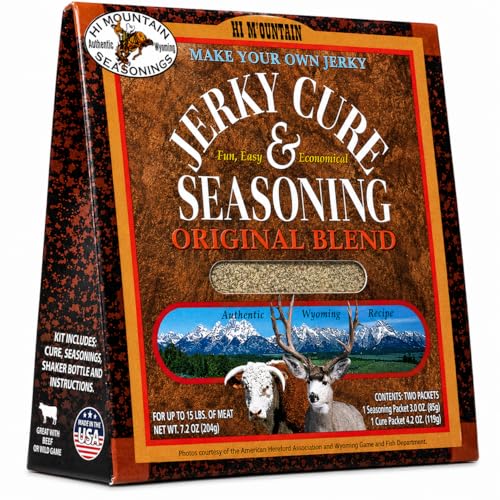
The original savory blend is the safe first purchase and the one most likely to please everyone. Hi Mountain sells it as a kit with the cure packet included, listed for a stated weight of whole muscle or ground meat.
Best for venison and stronger meats
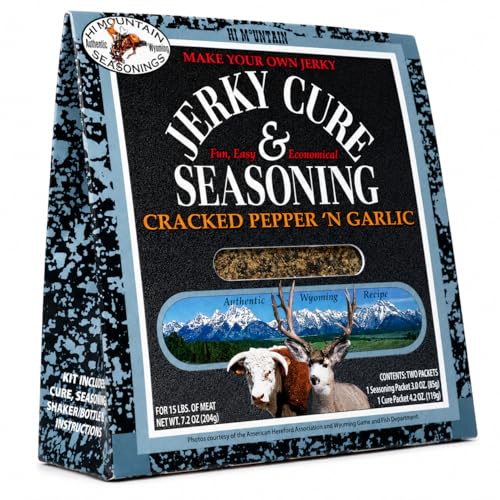
Cracked pepper and garlic stands up to the flavor of deer and elk instead of disappearing under it, and it is the blend most often recommended by hunters who dry their own trim.
Best for large batches
LEM’s Backwoods line is sold in packet sizes aimed at bulk processing, with a premeasured cure packet included, which suits anyone treating a whole animal in one session rather than a few pounds.

Best for trying several flavors cheaply
Variety packs and single flavor pouches let you test profiles across one batch without committing to a large packet of something your family turns out to dislike.

Choosing by Meat and Method
Kits usually state a different coverage for whole muscle and for ground meat, because ground meat takes seasoning through the whole mix while strips take it on the surface. Read the packet for both numbers before assuming one packet covers your batch.
| Blend | Suits | Format | Notes |
|---|---|---|---|
| Original savory | Beef, venison, first batches | Whole muscle or ground | Least likely to divide a household |
| Cracked pepper and garlic | Venison, elk, stronger game | Whole muscle or ground | Stands up to game flavor |
| Sweet and spicy | Lean beef, snack style jerky | Usually whole muscle | Sugar can darken the surface |
| Hickory or mesquite | Indoor drying without a smoker | Both | Smoke comes from flavoring, not wood |
Coverage weights and ingredient details in this section come from the brands’ own product listings.
Marinade or Dry Rub?
Both work, and kits usually give instructions for either: mix the seasoning with water and soak the strips, or apply it dry and refrigerate. A wet marinade penetrates more evenly and adds drying time; a dry application keeps the surface drier going into the machine and shortens the run.
Whichever you choose, marinate in the refrigerator rather than on the counter, in a covered container or a sealed bag, and blot the strips before loading so marinade does not drip through the shelves. A vacuum sealer bag makes short work of keeping strips submerged in the refrigerator.
Mixing your own
Homemade rubs are fine for flavor, and the same caution applies to cure: if a homemade recipe includes curing salt, get the quantity from the cure manufacturer’s instructions or an extension service, never from a rounded spoon measure in a recipe with no source.
Frequently Asked Questions
Do I need cure to make jerky? Not for flavor, and many people dry without it. Cure inhibits spoilage organisms during long low temperature drying and gives the traditional color and taste. If you use it, follow the packet instructions for the weight of meat exactly.
How much meat does one kit treat? The pack states it. Hi Mountain lists its kits as treating up to fifteen pounds of whole muscle or ten pounds of ground meat, and LEM sells Backwoods packets listed for five pounds and for twenty five pounds.
Can I use twice the cure for a stronger flavor? No. Cure is measured for a reason and is not a seasoning to adjust by taste. If you want more flavor, increase the spice blend, not the cure.
Does seasoning make jerky safe? No. Salt, acid and cure all help, and none of them replace the USDA FSIS heat step of 160F for meat or 165F for poultry before drying.
How long should jerky marinate? Kit instructions vary, and overnight in the refrigerator is the common approach for strips. Follow the instructions on your specific kit rather than a generic figure, and keep it refrigerated the whole time.
Is jerky seasoning the same for ground meat? The blend is, but the coverage differs, and ground meat generally needs the seasoning mixed through rather than applied to a surface. Check both weights on the packet before dividing it. Our jerky gun guide covers shaping the ground mix.
The Bottom Line
Buy the flavor your household will eat, size the packet against the pounds you actually process, and treat the cure packet as a measured ingredient rather than a seasoning. Everything else about jerky seasoning is preference. Once the meat is seasoned, the machine and the temperatures do the rest: see our dehydrator for jerky guide and the time and temperature guide.