Last updated: August 23, 2026
Ground meat jerky is the answer for anyone who has bought venison trim by the pound, or who has watched a family member give up on whole muscle jerky because it takes a jaw to eat. The problem is shaping it. Rolling a slab between parchment and cutting strips by hand works, and it is a slow, sticky way to spend an evening.
A jerky gun is a caulking gun for meat. Load the barrel, fit a nozzle, and lay even strips or round sticks straight onto the dehydrator shelf. The gun itself is simple enough that the real questions are which nozzles you need, how the barrel comes apart, and how badly it clogs, which is what owners actually complain about.
This article contains affiliate links. If you buy through them, we may earn a commission at no extra cost to you. Learn more.
Quick Answer
Which jerky gun should you buy?
- Get one with both a flat strip nozzle and a round stick nozzle. Most people use the flat one almost always.
- A barrel that fully disassembles is the difference between a two minute clean and a chore.
- Keep the meat cold and pack the barrel without air pockets; that is what stops sputtering.
- Ground jerky still needs the USDA heat step, the same as whole muscle strips.
Bottom line: buy on nozzle set and ease of cleaning, not on trigger design.
What a Jerky Gun Actually Buys You
Consistency and speed. Every strip comes out the same thickness and width, which means the whole shelf finishes drying at the same time instead of leaving you picking off the thin ones early. On a five pound batch that is the difference between one clean run and a night of checking.
It also opens up ground meat as a jerky format, which matters if you process your own game. Trim that would otherwise be burger becomes jerky, and the result is softer to chew than whole muscle, which suits kids and anyone with dental work.
Nozzles: Flat Strips or Snack Sticks
Two shapes cover almost everything. A flat nozzle extrudes a wide ribbon that looks like conventional jerky, and a round nozzle extrudes a snack stick. Manufacturers usually include both, and experienced users report reaching for the flat nozzle for the large majority of batches.
Extras are worth checking rather than assuming. Some kits add a double stick nozzle that lays two sticks at once, which halves the passes on a big batch, and some include a longer nozzle for reaching across a full shelf. Replacement nozzles are sold separately by the main brands.
Best known kit for both formats
LEM’s Jerky Cannon ships with stainless nozzles for flat strips and for snack sticks, and the brand sells individual replacement and double stick nozzles, which matters because a lost or damaged nozzle should not retire the gun.

Best if you want three nozzle shapes in the box
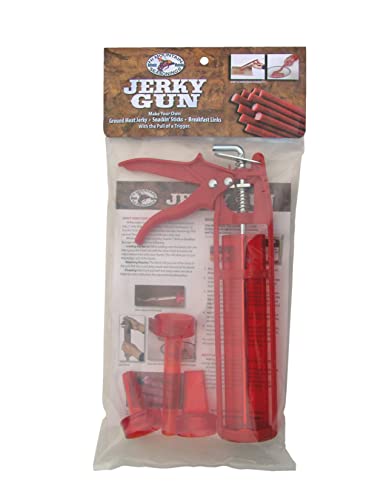
Hi Mountain’s jerky gun is sold with three interchangeable nozzles, flat, round and long, which covers strip work, sticks and reaching the back of a deep shelf without repositioning the tray.
Barrel, Capacity and Build
Most guns hold roughly a pound and a half to two pounds of ground meat per load, which means several refills over a full batch. Capacity is less important than how quickly the barrel comes apart, because you will empty, refill and eventually wash it more than once in a session.
Bodies are typically plastic with a metal trigger mechanism, and nozzles are stainless on the better kits. A plastic nozzle is the part most likely to crack under a stiff load of cold meat, which is a reason to prefer stainless where the listing offers it.
Best sturdier option for heavy seasonal batches
Weston’s jerky guns are aimed at the same hunting and bulk processing audience and use a similar nozzle set. If you already own that brand’s grinder or slicer, the accessories tend to share a parts ecosystem.

Best if you already own a gun and lost a nozzle
Nozzles are sold individually, and a double stick nozzle is a cheap upgrade that cuts the number of passes on a snack stick batch roughly in half.

Comparing What Matters
Ignore trigger styling and marketing about pressure. Four practical things decide whether a jerky gun is pleasant to use in a real session, and all four are visible in the listing photos if you look for them.
| Feature | What to look for | Why it matters | Warning sign |
|---|---|---|---|
| Nozzle set | Flat plus round, stainless | Covers strips and sticks | Single plastic nozzle only |
| Disassembly | Barrel, plunger and cap all separate | Cleaning is the main chore | Sealed or glued end cap |
| Capacity | Around one and a half to two pounds | Fewer refills per batch | Very small barrels on novelty guns |
| Spare parts | Nozzles sold separately | One broken part should not end it | No listed replacements |
Capacities and nozzle contents above come from the manufacturers’ own product listings.
Clogging, Sputtering and Cleaning
The complaint you will find in almost every review set is meat sticking in the nozzle at the end of a load, and strips coming out in bursts rather than a smooth ribbon. Both trace back to the same two causes: air pockets in the barrel, and meat that has warmed up and gone tacky.
The fix experienced users describe is to keep the ground meat genuinely cold, roll it into balls, drop them into the barrel one at a time so each pushes the air ahead of it, then fit the cap and pull the plunger back before loading more. Work in batches and return the rest of the meat to the refrigerator while you extrude.
Cleaning without a fight
Wash immediately, before anything dries. A bottle brush for the barrel and a small brush for the nozzle handle most of it, and warm soapy water beats a dishwasher for the nozzle threads. Check the listing before putting any part in a dishwasher, since many bodies are hand wash only.
Ground Meat and Safety
Grinding moves surface bacteria through the whole mix, so ground jerky deserves at least as much care as whole muscle. USDA FSIS guidance for home jerky is to heat meat to 160F, or poultry to 165F, before drying, then dry in a dehydrator that maintains 130F to 140F, and that applies to extruded ground strips as well.
Cure packets in commercial seasoning kits come with their own instructions for the weight of meat each packet treats. Follow those exactly, keep the meat cold while you work, and clean the gun between different meats rather than topping up the barrel.
Frequently Asked Questions
Meat keeps getting stuck in the nozzle. What am I doing wrong? Usually warm meat and trapped air. Chill the mix thoroughly, load it as balls that push the air out ahead of them, and stop before the barrel is completely empty rather than forcing the last of it through.
Which nozzle should I use for regular jerky? The flat one. Owners report using the flat strip nozzle for the large majority of batches, with the round nozzle reserved for snack sticks.
Do I need a jerky gun if I slice whole muscle? No. A jerky gun is for ground meat. If you buy or cut whole muscle strips, a sharp knife and partially frozen meat is the whole toolkit.
Can I use it with any ground meat? It handles ground beef, venison and other lean ground meat well. Very fatty mixes smear and are worth avoiding anyway, since fat is what turns rancid in stored jerky.
Is the gun dishwasher safe? Sometimes for the nozzles, rarely for the body. Check the specific listing, and either way wash straight after use before the meat dries into the threads.
Does ground jerky need the same temperatures as strips? Yes. Follow the same USDA FSIS steps described in our jerky time and temperature guide, since grinding spreads surface bacteria into the interior.
The Bottom Line
A jerky gun is a small purchase that changes how a jerky session feels, especially if you are working through ground game. Buy one with a stainless flat nozzle and a stick nozzle, check that the barrel comes fully apart, and keep the meat cold to avoid the clogging that fills the review sections. Pair it with a machine that holds its temperature, covered in our dehydrator for jerky guide, and season it using the kits compared in our jerky seasoning guide.