Last updated: August 23, 2026
Ask a canning group which pressure canner to buy and the thread splits in half within ten minutes. One camp has used a Presto for fifteen years, replaced two sealing rings and cannot see the problem. The other camp bought an All American once, expects to hand it to a grandchild, and points out that there is no gasket to fail in the first place.
Both camps are right, because they are answering different questions. The choice comes down to how much you can, what your stove can take, whether you want a consumable seal or a machined one, and how you feel about lifting a heavy pot full of jars. Here is the comparison without the loyalty.
This article contains affiliate links. If you buy through them, we may earn a commission at no extra cost to you. Learn more.
Quick Answer
Presto or All American, which pressure canner should you buy?
- Presto if you can a few times a year, want a lighter pot and do not mind replacing a sealing ring occasionally.
- All American if you can heavily, keep gear for decades, or simply do not want a rubber part in the seal. The maker describes it as a metal to metal sealing system with no gaskets to replace.
- Check your stove. Both makers list models as suitable for smooth top ranges, and Presto states its 23 quart canner is for household burners of 12,000 BTUs or less.
- Gauge preference matters. Presto canners are commonly dial gauge, which the NCHFP recommends testing yearly.
Bottom line: occasional canner, buy the Presto. Heavy or lifelong canner, buy the All American and lift with your knees.
The Real Difference Is the Seal
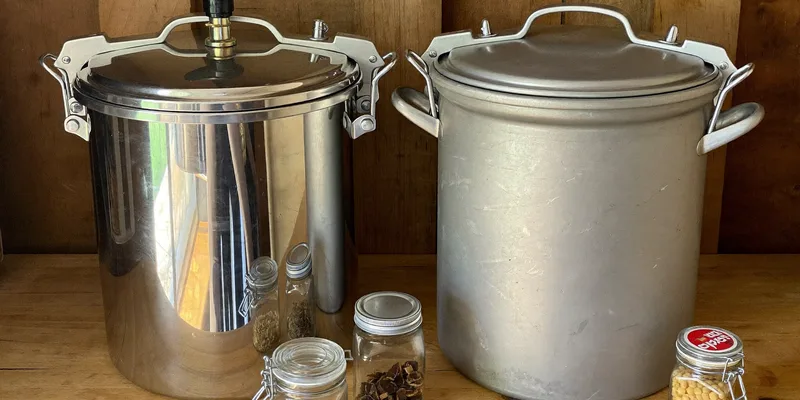
Presto canners close with a rubber sealing ring seated in the lid, compressed as you rotate the lid home. All American canners close with two machined metal faces pulled together by wing nuts. Everything else people argue about, weight, price, longevity, comes downstream of that one engineering choice.
A rubber seal is forgiving and cheap. It tolerates small imperfections in the rim, seals with a twist, and when it hardens you buy a new one. A machined seal has nothing to wear out, which is genuinely appealing, and it asks for clean faces, the lubricant the manual specifies, and wing nuts tightened evenly in opposing pairs.
What That Means Year to Year
With a Presto you have a small recurring task: inspect the ring each season and replace it when it stops springing back. With an All American you have a different small task: keep the sealing faces clean and undamaged, and never put the lid down face first on a hard counter. Neither is difficult, they are just different habits.
Weight, and Whether Your Stove Cares
All American canners are cast aluminum and heavy before you put anything in them. Full of jars and water, a large one is a two person lift for many people, and that is the honest reason some owners downsize later. Presto canners are lighter, which makes filling, emptying and storing them easier.
On stoves, both makers list models as smooth top compatible. Presto states its 23 quart canner is constructed of warp resistant aluminum and suitable for regular and smooth top ranges, and Amazon listings for the All American 1930 series describe it as suitable for gas, electric or flat top stoves. Glass top owners should still check their range manufacturer’s weight guidance, since that limit comes from the stove rather than the canner.

Gauges: Dial, Weight, or Both
Presto canners in the classic line use a dial gauge, which shows pressure on a needle. Presto notes that the dial gauge requires annual testing for accuracy, and the NCHFP makes the same recommendation, with many county extension offices providing the test. A drifting gauge is the one failure mode that matters, because it underprocesses without telling you.
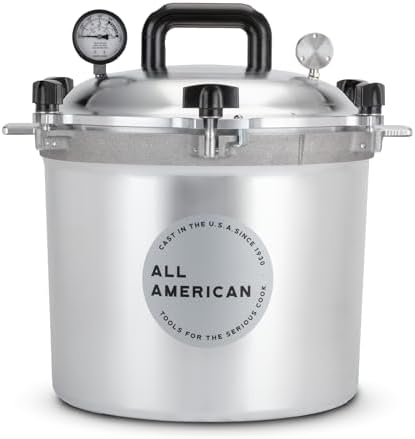
All American canners carry a steam gauge plus a machined regulator weight, so you have a reading to watch and a weight that sets the pressure mechanically. Weight regulators do not drift, which is why weighted gauge canners do not need the annual test, and it is a real convenience if your nearest extension office is an hour away.
Capacity and Batch Size
Presto lists its 23 quart canner with a mason jar capacity of 26 half pints, 20 pints or 7 quarts, and its 16 quart model is the smaller sibling for tighter kitchens. All American publishes its range by model number, with the 921 at 21.5 quarts sitting in the middle of the family and larger models above it.
The number that actually matters is quart jars per load, because that is the slow batch. Most canners in this size class take a single layer of seven quarts, and going bigger buys you a second layer of pints rather than more quarts. If you can quarts of green beans by the bushel, look at the larger All American models specifically.

Side by Side
The table compares the two families on the points that decide the purchase. Capacity and stove figures come from the makers’ own listings as cited above.
| Point | Presto | All American | Who cares |
|---|---|---|---|
| Seal | Rubber sealing ring, replaceable | Machined metal to metal, no gasket | Anyone tired of chasing parts |
| Closing | Twist the lid home | Tighten wing nuts in pairs | Speed versus certainty |
| Weight | Lighter, easier to handle full | Heavy cast aluminum | Anyone lifting it alone |
| Gauge | Dial, tested annually per NCHFP | Steam gauge plus regulator weight | Owners far from an extension office |
| Upkeep | Ring and plug as consumables | Clean and lubricate the faces | Different habits, similar effort |
| Longevity | Long, with parts replaced | Often described as generational | Buy once versus buy lighter |
Which One Fits You
Buy the Presto if you can a few weekends a year, if you store the canner on a high shelf, if you want the lower entry point, or if you are still deciding whether canning is going to stick. It is the canner most American home canners learn on, parts are easy to find, and our guide to Presto pressure canners compares the sizes.
Buy the All American if you can seriously every season, if you are equipping a homestead kitchen, if you hate consumable parts, or if you want one canner for the rest of your life and have the counter and shoulders for it. Our guide to All American pressure canners works through the model numbers.
What Neither of Them Changes
The processing rules are identical whichever you buy, because they come from the recipe rather than the pot. Low acid food needs pressure canning at the pressure and time the tested recipe specifies, adjusted for your altitude, and no canner brand alters that. Our pressure canning guide covers the process, and what you cannot water bath can covers the boundary.
Frequently Asked Questions
Is an All American worth the extra money? If you can heavily and expect to keep the canner for decades, yes, because the machined seal removes the recurring part and the build is meant to last. If you can a few times a year, a Presto does the same job for less and takes less lifting.
Can I use either one on a glass top stove? Both makers list models as smooth top compatible, and Presto describes its 23 quart canner as suitable for regular and smooth top ranges. Check your range manufacturer’s guidance on weight and on canning generally, since the limit usually comes from the stove.
Do I have to test the gauge on both? Dial gauges need it. The NCHFP recommends annual accuracy testing for dial gauges, which covers the classic Presto canners. Weight regulators do not drift, so a weighted setup avoids that errand.
Are the wing nuts on an All American a nuisance? They add a step and they are not difficult. Tighten opposing pairs a little at a time so the lid pulls down evenly, the same way you would fit a wheel. Owners who dislike them usually dislike the weight of the canner more.
Which holds more jars? Compare quart jar counts rather than pot volume. Presto lists its 23 quart canner at 26 half pints, 20 pints or 7 quarts, and larger All American models go above that. Extra capacity generally buys a second layer of pints rather than more quarts.
The Bottom Line
Presto for the household that cans in bursts and wants a pot it can lift, All American for the household that cans hard and wants nothing rubber in the seal. Check your stove either way, and remember that the gauge type decides whether you have a yearly errand at the extension office. Read next: pressure canners for the wider field, and gaskets and parts for what each one asks of you later.