Last updated: August 23, 2026
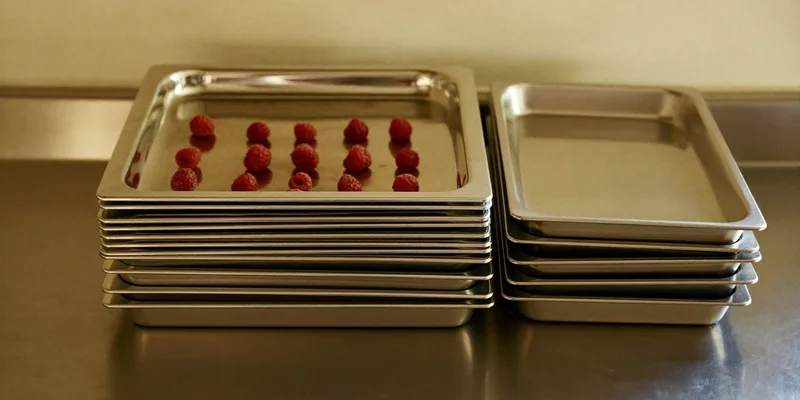
Ask a room full of freeze dryer owners what they bought first after the machine and the answer is almost always trays. Not because the ones in the box are bad, but because a single set turns the machine into a queue. The cycle finishes, you unload, you wash, you dry, you refill, and only then does the next batch start. During peach week that dead time is the difference between processing the harvest and watching part of it go soft.
The other complaint is capacity. Owners look at the loaded trays, do the arithmetic on a bushel of tomatoes, and realize the machine is smaller in practice than it looked in the listing. You cannot buy your way out of chamber size, but you can stop wasting the space you have, and dividers and liners are how.
This article contains affiliate links. If you buy through them, we may earn a commission at no extra cost to you. Learn more.
Quick Answer
Which freeze dryer trays and accessories are actually worth buying?
- A second full tray set, first. It lets you prep and pre freeze the next batch while one runs.
- Silicone liners, second. They stop sticky food welding to stainless and save the tray finish.
- Dividers, if you run mixed loads or candy. Several foods per tray, no flavor migration.
- Match the model, not the brand. Tray dimensions differ by machine size, so measure before ordering.
Bottom line: a spare set plus liners removes the two biggest bottlenecks in a busy preserving week.
Why a Second Tray Set Pays for Itself
Because the machine is only idle when you are washing trays. With a spare set you load, freeze and stage the next batch in the kitchen freezer while the current cycle runs, then swap sets in a couple of minutes when it finishes. Over a harvest weekend that is an extra batch or two, which is real food rather than a convenience.
It also removes the pressure to unload immediately. Freeze dried food starts pulling moisture from the air the moment the door opens, so being able to package carefully rather than racing to free up trays is worth something on its own.
Get the Size Right the First Time
Trays are model specific. Harvest Right’s home lineup runs four trays on the small, five on the medium, six on the large and seven on the extra large, and the tray dimensions differ between those sizes. Third party sets are sold per model, with listings for medium sets describing five stainless pans around 18 by 7.5 inches and small sets describing four pans around 14 by 7.75 inches. Measure your own trays before ordering rather than trusting a size name.


Liners: The Cheapest Upgrade in Freeze Drying
Sticky food bonds to bare stainless. Banana, mango, purées, egg, pumpkin and every kind of candy come off in fragments and leave a film that the next batch sticks to even harder. Owners then attack the trays with metal utensils, scratch the surface, and make the problem permanent.
A silicone liner sized to your tray solves all of it. Food lifts off in one piece, cleanup is a rinse, and the stainless underneath stays smooth. If you buy one accessory beyond a spare tray set, make it liners.

One Honest Trade Off
A solid liner covers the tray surface, so vapor leaves from the top of the food rather than from all around it. On very wet loads that can add a little to the cycle. It is a small cost against never scraping a tray again, and it does not apply to dry loads like candy at all.
Dividers, and Running Several Foods at Once
Dividers are silicone inserts that split a tray into sections, and they solve two problems. They let you run small quantities of different foods in one cycle without the flavors and colors migrating, and they keep expanding candy from fusing into a single sheet.
They are most useful to households that freeze dry leftovers and odd amounts rather than one crop at a time. If you routinely fill every tray with the same food, you can skip them.

What Each Accessory Actually Solves
Buying in the right order saves money. Trays remove the queue, liners remove the mess, dividers add flexibility, and everything else is optional. The table sorts them by the problem they fix rather than by how they are marketed.
| Accessory | Problem it solves | Fit note | Watch out for |
|---|---|---|---|
| Second tray set | Machine idle between batches | Sold per model size | Ordering the wrong size name |
| Silicone liners | Sticky food welding to stainless | Must match tray footprint | Slightly longer cycles on wet loads |
| Tray dividers | Mixed loads and expanding candy | Cavity count varies | Reduces usable area per tray |
| Parchment sheets | Occasional messy batch | Cut to size yourself | Single use, can shift under vacuum |
| Stackable racks | Pre freezing trays in a home freezer | Depends on your freezer shelf | Frozen trays are heavy and awkward |
Tray counts by model size are Harvest Right’s published configuration, and the dimensions quoted above are from third party tray listings rather than measurements of our own.
Making Trays Last
Stainless trays are not fragile, but they warp and scratch in predictable ways. Never pry frozen food off with a metal tool, never bang a tray on the edge of the sink to release a sheet, and let a tray warm slightly rather than fighting food that is still bonded by ice. A warped tray sits unevenly in the chamber and loads unevenly forever after.
Hand washing is the safe default, and drying fully before stacking prevents the water spots and the faint corrosion that shows up on the cheapest sets. Listings for the common third party sets describe 304 or 18/8 stainless, which handles kitchen use well when it is not abused.
Frequently Asked Questions
My trays feel too small for the amount I want to process. What can I do? Nothing changes the chamber, so work on throughput instead. A second tray set lets you run back to back cycles, pre freezing means shorter cycles, and slicing to a uniform thickness stops the wettest piece from holding up the batch. If the volume is consistently beyond the machine, the honest answer is that you bought a size too small.
Can I use another brand’s trays in my machine? Only if the dimensions match. Tray size varies by model, and a tray that is slightly too long will not seat or will block the chamber. Measure length, width and depth of your existing tray and compare against the listing rather than relying on the size name.
Are silicone liners safe to use under vacuum? Food grade silicone mats sold for this purpose are the standard accessory and are widely used. Avoid thin plastic wrap or anything that could be drawn into the chamber, and follow the temperature guidance from the liner’s own manufacturer.
Do liners make cycles longer? A little, on wet loads, because vapor can only leave from the top surface. On candy and dry loads the difference is negligible. Most owners accept the trade rather than scraping trays after every batch.
Should I buy trays or a bigger machine? Trays, unless you are consistently turning away food. A spare set costs a tiny fraction of a size upgrade and solves the queue problem, which is what most people are actually experiencing. Our cost breakdown shows what the size step really costs.
The Bottom Line
Buy a second tray set first, liners second, dividers only if you run mixed loads. Match everything to your specific model rather than the brand, treat the stainless gently so it stays flat, and accept the small cycle penalty a solid liner brings on wet food. For what to do with the extra throughput, see freeze drying fruit and the candy setup, and if maintenance is the next thing on your list, our oil and filter walkthrough covers it.