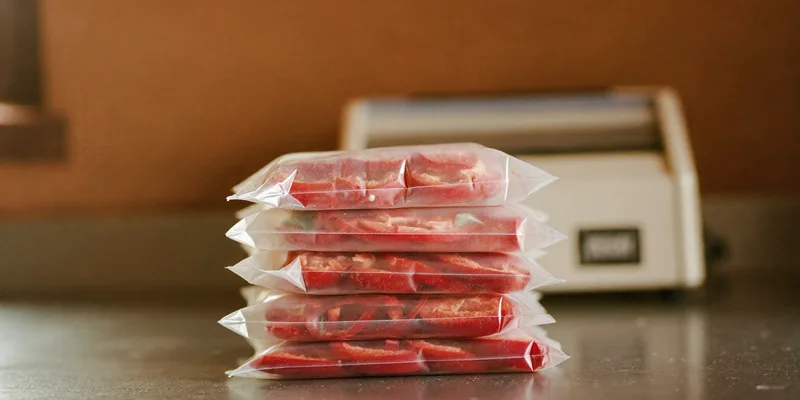
Last updated: August 23, 2026
NutriChef sits at the price point where most people buy their first vacuum sealer. It shows up in a search for a machine to portion chicken breasts, keep coffee from going stale, and stop the freezer from turning every bag of berries into a frosted brick. For those jobs it does what it says.
The questions worth asking are not about the feature list. They are about what happens on bag fifteen, what moist mode really compensates for, and whether a cheap machine ends up costing more in bags than it saved on the purchase. Those answers decide whether NutriChef is a smart buy or a stepping stone.
This article contains affiliate links. If you buy through them, we may earn a commission at no extra cost to you. Learn more.
Quick Answer
Is a NutriChef vacuum sealer good enough for your kitchen?
- Yes for weekly portioning. NutriChef lists dry and moist food settings plus normal and gentle modes, which covers most household sealing.
- Yes for pantry work. Coffee, nuts, rice and dried herbs seal cleanly and stay dry.
- No for processing day. Budget sealers pause to cool, and a long bulk run turns into a long evening.
- No for soup and brine. Moist mode helps with damp food, it does not let you bag liquid.
Bottom line: an honest first sealer for household batches. If your list starts with a whole deer or a bushel of tomatoes, buy heavier.
What NutriChef Lists on Its Sealers
NutriChef describes the PKVS18 series as an automatic sealing system with separate vacuum and seal buttons, dry and moist food settings, normal and gentle operating modes, soft touch digital controls with indicator lights, and a starter kit of bags in the box. The listing pairs the machine with an accessory hose for containers on the models that include one.
That is a standard external sealer feature set, and the useful part of it is the mode switching. Dry mode runs a full vacuum and a standard seal, moist mode shortens the vacuum and lengthens the seal to cope with damp surfaces, and gentle mode stops the pump short so soft food is not crushed.

What Moist Mode Actually Fixes
Moist mode is for wet surfaces, not for liquid. It exists because a damp bag mouth cools the weld and produces a seal that looks fine and fails a week later in the freezer. The longer seal time burns off that moisture. What it cannot do is stop broth from being pulled toward the pump, because that is how external sealers work.
The Fix That Costs Nothing
Freeze wet food first. Portion chili or stock into a container, freeze it solid, then drop the block into the bag and seal it dry. It adds a day to the process and removes the problem entirely, and it works on any machine at any price. Folding a cuff over the bag mouth before filling keeps the seal path clean, which is the other free habit worth building.
If you routinely bag liquid rather than occasionally, no external machine is the right tool. That job belongs to a chamber sealer, and the reasons are set out in sealing liquids without wrecking the pump.
The Overheating Limit Every Budget Sealer Has
The most common complaint owners raise about inexpensive sealers is that the machine forces a cooldown after a run of bags. This is not a fault so much as a design boundary. A small sealer has no cooling fan, the heating element and the pump both shed heat into a plastic body, and the controller pauses to protect them.
How to Work Around It
Batch your work. Prepare and fill ten bags before you seal any of them, seal that batch, then let the machine sit while you fill the next ten. Waiting between seals also gives the element time to recover, which produces a more consistent weld than firing bag after bag. If you find yourself managing the machine instead of the food, that is the signal to move up a tier.
Owners who process game or buy meat by the case usually land on a fan cooled machine for exactly this reason. That tier is covered in the heavy duty sealer guide and in sealing meat for the freezer.

Which Jobs a NutriChef Handles Well
Sorted by how the machine behaves rather than by what the box promises. The pattern is simple: dry and moderate volume work goes smoothly, wet and high volume work is where you meet the limits. Nothing here is a defect, it is the tier.
| Job | How it goes | What can go wrong | Better tool if it does |
|---|---|---|---|
| Weekly meat portions | Fine in batches of ten or so | Cooldown pause on long runs | Fan cooled sealer |
| Coffee, nuts, dried goods | Very good, dry mode | Sharp edges pierce thin bags | Thicker bags or jar sealing |
| Soft fruit and baked goods | Good on gentle mode | Crushing if you use dry mode | Rigid container plus a lid |
| Soup, stock, marinade | Poor without pre freezing | Liquid pulled into the machine | Chamber sealer |
For the dry goods row, a jar attachment often beats a bag entirely. Sealing a mason jar of coffee or flour costs nothing per use after the first purchase, as explained in jar sealing for dry goods.

Frequently Asked Questions
Can I use FoodSaver bags in a NutriChef sealer? Yes. Any embossed or channeled bag of the right width works in an external sealer, and buying rolls rather than pre cut bags lowers the cost per seal. Match the width to your machine and the thickness to how long the food is being stored.
My NutriChef stopped pulling a vacuum. What should I check? Go through the free fixes in order. Wipe the bag mouth dry, check that the bag sits flat across the strip with no wrinkles, inspect the foam gasket for grease or a nick, close the lid firmly on both corners, and let the machine cool if it has been running. Gaskets are consumable parts and a replacement is cheaper than a machine.
Why did my seal hold for a week and then let go in the freezer? Almost always moisture or fat in the seal path at the moment of welding. Use a cuff, dry the mouth, and switch to moist mode for damp food. A second seal line a little below the first is cheap insurance on anything staying frozen for months.
Does vacuum sealing make food shelf stable? No. Removing air slows spoilage and fights freezer burn, but wet low acid food still needs the refrigerator, the freezer, or proper canning. See vacuum sealing against canning for where each method belongs.
Is it worth buying a cheap sealer at all? For most households, yes. A machine you use weekly for portioning and pantry goods pays for itself in food that does not get thrown out. The upgrade case only appears when the volume does.
The Bottom Line
A NutriChef is a reasonable first sealer and an honest one, provided you buy it for household batches rather than for processing day. Dry and moist modes cover the sealing you will actually do, gentle mode saves soft food, and the cooldown pause is the price of the tier. Freeze liquid before bagging it, keep a spare gasket in the drawer, and buy rolls instead of pre cut bags. Read next: the countertop sealer guide to see the tiers side by side, and the bag guide to stop paying too much per seal.